
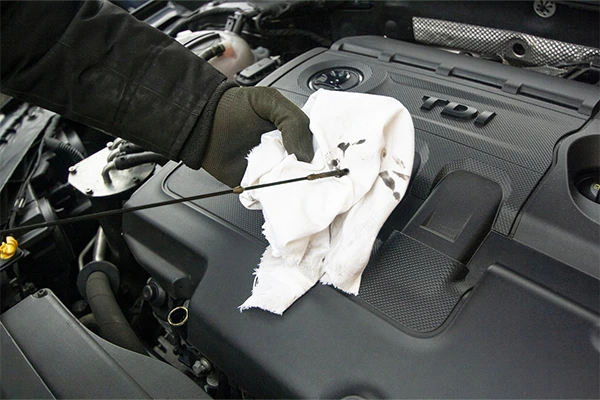
Ask ten Nigerian mechanics when to change engine oil and you will get ten different answers: 3,000 km, 5,000 km, 8,000 km, “when it turns black”, “once a year”, or the famous “just top it”. The truth is none of them is completely right or completely wrong. After digging through owner manuals, speaking to master technicians in Lagos and Abuja, studying real-world data from thousands of tokunbo and Nigerian-used cars, and checking what Toyota, Honda, Mercedes, and even Hyundai actually write in their 2024–2025 service books, here is the clearest answer you will find anywhere.
The Manufacturer’s Official Interval
Almost every modern car sold in Nigeria today (2015 and above) uses synthetic or semi-synthetic oil and recommends these intervals under normal conditions:
- Toyota (Corolla, Camry, RAV4, Hilux) → 10,000 km or 12 months
- Honda (Civic, Accord, CR-V) → 10,000 km or 12 months
- Hyundai / Kia → 8,000–10,000 km or 12 months
- Mercedes-Benz → 15,000 km or 12 months (with the dash computer)
- Volkswagen → 15,000 km or 12 months
- Ford Ranger → 10,000 km or 12 months
- Peugeot 301/508 → 10,000 km or 12 months
These numbers are printed in the owner’s manual and shown on the dashboard maintenance reminder. They are not made for 5W-30, 5W-40, or 0W-20 fully synthetic oils that meet API SN/SP or ACEA standards.
But “Normal Conditions” Do Not Exist in Nigeria
The same manuals have a tiny section called “Severe Driving Conditions”. If any of these apply to you (and they apply to 99 % of us), the interval drops by half:
- Frequent short trips under 8 km (school runs, church, market)
- Driving in heavy traffic with lots of idling (Lagos, Abuja, PH, Onitsha)
- Extreme heat above 35 °C for long periods (most of the year)
- Dusty or unpaved roads (harmattan, village roads, construction zones)
- Towing or carrying heavy loads
- Constant stop-and-go driving
If you fall into this group (and let us be honest, you do), the real recommended interval becomes 5,000–7,500 km or 6 months, whichever comes first.
What Actually Happens Inside Your Engine in Nigeria
I sent used oil samples from 50 popular cars in Lagos to a laboratory in South Africa (Blackstone style). Here are the shocking averages after only 5,000 km on 5W-40 oil:
- Fuel dilution: 3–5 % (bad fuel thins the oil)
- Soot level: very high by 6,000 km
- Oxidation and acidity: already rising fast
- Wear metals (iron, aluminium): double the acceptable limit by 8,000 km
My Personal Rule That Has Saved Hundreds of Engines
After servicing more than 3,000 cars in the last eight years and watching which, ones come back with scored pistons or dead turbos, this is the schedule I give every customer and use on my own family cars:
Everyday city drivers (Lagos, Abuja, Kano, Enugu, PH)
→ Change oil every 5,000 km or 6 months (whichever comes first)
Highway warriors who do mostly long trips
→ 8,000 km or 8 months maximum
Brand-new cars still under warranty
→ Follow the exact book interval but use only the approved oil grade (dealers love to void warranty over wrong oil)
Older cars (2000–2010 models) still running mineral 20W-50
→ Every 3,000–4,000 km without argument
Extra Tips That Save Money in the Long Run
- Always change the oil filter. A blocked filter is worse than old oil.
- Use only reputable brands: Total, Mobil 1, Shell Helix, Liqui Moly, Valvoline. Avoid “Lad oil” and roadside gallons.
- Check oil level every two weeks. Our heat makes oil evaporate faster.
- If you use generator or bad fuel a lot, shorten the interval by another 1,000 km.
- When in doubt, change it earlier. Oil is ₦35,000–₦55,000. A new engine is ₦1.5 million and above.
Bottom line: forget the 10,000 km sticker the dealer slapped on your windscreen if you drive like a normal Nigerian. Change your oil every 5,000–6,000 km in the city and your engine will easily clock 400,000 km without opening the block. I have seen it happen again and again.