
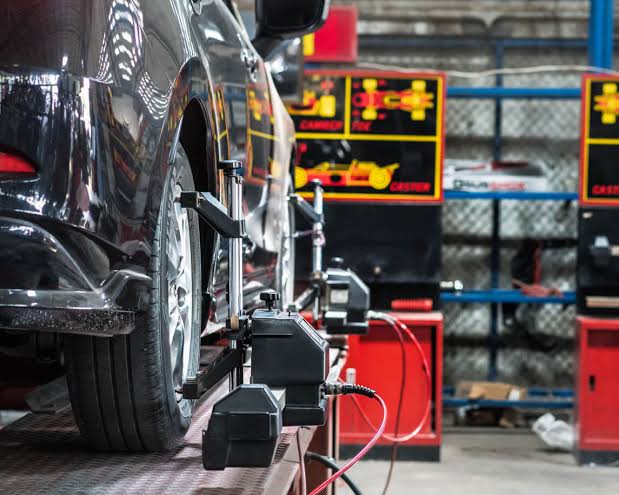
If you’ve ever felt your car pulling to one side while driving straight or noticed a shimmy in the steering wheel at higher speeds, chances are you’re dealing with either wheel alignment or wheel balancing issues. These two services are often confused, but they’re crucial for safe handling, tire longevity, and fuel efficiency. Mixing them up can lead to unnecessary expenses or overlooked problems. Drawing from trusted sources like Firestone Complete Auto Care and Kwik Fit, I’ll break down what each involves, how they differ, and when you need them. This guide aims to clarify things so you can make informed decisions at your next shop visit.
What Is Wheel Alignment?
Wheel alignment refers to adjusting the angles of your vehicle’s wheels to match the manufacturer’s specifications. It’s all about ensuring the tires are positioned correctly relative to each other and the road surface. There are three main angles involved: camber (the tilt of the wheel inward or outward when viewed from the front), caster (the steering axis angle that affects stability and cornering), and toe (whether the wheels point in or out when viewed from above). When these are off, your car doesn’t track straight, leading to uneven tire wear and poor handling.
Think of it like this: imagine your wheels as feet, if they’re not pointing straight ahead or are leaning awkwardly, you’ll stumble. Alignment corrects that stance. It’s typically done by a technician using specialized equipment to measure and tweak the suspension components, like tie rods or control arms. This service is essential after hitting a pothole, curb, or after suspension work, as it restores proper geometry. Without it, you might see tires wearing out faster on the edges, reduced gas mileage from increased rolling resistance, or even safety risks like longer stopping distances. Most experts recommend checking alignment every 10,000-12,000 miles or annually, but rough roads accelerate the need.
What Is Wheel Balancing?
Wheel balancing, on the other hand, focuses on distributing weight evenly around each tire and wheel assembly. No wheel is perfectly balanced from the factory, tiny imperfections in the tire rubber, rim, or even valve stems create imbalances. Over time, these get worse from wear, debris, or minor damage. Balancing involves spinning the wheel on a machine to detect heavy spots and then adding small counterweights (usually clip-on or adhesive) to even things out.
Picture a washing machine on spin cycle: if the load is uneven, it vibrates wildly. The same happens with unbalanced wheels, causing shakes that you feel through the steering wheel, floor, or seat. This service is quick and targets vibrations, improving ride comfort and preventing premature wear on tires, bearings, and suspension parts. It’s especially important after new tire installation or rotations, as even high-quality tires can settle unevenly. Balancing is recommended every 5,000-6,000 miles or whenever you notice vibrations, and it’s cheaper than alignment often under $100 for all four wheels.
Key Differences Between Wheel Alignment and Balancing
Now that we’ve covered the basics, let’s compare them directly. Alignment deals with the angles and positioning of the wheels on the car’s suspension system, ensuring they roll straight and parallel. It’s about the vehicle’s overall geometry and how the tires interact with the road. Balancing, however, is strictly about the tire-wheel unit itself, correcting weight distribution to eliminate vibrations during rotation. Alignment affects handling and steering response, while balancing impacts smoothness at speed.
In terms of process, alignment requires lifting the car, measuring angles with lasers or cameras, and adjusting hardware. It can take 30-60 minutes and might need specialized tools. Balancing is simpler: the wheel is removed, spun on a balancer, and weights are added, usually done in 15-30 minutes per wheel. Cost-wise, alignment runs $75-150, depending on the vehicle type (front-wheel vs. four-wheel), while balancing is $10-20 per wheel.
Another big distinction is the symptoms. Alignment issues show up as the car drifting left or right on flat roads, uneven tire tread (like more wear on one side), or a steering wheel that’s off-center. Balancing problems manifest as vibrations that increase with speed, often felt in the steering at 50-70 mph for front wheels or through the seats for rear ones. If ignored, misalignment can ruin tires in months and strain suspension, whereas imbalance leads to annoying shakes and eventual component fatigue. Some shops bundle them, but they’re not interchangeable: fixing balance won’t correct alignment, and vice versa.
When to Get Wheel Alignment
Knowing the signs helps you act before small issues become big bills. Schedule an alignment if your car pulls to one side even on crowned roads (where the surface slopes for drainage), test this by briefly letting go of the wheel on a straight, empty stretch. Other clues include rapid or uneven tire wear, such as feathering on the edges or bald spots on shoulders. If the steering feels loose or you hear squealing around corners, that’s another hint. Post-accident or after replacing parts like struts, shocks, or tires, alignment is a must to reset everything.
Life events matter too: if you drive on bumpy city streets or haul heavy loads, check more often. For most sedans and SUVs, every two tire rotations (around 12,000 miles) is ideal. Four-wheel alignments are pricier but necessary for AWD vehicles to prevent drivetrain stress. Skipping it not only shortens tire life by 20-30% but can void warranties or lead to handling problems in wet conditions.
When to Get Wheel Balancing
For balancing, vibrations are the giveaway. If they start around 40-50 mph and worsen, it’s likely front wheels; rear imbalances vibrate the whole car at highway speeds. New tires always need balancing, as mounting can shift weights. After patching a flat or hitting road debris, rebalance to avoid compounding issues.
Routine-wise, balance during tire rotations every 5,000-8,000 miles. If you switch to winter tires seasonally, balance them each time. Ignoring vibrations can lead to cupped tire wear (scalloped patterns), damaged wheel bearings, or even loose lug nuts from constant shaking. It’s a preventive measure that keeps rides quiet and extends component life
Can You Do It Yourself or Need a Pro?
While you can check for obvious signs at home, like measuring tire tread depth or feeling for vibrations, both services require professional equipment. DIY alignment kits exist but are imprecise and risky for safety-critical adjustments. Balancing needs a dynamic spinner machine, which most home mechanics lack. Head to a reputable shop with certified techs; look for places offering lifetime alignments for frequent drivers.
In summary, wheel alignment tunes your car’s stance for straight, efficient travel, while balancing ensures smooth, vibration-free rotation. Addressing them promptly saves money on tires (which cost $100-300 each) and boosts safety. Next time you feel something off, diagnose whether it’s a pull or a shake, and get the right fix. Regular maintenance like this keeps your vehicle running like new,drive smart and stay safe out there.