
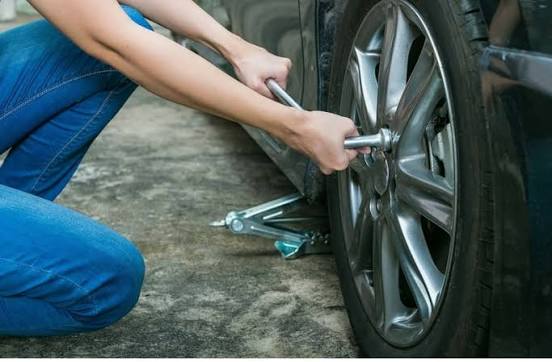
A flat tire always seems to strike when you least expect it, like on a busy highway or during a rainstorm. The good news is that with the right steps, you can swap it out in about 10 minutes and get moving again. Changing a tire is a basic skill every driver should know, not just to save on towing fees but to stay safe in emergencies. Safety comes first—pull over to a flat, stable spot away from traffic, turn on your hazard lights, and set the parking brake. If you are on a road, place warning triangles or flares behind the car. Now, let us go through the process step by step, based on what works in real situations for most cars. This assumes you have a spare tire, jack, and lug wrench in your trunk—check those regularly, as a flat spare defeats the purpose.
1. Gather Your Tools and Prep the Car
Before lifting anything, make sure you have what you need. Your car’s manual shows where the spare, jack, and lug wrench are stored, usually under the trunk floor. The lug wrench is that L-shaped tool for loosening nuts; some cars have a wheel lock key if you have anti-theft lugs. If your car uses a scissor jack, it fits under specific points on the frame look for notched areas near the wheels. Loosen the lug nuts on the flat tire about a half-turn while the car is still on the ground; this uses the tire’s weight for leverage and prevents spinning later. Do not remove them yet. If the nuts are rusted or tight, spray WD-40 or similar lubricant and let it sit a minute. This prep takes 1 to 2 minutes and sets you up for a smooth change.
2. Jack Up the Car Safely
Position the jack under the designated lift point your manual marks it, often a reinforced spot on the frame behind the front wheel or ahead of the rear. Pump the jack handle until the tire lifts about 5 centimeters off the ground; do not go higher than needed to avoid instability. If the ground is soft, place a flat board under the jack base for stability. Never get under the car or put your hands near the tire while jacked use the spare as a backup support if worried. This step should take 2 to 3 minutes if you are familiar with your jack; practice in your driveway first to build confidence.
3. Remove the Flat Tire
With the wheel off the ground, finish unscrewing the lug nuts by hand or with the wrench turn counterclockwise, or “lefty loosey.” Keep them in your pocket or a safe spot to avoid losing them. Pull the tire straight toward you; it might stick from rust, so rock it gently. Set it aside flat to prevent rolling. If the hub is rusty, a light tap with a mallet or your foot loosens it without damage. This part is quick, about 1 minute, but wear gloves to keep your hands clean from brake dust.
4. Mount the Spare Tire
Lift the spare onto the hub, aligning the holes with the bolts. Push it flush against the rotor. Hand-tighten the lug nuts as far as possible, starting with the bottom one to hold the weight, then the others in a star pattern top, bottom left, bottom right, and so on. This ensures even pressure and prevents warping. Do not fully tighten yet; the wheel needs to spin freely for now. If your spare is a donut (smaller temporary type), remember it is for short distances at low speeds under 80 km/h and no more than 100 kilometers. This step takes 1 to 2 minutes; double-check alignment to avoid cross-threading nuts.
5. Lower the Car and Tighten the Nuts
Slowly lower the jack until the tire touches the ground, then remove the jack completely. Now tighten the lug nuts fully in that same star pattern, using your body weight on the wrench for torque about 100 to 140 Nm, or as tight as you can without jumping on it. This grounds the wheel evenly. Recheck after driving 10 kilometers, as they can loosen slightly. Stow the flat tire, jack, and tools securely. Drive to a tire shop soon for repair or replacement, as spares are not for long-term use. This final step wraps up in 2 minutes, getting you under 10 total if efficient.
Safety Tips and Common Mistakes to Avoid
Always chock the opposite wheels with rocks or the wrench to prevent rolling. Change on flat ground away from curves or hills. If on a highway, stay behind the guardrail while working. Common errors include overtightening nuts while jacked (strips threads) or forgetting to loosen them first (spins the wheel). If the jack slips, stop and reposition never use the bumper or exhaust as lift points. For electric or hybrid cars, check the manual for jack locations, as batteries add weight considerations.
After the Change: What to Do Next
Inflate the spare to its recommended pressure (on the sidewall) at the nearest station. Get the flat fixed promptly patches for punctures cost ₦2,000 to ₦5,000, new tires ₦20,000 up. Rotate tires regularly to even wear and prevent flats from uneven tread. Carry a tire pressure gauge and compressor kit for on-road top-ups. With practice, this becomes second nature, turning a stress into a quick pit stop.
Knowing these steps empowers you to handle flats confidently. Stay prepared, and your drives stay smooth.