
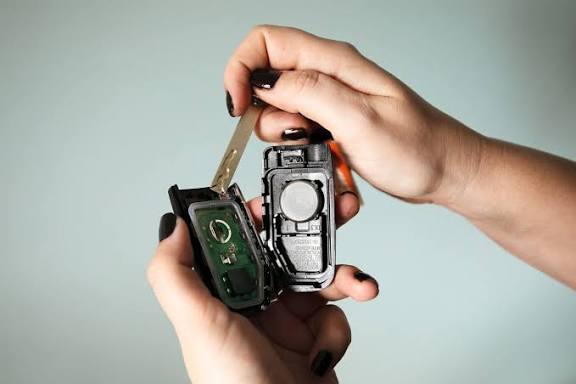
A dead key fob battery is one of those small annoyances that can ruin your morning. The lights stop flashing, the doors refuse to unlock, and suddenly you are digging for the physical key you forgot existed. The good news is that replacing the battery takes less than five minutes and works the same way across almost every brand—Toyota, Honda, Ford, BMW, Mercedes, Hyundai, Kia, Nissan, Volkswagen, and more. Modern key fobs use a small coin cell battery, usually a CR2032 or CR2025, and the process is nearly identical no matter what car you drive.
First, confirm the battery is actually dead. If the key fob does nothing when you press buttons but the car still starts with the key in the ignition or by holding the fob against the push-start button, the battery is almost certainly the issue. Most fobs give a warning—many cars flash the dash with a key symbol or show a low-battery message. If you have a spare fob that works, swap batteries to test. Once you are sure, grab a small flathead screwdriver or plastic pry tool (a guitar pick works) and a fresh battery.
Open the fob carefully. The majority of key fobs split apart along a seam. Look for a small notch or slot on the side or back edge, insert the tool, and gently twist to pop the case open. Some fobs have a hidden release button—press it and slide the key blade out to access the battery compartment. Avoid prying near the buttons or the emergency key slot. If the case feels stuck, check for tiny screws on the back; a few luxury brands hide them under a rubber plug or sticker.
Once open, note how the old battery sits—most have the positive (+) side facing up, but double-check before inserting the new one. Lift the old battery out with the tool or your fingernail. The battery is usually a CR2032 (3-volt, 20mm diameter, 3.2mm thick) or sometimes a CR2025 (thinner at 2.5mm). These are the same batteries used in watches and calculators, available at any pharmacy, supermarket, or auto parts shop for ₦500–₦1,500. Buy name-brand like Energizer, Duracell, or Panasonic—cheap generics die faster and can leak.
Drop the new battery in with the same orientation. Snap the case back together firmly until it clicks all around. Test the fob immediately—lock and unlock the doors from a few meters away. If it still does not work, the battery might be installed backward, or the fob itself has another issue (rare, but possible after a drop or water exposure). Some fobs need a quick re-pairing procedure—check your manual—but most wake up instantly with a fresh battery.
A few brand-specific notes. Toyota and Lexus fobs usually open with a small slot near the key release. Honda and Acura often have a sliding cover or a release button. Ford and some GM models use a screw on the back. BMW and Mercedes key fobs sometimes require pressing a release tab to slide the cover. If your fob has a start button on the side or a flip-out key, the battery is almost always under the back cover. In all cases, avoid forcing anything—if it does not pop open easily, look up a quick video for your exact model year.
Keep a spare battery in the glove box or your wallet. They last 2–4 years depending on use, and cold weather kills them faster. Replacing it before it dies completely is smart—most fobs give a low-battery warning on the dash for weeks before they stop working.
A dead fob battery is annoying but completely preventable. Grab a couple of CR2032s next time you are out, and you will never be locked out again.
Keywords: dead key fob battery replacement, how to replace car key fob battery, change key fob battery all brands, Toyota Honda key fob battery, key fob not working battery fix, CR2032 key fob replacement 2025