
Selling or buying a used car in Nigeria is straightforward on paper, but the paperwork can trip people up and lead to headaches later. Transferring ownership properly makes the car legally yours (or the buyer’s), avoids future fines landing on the wrong person, and keeps the vehicle sellable or insurable. Skipping steps leaves the car in the old owner’s name, meaning they stay responsible for any tickets, accidents, or crimes committed with it. The process is the same across states, handled through the state’s Vehicle Inspection Office (VIO) or Motor Licensing Authority. Here is a clear, step-by-step guide that works for tokunbo imports and locally used cars alike.
Step 1: Agree on the Sale and Prepare Documents
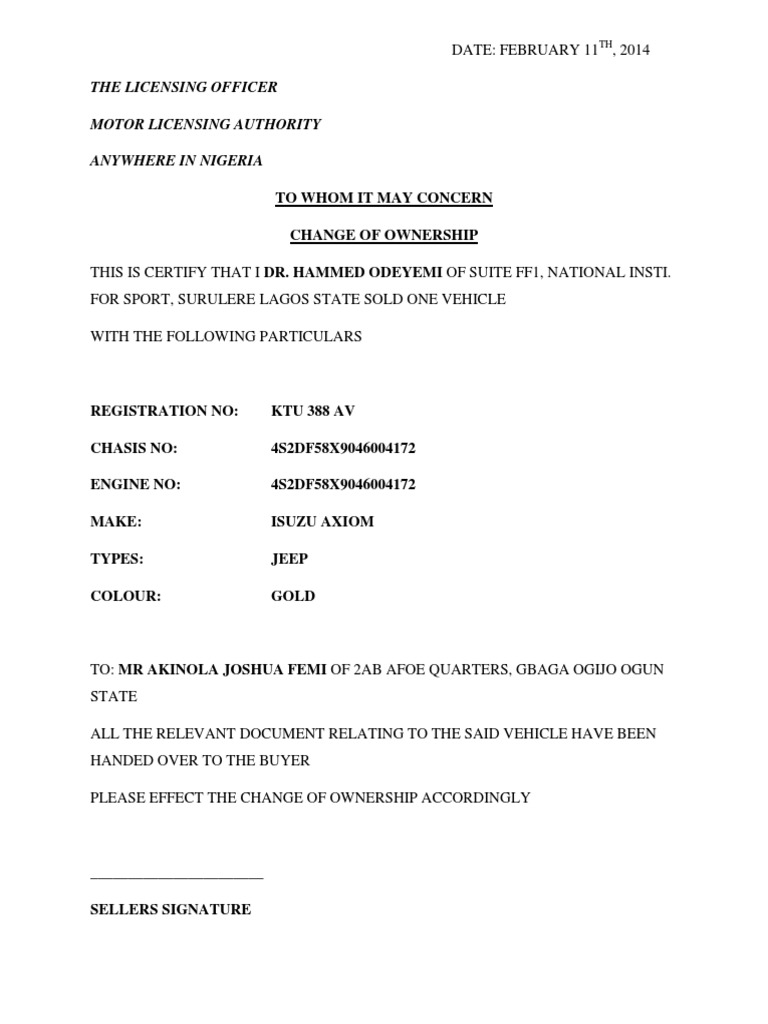
Both buyer and seller must be clear on price, condition, and any “as-is” terms. The seller provides these core documents:Original vehicle registration certificate (particulars)Customs papers (for tokunbo cars: Form M, Single Goods Declaration, Bill of Lading, etc.)Valid insurance certificate (third-party minimum)Roadworthiness certificate from VIOProof of payment of any outstanding fines or leviesSeller’s ID (national ID, passport, or driver’s license)A signed letter of transfer from the seller stating the sale details, date, price, and that the car is free of liensThe buyer needs their ID and proof of payment (receipt or bank transfer). Many sellers include service history receipts to build trust, though they are not legally required.
Step 2: Sign the Transfer Documents
The seller signs the back of the registration certificate in the space provided for transfer of ownership. Both parties sign a simple sales agreement (a typed or handwritten letter is fine) that includes:Date of saleFull names and addresses of buyer and sellerCar details (make, model, year, color, engine number, chassis number/VIN, plate number)Agreed priceStatement that the car is sold “as is” with no outstanding debts or encumbrancesSignatures of both parties and a witnessMake at least two copies—one for each party. This agreement protects both sides if disputes arise later.
Step 3: Visit the Vehicle Inspection Office (VIO)
Go to the VIO office in the state where the car is registered (or where the buyer wants new plates). Both buyer and seller should go together if possible, or the seller can give a signed letter authorizing the buyer to proceed. Bring all original documents and copies.At the VIO:Submit the registration certificate, transfer letter, and other papers.Pay the transfer fee (varies by state, usually ₦5,000–₦15,000 for private cars).The office verifies the documents, checks for outstanding fines, and processes the transfer.You may need to do a quick roadworthiness test (brakes, lights, tires, etc.) if the current certificate has expired—costs ₦5,000–₦10,000.Once approved, the office issues a new registration certificate in the buyer’s name and assigns new plates if required (or retains the old ones in some states).The whole process usually takes 1–3 days, depending on the state and workload. Lagos and Abuja can be faster if you go early and have everything ready.
Step 4: Update Insurance and Other Records
After transfer, the buyer must update the insurance policy in their name. Contact the insurer with the new registration details—third-party is mandatory, but switch to comprehensive if you want full coverage. The old policy becomes invalid once ownership changes.Notify any other relevant parties (like banks if the car was on loan) and update toll tags or any subscription services linked to the old registration.
Common Mistakes to Avoi
Never hand over the car or money without completing the transfer at VIO—many buyers get stuck with cars they cannot register. Do not accept photocopies only—always verify originals. Watch out for sellers with outstanding fines or court cases on the car; these transfer to the new owner if not cleared. Pay in a bank or use transfer so you have proof.For tokunbo cars, double-check customs papers for authenticity—fake ones lead to seizure. If buying from a dealer, insist they handle the transfer or provide proof it is done.