
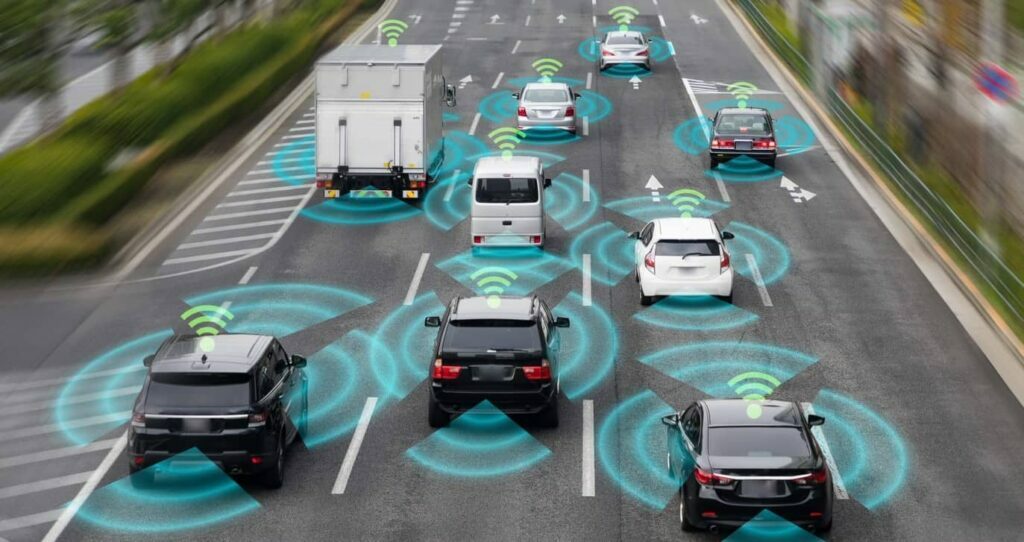
Picture this: you hop into your car in Lagos, tell it where to go, and sit back as it weaves through the chaos of Third Mainland Bridge without a single honk or sudden brake. That is the promise of self-driving cars autonomous vehicles that use sensors, cameras, radar, and AI to navigate without human input.
They are already testing on roads in places like the US and China, but in Nigerian cities, the story is different. The technology is advancing fast, with companies like Tesla and Waymo leading the way, but our urban environments throw up unique hurdles. Self-driving cars could transform how we move, reducing accidents and easing traffic, but readiness here in 2026 is still a work in progress. Let us break it down: what makes these cars work, why Nigerian cities are not quite there yet, and what needs to happen for them to roll out.Self-driving cars rely on a mix of hardware and software to “see” and react to the world. Cameras capture images of signs, lanes, and obstacles. Radar and lidar (laser sensors) measure distances and speeds, even in fog or rain.
Ultrasonic sensors handle close-range detection for parking. The AI brain processes all this data in real time, making decisions like when to brake for a pedestrian or merge into traffic. Levels of autonomy go from 0 (no automation) to 5 (full self-driving). Most cars today are at Level 2 partial automation like adaptive cruise control and lane-keeping. True self-driving (Level 4–5) means the car handles everything in certain areas without a driver ready to take over.In Nigerian cities like Lagos, Abuja, or Port Harcourt, the biggest roadblock is infrastructure.
Self-driving cars need clear lane markings to stay in their path, but our roads often have faded or missing lines, especially after rain washes them away. Potholes confuse sensors lidar might see a deep hole as an obstacle and slam on brakes unexpectedly. Traffic lights are unreliable; in many junctions, they do not work or get ignored, so the AI has to predict human chaos. Self-driving tech assumes predictable behavior, but here, okadas zip through gaps, danfos stop anywhere, and pedestrians cross mid-road. AI trained on orderly US or European roads struggles with that unpredictability. Tests in similar chaotic environments, like in India, show the systems need major tweaks to handle “informal” traffic rules.
Regulations are another hurdle. Nigeria’s road safety laws are enforced by the FRSC, but self-driving rules do not exist yet. Who is liable in a crash the owner, the manufacturer, or the AI? Insurance companies are not ready for that shift. The National Vehicle Identification Scheme tracks cars, but integrating it with autonomous tech would need upgrades. Globally, places like Singapore have dedicated lanes for testing, but here, no such framework exists.
The government could start with pilot programs in controlled areas like the Lekki-Epe Expressway, but until laws catch up, full rollout is years away.Power and connectivity issues add complications. Self-driving cars need constant data from GPS, maps, and cloud servers for real-time updates. In Nigeria, network coverage drops in rural areas, and power outages affect charging for electric models (many self-drivers are EVs).
Dust from harmattan clogs sensors, and heavy rains reduce camera visibility. AI must adapt to these, but current systems are optimized for milder weather.Despite the challenges, the benefits for Nigerian cities are huge if readiness improves. Traffic congestion could drop self-driving cars communicate to optimize flow, reducing go-slow on bridges like Carter or Third Mainland. Accidents from human error (like speeding or drunk driving) fall dramatically; global data shows autonomous vehicles have fewer crashes per kilometer.
Fuel efficiency rises as AI drives smoother, saving money during scarcity. Shared self-driving fleets could reduce the number of cars on roads, easing parking woes in crowded areas like Victoria Island.To get ready, Nigeria needs better roads consistent markings, pothole repairs, and smart traffic lights. Government investment in 5G networks would support connectivity.
Training programs for mechanics to service high-tech cars are essential. Private companies could pilot autonomous shuttles in gated communities or airports first.Self-driving cars are not ready for Nigerian cities in 2026, but the tech is evolving fast. Infrastructure gaps, regulatory hurdles, and environmental factors hold it back, but the potential to cut accidents, ease traffic, and save fuel is real. Watch for pilots from companies like Uber or local startups they could bring it closer sooner than you think. In the meantime, drive safely with what we have.