
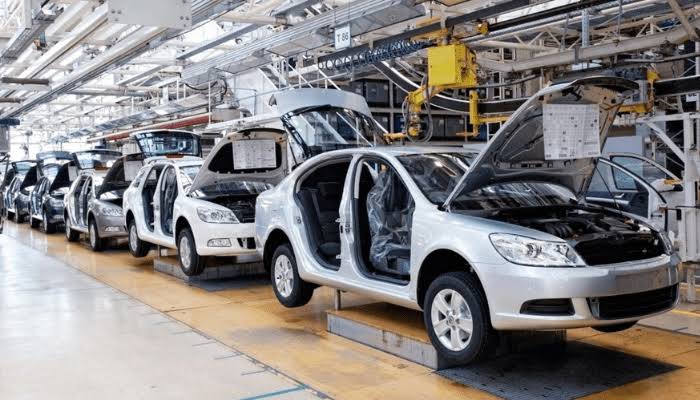
Car assembly in nigeria has a long and bumpy history tied closely to the countrys economic policies oil booms import bans and attempts at industrialization the story starts in the late 1950s when nigeria was still a british colony and the first vehicle assembly plants appeared mainly to put together imported completely knocked down kits rather than build from scratchin 1957 the nigerian motor assembly plant in apapa lagos began assembling austin and morris cars under the british leyland group this was the first real assembly operation in the country it used imported parts shipped in crates and nigerian workers bolted them together the goal was to reduce import costs create jobs and train locals in basic manufacturing by 1960 when nigeria gained independence assembly had expanded to include bedford trucks and vansthe 1960s and early 1970s saw more plants open as the oil boom brought foreign investment and government incentives peugeot automobile nigeria pan opened in kaduna in 1975 to assemble peugeot 504 models volkswagen nigeria limited vw started in lagos in 1975 building the beetle and later the passat and golf leyland nigeria assembled trucks and buses in ibafo while bayero motors in kano put together mercedes benz trucks national trucks manufacturers limited assembled nissan and later mack trucks in bauchi these plants employed thousands created supply chains for local parts like seats upholstery and wiring and reduced the need for fully built importsthe peak came in the late 1970s and early 1980s when local content rules forced assemblers to use a percentage of nigerianmade components government banned certain imported fully built cars to protect the assembly industry at one point nigeria assembled over one hundred thousand vehicles a year mostly peugeot 504 505 vw passat and bedford trucks the 504 became the national car because it was tough reliable and affordable with parts made or repaired locallythen the economy collapsed in the mid 1980s oil prices crashed foreign exchange dried up import licenses became scarce and assemblers could no longer get enough kits or raw materials production dropped sharply plants closed or scaled down drastically peugeot vw and leyland struggled with shortages workers were laid off and by the early 1990s most assembly lines had stopped the government shifted to full import liberalization in the structural adjustment program era which flooded the market with cheaper tokunbo cars and killed local assembly for goodfrom the mid 1990s to the early 2010s almost no vehicles were assembled in nigeria the market relied entirely on imported used cars tokunbo from europe america and dubai local manufacturing was dead except for a few small commercial vehicle assemblers like innoson which started in 2007 building buses and trucks using mostly imported partsthe revival began around 2013 when the government introduced the national automotive industry development plan naidp it offered tax holidays import duty waivers on kits and restrictions on fully built used car imports to encourage assembly companies responded innoson expanded to cars stallion group assembled hyundai and nissan models in lagos nord assembled nissan and ford in lagos and abuja while ckd assemblers like coscharis and proforce built hyundai kia and other brands by 2016 nigeria was assembling several thousand vehicles a year again mostly commercial buses trucks and a few passenger carsin 2026 assembly remains small compared to imports but it is growing steadily innoson produces the ivm g40 g80 and g5 models with increasing local content hyundai and kia assemble the tucson santa fe elantra and sportage in lagos ford ranger and everest come off lines in ogun state toyota hilux and corolla cross have ckd assembly in lagos the government continues incentives like duty waivers for kits and local content targets to push assembly higherthe benefits are clear assembly creates jobs trains technicians builds supply chains for local parts and reduces dependence on imported used cars it also improves vehicle quality because assembled cars often meet stricter safety and emission standards than many tokunbo imports the challenges are high cost of imported kits unreliable power supply poor road infrastructure and competition from cheap tokunbo vehicles despite that assembly is slowly returning and in the next decade it could become a bigger part of the nigerian economythe history shows nigeria has tried assembly before failed due to economic crises and policy shifts and is trying again with more realistic goals the 2026 landscape has a small but growing number of plants producing vehicles that suit local needs if policies stay consistent and power improves assembly could finally take root and reduce the reliance on imported used cars