
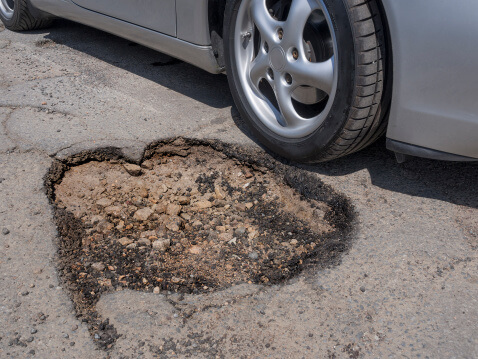
Potholes are one of the most expensive and frustrating parts of driving in Nigeria. They appear suddenly after rain, hide under water, bend rims, tear sidewalls, knock suspension components loose and sometimes crack engine mounts or damage exhausts. A single deep hit can cost anywhere from twenty thousand naira for a rim and tire replacement to over two hundred thousand if control arms ball joints or shocks are ruined. The good news is that most pothole damage is preventable or at least greatly reduced with simple habits awareness and a few inexpensive preparations. Here is a practical guide that actually works on Nigerian roads in 2026.The most effective protection starts with your eyes. Scan the road far ahead not just the car in front of you. Look for dark patches in the asphalt that indicate recent water pooling because those spots often hide deep holes. Watch how other vehicles behave if a car ahead suddenly swerves or dips hard slow down immediately. During and right after rain drive slower than normal even on familiar roads because water hides depth and makes surfaces more slippery. Keep headlights on low beam in rain or early morning/evening so you see surface changes better.
Adjust speed before you reach the bad section. Never brake hard right on top of a pothole the sudden weight transfer compresses the suspension and increases impact force. Ease off the accelerator early let engine braking slow you down then brake gently before the hole. If you cannot avoid it straddle the pothole by positioning the car so one wheel goes over the edge or miss it completely. When you must hit one slow to 20–30 km/h or less keep a loose grip on the steering wheel and do not slam the brakes. A light touch on the wheel lets the suspension absorb the shock instead of fighting it.Tire pressure plays a huge role. Underinflated tires flex more hit harder and are more likely to pinch the rim or burst the sidewall. Check pressure every two weeks when tires are cold and keep them at the door-jamb sticker value usually 30–35 psi for most passenger cars and crossovers. Overinflation is not the answer either it makes the ride harsher and wears the center tread faster. Proper pressure gives the tire the right shape to absorb impacts instead of transferring them straight to the rim and suspension.
Suspension condition matters more than most drivers realize. Worn shocks struts bushings or ball joints let the wheel drop farther into the hole increasing the force when it hits the bottom. Have your suspension checked every twenty thousand kilometers or after a few hard hits. Listen for clunks knocks or rattles over bumps those are early signs of wear. Replacing shocks or struts before they fail prevents secondary damage like bent rims or cracked subframes.
Choose tires with stronger sidewalls and higher load ratings for Nigerian conditions. All-season or highway-terrain tires with reinforced sidewalls resist pinch flats better than low-profile performance tires. Avoid very low-profile setups 40 aspect ratio or lower unless you drive only smooth highways. Stick to 50–65 aspect ratio tires on 16 to 18 inch rims for the best balance of comfort pothole resistance and handling. Keep a good spare fully inflated and tools ready so a sidewall tear does not leave you stranded.Slow down over speed bumps and expansion joints. Many drivers hit these at speed thinking they are minor but they transmit the same kind of shock as potholes.
Approach them at walking pace let the suspension settle then accelerate gently after. The same rule applies to drainage channels and rail crossings.After hitting a pothole inspect the car as soon as it is safe. Check tires for bulges cuts or embedded objects. Look at rims for dents or cracks. Listen for new noises clunks vibrations or pulling. Feel for vibration through the steering wheel or floor at certain speeds that could mean a bent wheel or damaged tire.
Park and visually inspect the underbody if possible look for fresh leaks bent components or loose parts. Even if nothing seems broken a hard hit can knock wheel alignment out or damage suspension bushings so get a four-wheel alignment check within a week or two.Carry a basic emergency kit in the trunk reflective triangles flashlight gloves small towel tire pressure gauge and a portable compressor or foot pump. If you get a flat from a pothole edge you can inflate the spare or temporary repair kit on the spot instead of waiting for help.
Pothole damage is expensive but almost always avoidable or minimized with awareness and preparation. Scan far ahead slow down early keep tires properly inflated maintain suspension and inspect after every hard hit.
These habits save rims tires suspension components and most importantly your safety and wallet. The roads will not change overnight but the way you drive on them can make a huge difference.