
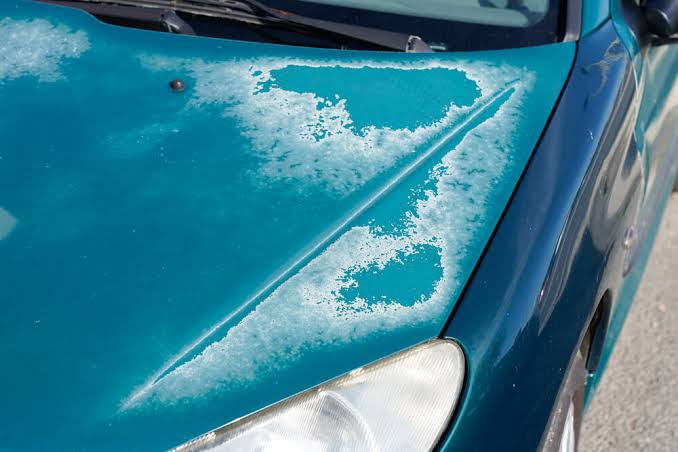
Faded car paint is one of the most common problems faced by vehicle owners in Nigeria. The combination of intense sunlight, harmattan dust, acid rain, bird droppings, and road grime slowly breaks down the clear coat and oxidizes the paint underneath, leaving the car looking dull, chalky, and older than it really is. The good news is that most faded paint can be restored to a much better condition without repainting, saving you a significant amount of money. With the right products and technique, you can bring back shine, depth, and protection in a single weekend.
The fading process starts when the factory clear coat is damaged by UV rays and environmental contaminants. Once the clear coat loses its ability to protect the color layer, the paint begins to oxidize. This creates a chalky, matte surface that scatters light instead of reflecting it. Restoration works by first removing the oxidized layer, then polishing the paint to restore smoothness, and finally applying protection to slow down future fading.
Begin by washing the car thoroughly. Use a pH-neutral car shampoo and two buckets (one with shampoo, one with plain water for rinsing the mitt). Wash from top to bottom, rinsing the mitt often to avoid scratching the paint with trapped dirt. Pay special attention to areas where contaminants collect, such as the hood, roof, and trunk. After washing, dry the car completely with a clean microfiber towel or blower to prevent water spots.The next step is clay bar decontamination. Even after washing, tiny particles of industrial fallout, brake dust, and embedded dirt remain bonded to the paint.
A clay bar glides over the surface and pulls these contaminants out. Spray a clay lubricant or quick detailer generously on a small section, then gently glide the clay bar across the paint with light pressure. Fold and knead the clay frequently to expose a clean surface. When the clay glides smoothly without resistance, the panel is clean. Clay bar treatment makes the subsequent polishing step far more effective and prevents scratches.Now move to polishing to remove oxidation. Use a dual-action polisher if you have one, or apply by hand with a foam applicator.
Start with a cutting or correcting compound for moderate to heavy oxidation. Work in small sections (about 60 cm by 60 cm) using overlapping passes. Apply moderate pressure at first, then lighten as the compound begins to work. Wipe off the residue with a clean microfiber towel and check your progress. If the paint still looks dull, repeat with the same compound or move to a finer polishing compound.
The goal is to remove the dead oxidized layer and reveal fresh paint underneath. Be careful not to over-polish thin paint areas such as edges or the roof.Once the paint looks smooth and reflective, apply a sealant or wax to protect it. Modern ceramic sealants or hybrid waxes last longer than traditional carnauba wax in our harsh climate. Apply the product thinly with a foam applicator in straight lines, let it haze according to the instructions (usually 5–10 minutes), then buff off with a clean microfiber towel. A good sealant will give the paint a deep wet look and add a protective layer against UV rays, water, and dust.
Reapply every 3–6 months depending on exposure.For deeper scratches or swirl marks that polishing alone cannot remove, a light wet sanding with 2000–3000 grit sandpaper may be necessary before polishing. This step requires experience and should be done carefully with plenty of water to avoid burning through the clear coat. If you are unsure, leave this to a professional detailer.After restoring the paint, maintain it properly to slow down future fading. Wash the car regularly with pH-neutral shampoo, use a quick detailer spray after every wash to remove light dust, and park in shade or under a car cover whenever possible. Avoid automatic car washes that use harsh brushes. A ceramic coating applied by a professional after restoration can provide extra protection for 2–5 years.
Restoring faded car paint is a rewarding project that dramatically improves the appearance and value of your vehicle. With thorough washing, clay bar decontamination, careful polishing, and proper protection, even heavily oxidized paint can look significantly better.
The entire process can be completed in one or two days and costs far less than a full repaint. Take your time, work in the shade, and use good-quality products. Your car will look newer, the paint will last longer, and you will enjoy the results every time you walk up to it.