
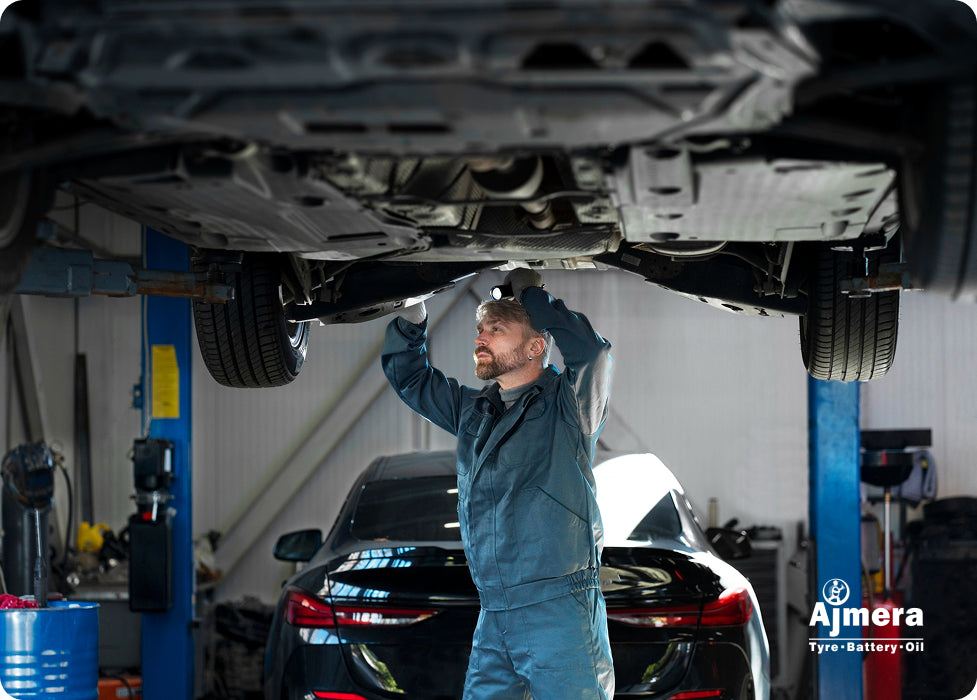
A thorough suspension checkup is one of the smartest things you can do for your car in Nigeria. Our roads, with their potholes, speed bumps, and uneven surfaces, put constant stress on shocks, struts, springs, ball joints, tie rods, and bushings. A worn suspension does not just make the ride uncomfortable it affects handling, braking distance, tire wear, and even safety. Catching problems early prevents small issues from turning into expensive repairs and keeps your car stable and predictable on the road. Here is a clear, practical guide to suspension checkup tips that every driver should follow.The most obvious sign of suspension trouble is how the car feels while driving. If the ride has become unusually bouncy, the car floats or sways excessively over bumps, or it takes longer to settle after going over a speed bump, the shocks or struts are likely worn.
A simple test is the bounce test: push down firmly on the front or rear of the car and release. A healthy suspension should rebound once or twice and then settle. If it continues bouncing three or more times, the dampers are no longer doing their job properly.Listen carefully while driving.
Clunking or knocking sounds when going over bumps, especially at low speeds, often point to worn ball joints, tie rod ends, or control arm bushings. A creaking or squeaking noise when turning or going over uneven surfaces usually indicates dry or damaged bushings. Rattling from the rear can mean worn shock mounts or broken springs. These sounds become louder and more frequent as components wear further.Pay attention to how the car handles. If it pulls to one side, feels loose in corners, or the steering wheel vibrates at certain speeds, the suspension or steering components may be the cause. Uneven tire wear is another strong indicator.
Cupping or scalloped edges on the tread often result from worn shocks or struts that allow the tires to bounce. Inner or outer edge wear can signal alignment problems caused by bent or worn suspension parts.Visually inspect the suspension components whenever the car is on a lift or you have enough clearance to look underneath. Look for leaking fluid around the shock absorbers or struts. A small amount of oil near the seal is normal, but heavy dripping or wet shocks mean the seals have failed and the unit needs replacement.
Check rubber bushings for cracks, splits, or missing pieces. Worn bushings compress too easily and allow excessive movement. Inspect ball joints and tie rod ends for play by grabbing the tire at the 12 and 6 o’clock positions and rocking it. Any noticeable movement suggests these components need attention.Test the car on different road surfaces. Drive over a series of small bumps at low speed and note how the suspension reacts. A good system absorbs impacts smoothly without harsh jolting or excessive bouncing. On highways, the car should feel stable at speed with no wandering or constant steering corrections. During braking, the front end should not dive excessively, and the rear should not squat dramatically when accelerating.In Nigeria’s climate, heat and dust accelerate wear on rubber components.
Bushings and dust boots dry out and crack faster in high temperatures. During harmattan, fine dust works its way into joints and accelerates wear. For this reason, many mechanics recommend a full suspension inspection every 10,000 to 15,000 km or at least twice a year.When components need replacement, replace them in pairs on the same axle for balanced handling. For example, if one front shock is bad, replace both front shocks. The same rule applies to struts, springs, and control arms. Using quality parts from reputable brands (KYB, Monroe, Gabriel for shocks, or original equipment equivalents) usually gives better longevity and ride quality than the cheapest options.
After any suspension work, get a four-wheel alignment. Worn or replaced parts often change the geometry, causing uneven tire wear and poor handling if left unaligned. A proper alignment ensures the car tracks straight and the tires wear evenly.Regular suspension checkups are inexpensive compared to the cost of major repairs or accidents caused by poor handling. Listen to how your car feels and sounds, watch for uneven tire wear, and have the suspension inspected twice a year or every 10,000–15,000 km.
Addressing small problems early keeps your car safer, more comfortable, and less expensive to maintain in the long run.A well-maintained suspension not only improves ride comfort but also enhances braking stability and overall control critical factors on our often unpredictable roads.