
Transmission fluid is the lifeblood of your car’s automatic transmission, and checking it regularly is one of the easiest ways to prevent expensive repairs. In Nigeria’s hot climate and heavy traffic conditions, transmission fluid breaks down faster than in cooler environments, leading to slipping gears, delayed shifting, overheating, and eventually complete transmission failure if neglected. The good news is that checking the fluid level and condition takes only a few minutes and requires almost no special tools.
Here is a clear, practical guide to help you stay on top of your transmission’s health.The first step is understanding when and how to check the fluid accurately. Most automatic transmissions must be checked with the engine running and the transmission at normal operating temperature. Park the car on level ground, start the engine, and let it idle for a few minutes. Shift through all gears (Park, Reverse, Neutral, Drive) while pressing the brake pedal, then return to Park or Neutral as specified in your owner’s manual. This circulates fluid through the entire system so the dipstick reading reflects the true level.
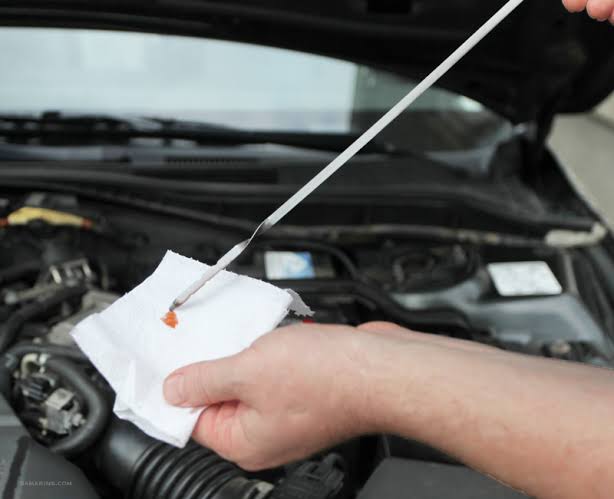
Locate the transmission dipstick. It is usually near the back of the engine bay, separate from the engine oil dipstick, and often has a red, yellow, or brightly coloured handle. On some newer models the dipstick may be sealed or replaced by an electronic sensor, but most cars in Nigeria still have a traditional dipstick. Pull the dipstick out, wipe it clean with a lint-free cloth or paper towel, reinsert it fully, and pull it out again to read the level.The fluid should sit between the “Low” and “Full” marks or within the crosshatched area. If it is below the “Low” mark, add only the recommended fluid type in small amounts (about 200–300 ml at a time), then recheck after running through the gears again. Overfilling is just as harmful as underfilling because it causes foaming and pressure issues that lead to slipping and overheating.
Pay close attention to the fluid’s condition every time you check the level. Fresh automatic transmission fluid (ATF) is typically bright red or pink and has a slightly sweet smell. As it ages, it turns dark brown or black and develops a burnt odour. Milky or foamy fluid usually indicates water contamination, often from driving through deep floods. Metal particles or a gritty texture on the dipstick are signs of internal wear. If the fluid looks or smells bad, even if the level is correct, it should be changed immediately.
How often you should check depends on your driving conditions. In heavy Lagos or Abuja traffic with frequent short trips, check the fluid every month or every 1,000–2,000 km. For highway or inter-city driving, checking every 3,000 km is usually sufficient. Many mechanics in Nigeria recommend a full fluid and filter change every 40,000 km or sooner for cars used primarily in city conditions.Always use the exact type of transmission fluid specified in your vehicle’s owner’s manual. Using the wrong fluid can cause slipping, harsh shifts, or complete transmission failure. Common types in Nigeria include Dexron VI, Mercon LV, Toyota Type T-IV or WS, and Honda ATF. Buy from reputable sources to avoid counterfeit fluid that breaks down quickly.If the fluid level is consistently low between checks, look for leaks.
Common leak points include the transmission pan gasket, cooler lines, seals around the output shaft, and the torque converter. Small leaks can often be fixed with a new gasket or seal, while larger leaks need immediate professional attention to prevent running the transmission dry.After adding or changing fluid, take the car for a short test drive and recheck the level once the transmission has reached normal temperature. This ensures the reading is accurate.Regular transmission fluid checks and timely changes are among the most effective ways to extend the life of your automatic gearbox.
In Nigeria’s demanding driving environment, staying ahead of fluid condition and level can prevent slipping, overheating, and costly transmission repairs. Make it a habit to check the fluid monthly, especially during the hot season and after driving through flooded areas. A few minutes of attention every month can save you from major headaches and keep your car shifting smoothly for many kilometres to come.