
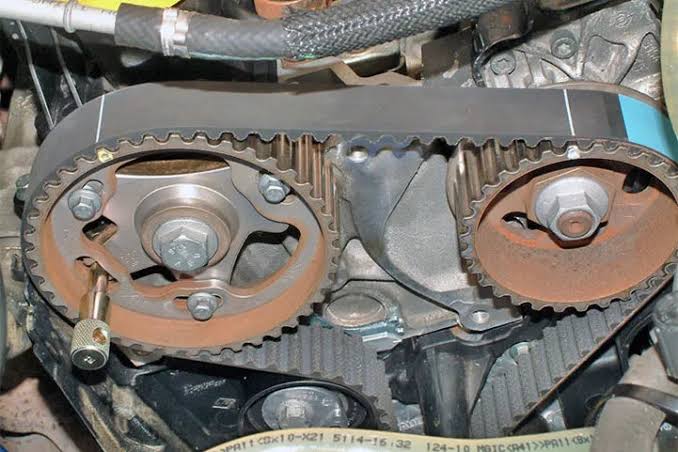
Timing belt inspection is one of the most critical yet frequently ignored maintenance tasks for many cars in Nigeria. The timing belt is a reinforced rubber belt that synchronises the rotation of the crankshaft and camshaft, ensuring the valves open and close at the exact right moment during the engine cycle.
If it breaks or slips, the engine can suffer serious internal damage, often requiring a complete overhaul that costs hundreds of thousands of naira. In our hot climate, dusty conditions, and heavy traffic, timing belts wear out faster than in cooler regions, making regular inspection essential.Most manufacturers recommend inspecting the timing belt every 20,000 to 30,000 km and replacing it every 60,000 to 100,000 km or every 5 to 7 years, whichever comes first. However, in Nigeria many mechanics advise replacing it every 50,000 to 70,000 km or every 4 to 5 years because of high under-hood temperatures and dust contamination. Vehicles used mainly in city traffic with frequent short trips tend to need earlier replacement because the engine rarely reaches full operating temperature, allowing moisture and contaminants to degrade the belt faster.The timing belt is usually hidden behind a plastic or metal cover on the side of the engine. To inspect it properly, the cover must be removed.
Look for these common warning signs of wear:Cracks on the back or inner side of the beltMissing, chipped, or frayed teethGlazing or shiny spots where the belt has been slippingOil or coolant contamination (soft, swollen, or sticky belt)Excessive slack or tightness when pressedIf any of these signs are present, the belt should be replaced immediately, even if it has not reached the recommended mileage.While inspecting the belt, also check the related components. The tensioner and idler pulleys should spin smoothly without noise or roughness. A noisy or seized pulley puts extra strain on the belt and can cause premature failure. The water pump is often driven by the timing belt on many engines; if it shows signs of leakage or roughness, replace it at the same time as the belt to avoid doing the job twice.
When replacing the timing belt, always use a high-quality belt from a reputable brand that meets or exceeds the manufacturer’s specifications. Cheap, unbranded belts often stretch, lose teeth, or fail early. Replace the tensioner, idler pulleys, and water pump (if applicable) together with the belt. This complete kit approach is cheaper in the long run and prevents future labour costs. After installation, the engine should be test-run and the timing rechecked to ensure everything is synchronised correctly.
Pay special attention to interference engines versus non-interference engines. In interference engines, which are common in many Toyota, Honda, and Hyundai models, a broken timing belt will cause the pistons to collide with the valves, resulting in bent valves and possibly damaged pistons. In non-interference engines the damage is usually limited to the belt itself. Knowing which type your car has helps you understand the urgency of timely replacement.Driving habits also affect timing belt life. Frequent short trips, extended idling in traffic, and driving in dusty conditions accelerate wear. During harmattan, fine dust can work its way into the timing belt cover and act as an abrasive, so inspect the belt more often.
After driving through deep water or floods, have the timing belt checked because water contamination can cause rapid deterioration.Many drivers only think about the timing belt when the car starts making unusual noises or develops starting problems. By then it may already be too late. Make timing belt inspection part of your regular service schedule.
Ask your mechanic to check it visually every 20,000 km and plan a full replacement before the recommended interval if you drive in heavy traffic or harsh conditions.A timely timing belt replacement is one of the best investments you can make in your car’s longevity. The cost of replacing the belt, tensioner, and related parts is far lower than repairing a damaged engine after a belt failure.
By staying ahead of the schedule and watching for early signs of wear, you protect your engine, maintain performance, and avoid the inconvenience and expense of a roadside breakdown.Keep your timing belt in good condition and your engine will reward you with smooth, reliable operation for many kilometres to come.