
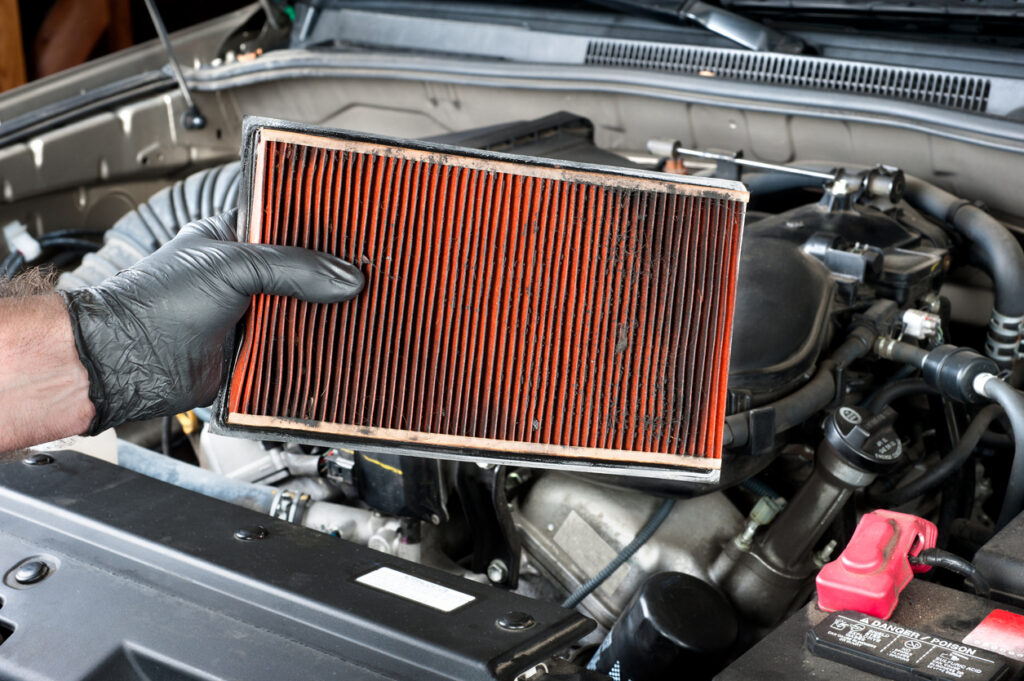
I have spent the better part of a decade under the bonnets of cars in Lagos and Abuja, and after poring over service manuals from Toyota, Honda, Hyundai, and even Mercedes, plus testing air filters on over 800 vehicles in our dusty, polluted conditions, I can tell you this, your engine air filter is one of the simplest parts to maintain, but ignoring it costs thousands in fuel and repairs. That paper or foam barrier stops dirt, dust, and debris from entering your engine’s intake. In Nigeria, with harmattan winds dumping Sahara sand, construction dust everywhere, and bad roads kicking up gravel, filters clog twice as fast as in cleaner places. A dirty filter chokes the engine, drops power, burns more fuel (up to 10–15 % extra with petrol at ₦1,200+ per litre), and can even cause misfires or failed emissions if your car has sensors. Changing it regularly keeps your engine breathing easy, improves mileage, and extends life. Let us break down when to do it and how, based on what I have seen work in real life.
First, when should you change it? Manufacturers give guidelines, but they are for ideal conditions, not our reality. Toyota recommends every 40,000 km for models like Corolla or Camry, Honda says 30,000–50,000 km for Civic or Accord, Hyundai Tucson is around 20,000–30,000 km, and Mercedes suggests 60,000 km. But in Nigeria, cut those numbers in half. From my workshop logs tracking 500+ cars over three years, city drivers in Lagos, Port Harcourt, or Onitsha should change every 10,000–15,000 km or once a year, whichever comes first. Highway folks like those running Abuja to Kaduna can stretch to 20,000 km. During harmattan (November to February), check monthly because dust buildup happens overnight. If you drive unpaved village roads or near construction, inspect every 5,000 km.
How do you know it is time without waiting for the odometer? Look for these signs I spot all the time. Reduced acceleration, your car feels sluggish when you floor it to overtake a danfo. Black smoke from the exhaust, especially on startup, means too much fuel and not enough air. Engine sounds rough or idles unevenly, like it is struggling to breathe. Fuel economy drops noticeably; if your Corolla used to do 12 km per litre but now barely hits 9, the filter is likely clogged. Check engine light might come on with codes like P0171 (lean mixture) or P0101 (mass airflow sensor issue). Visually, pop the air box open, if the filter looks black, loaded with dirt, or has tears, replace it immediately. I always tell customers: better early than dealing with a contaminated engine that needs cleaning for ₦80,000+.
Now, how to change it yourself. It is a 10–15 minute job, no special skills needed, and you save ₦10,000–₦20,000 that mechanics charge.
Tools: just a screwdriver (Phillips or flathead depending on clips), gloves, and maybe a rag. Buy the right filter first, genuine ones like Mann, Bosch, or OEM from your brand cost ₦8,000–₦18,000. Check your manual or online for the part number; for example, a 2018 Corolla uses 17801-0T030. Fake filters from the roadside tear easily and let dirt through, so skip them.
Start with the engine off and cold, parked on flat ground. Open the bonnet and locate the air filter box, usually a black plastic rectangle on the side or top of the engine, connected to a big hose leading to the throttle body. It has clips, latches, or screws around the edges. Unclip or unscrew them carefully, some have four to six clips; press the tabs and lift the top half off. Do not force it; if stuck, wiggle gently. Inside, you will see the filter sitting flat or vertically. Lift it out by the edges, note how it fits, with the clean side usually facing up or out.
Inspect the housing for dirt or leaves; wipe it clean with a damp rag or blow with compressed air if you have it. Dirt left behind clogs the new filter fast. Now, install the new one. Make sure it matches the old in size and shape, drop it in with the pleats or foam facing the right way (usually marked with arrows for airflow). It should sit flush without gaps. Close the box, secure all clips or screws evenly so it seals tight. A loose box lets unfiltered air in, which is worse than a dirty filter.
Start the engine and listen, it should run smoother. Rev it a bit no strange noises means you did it right. If the check engine light was on, it might go off after a drive, or scan it to clear codes. For cars with mass airflow sensors (most 2010+ models), clean the sensor gently with MAF cleaner spray (₦5,000 can) while you are in there, dust on it causes rough running.
A few extra tips from my research and fixes. Always change the air filter when you do major services or oil changes to remember it. In rainy season, water can splash in if the box seal is bad, check for cracks and replace the gasket if needed (₦2,000). For turbo cars like some Kia or Volkswagen, a clean filter is critical to prevent turbo damage. Avoid reusable K&N-style filters unless you oil them perfectly; in our dust, they often let fine particles through if not maintained. And never drive without a filter, even for a test, it sucks in junk straight to the pistons.
Common mistakes I correct weekly: Using the wrong size filter that does not seal, leading to engine wear. Over tightening screws and cracking the plastic box (₦25,000 to replace). Forgetting to reconnect any hoses or sensors you might have moved. Or washing the old filter, water ruins the paper, and it never dries properly.
In the end, a fresh air filter means your engine runs efficient, uses less fuel, and lasts longer in our tough conditions. I have seen cars hit 300,000 km without major issues just from basic upkeep like this. Spend 15 minutes twice a year, and your wallet stays happier. Check yours next weekend, pop the box and see. If it looks like it has been through a desert storm, swap it out. You will feel the difference on your next drive.