
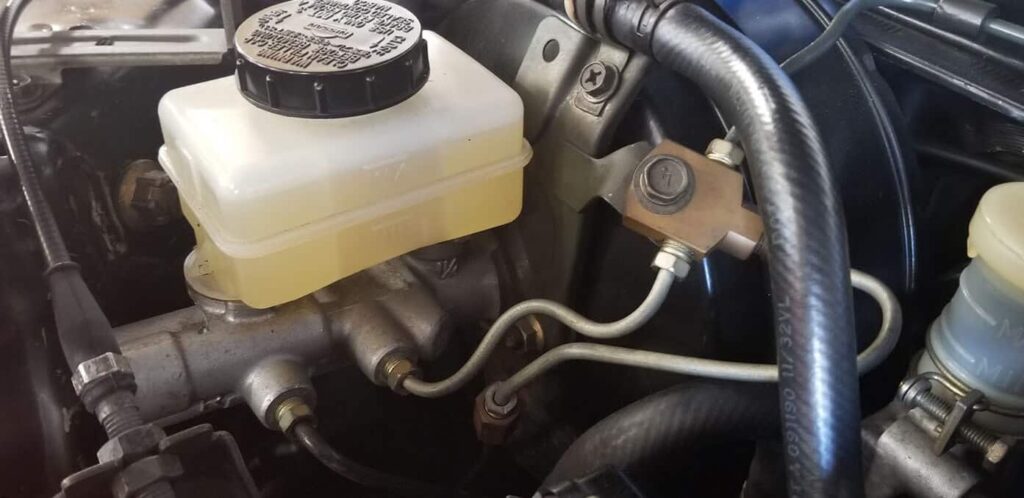
Your car’s brake master cylinder is the heart of the hydraulic braking system, converting the force from your foot on the pedal into pressure that stops the wheels. When it starts to fail—often due to worn seals, corrosion from moisture, or age, it can compromise your safety by reducing braking power or causing unpredictable behavior. Recognizing the signs early can prevent accidents and pricey repairs, like replacing calipers or rotors damaged from neglect. Based on insights from automotive sites and mechanic forums, here are the key indicators that your master cylinder might be on its way out. These apply to most vehicles, but symptoms can vary by model, so consult your manual or a pro if unsure.
1. Spongy or Soft Brake Pedal
One of the earliest and most noticeable signs is a brake pedal that feels spongy or mushy when you press it. Instead of firm resistance, it might compress too easily, like stepping on a sponge. This happens because internal seals in the master cylinder wear out, allowing air to enter the system or fluid to bypass properly. Air bubbles reduce hydraulic pressure, making the brakes less responsive. In some cases, the pedal might even sink slowly to the floor while you’re holding it at a stoplight, a classic red flag for seal failure. To check, pump the pedal a few times with the engine off, if it firms up temporarily but softens again, air or a bad cylinder could be the issue. This symptom often worsens over time, starting subtle and becoming dangerous in emergencies where you need quick stops.
2. Brake Pedal Sinks to the Floor
If the pedal gradually drops all the way to the floor under steady pressure, that’s a strong indicator of master cylinder trouble. This “sinking” occurs when the primary piston seal fails, letting fluid leak internally back into the reservoir instead of building pressure in the lines. You might notice it most when idling at intersections or in traffic, where the pedal creeps down without releasing the brakes. It’s different from a sudden drop, which might point to a major leak elsewhere, but either way, it signals hydraulic integrity is compromised. Drivers often describe it as needing to pump the pedal repeatedly to regain some braking power, but that’s a temporary fix. Ignoring this can lead to total brake failure, especially if combined with low fluid levels. Test it safely in a parking lot: Apply steady pressure and watch for sinking if it happens, pull over and tow the car to a shop.
3. Visible Brake Fluid Leaks
Look under your car or around the firewall (the panel separating the engine from the cabin) for puddles or wet spots of brake fluid, which is usually clear or light amber but can turn dark when contaminated. Leaks often appear near the master cylinder itself, dripping from faulty seals or connections. If the reservoir level drops consistently without obvious external leaks, it might be an internal one, where fluid seeps past pistons and reduces system pressure. Brake fluid is corrosive, so stains on paint or rubber parts are clues too. Check the reservoir weekly: If it’s low, top it off temporarily but diagnose soon, as driving with leaks risks air ingestion and pedal fade. In older cars, rust from moisture can exacerbate this, turning a small seep into a major problem.
4. Contaminated or Discolored Brake Fluid
op the hood and inspect the brake fluid in the reservoir, if it’s dark brown, cloudy, or has particles floating in it, the master cylinder could be failing. Fresh fluid is translucent, but over time, it absorbs moisture through seals, leading to corrosion inside the cylinder. This contamination weakens the fluid’s boiling point and can cause internal pitting, accelerating wear. You might smell a burnt odor if it’s overheated from poor performance. This sign often pairs with a spongy pedal, as dirty fluid doesn’t transmit pressure efficiently. Mechanics recommend flushing fluid every 2-3 years, but if it’s bad prematurely, the cylinder’s seals might be letting in contaminants. Avoid driving far if you spot this; a flush might help temporarily, but replacement is usually needed.
5. Dashboard Warning Lights Illuminate
Modern cars have sensors that monitor brake system pressure and fluid levels, so a failing master cylinder often triggers the brake warning light (usually a red exclamation mark in a circle) or even the ABS light. If the cylinder can’t maintain consistent pressure, the computer detects imbalances and alerts you. In some cases, the check engine light comes on too, as braking issues can tie into overall vehicle diagnostics. Don’t ignore these, scan for codes with an OBD-II tool; common ones like C1288 point to master cylinder pressure faults. This symptom might appear intermittently at first, especially during hard stops, but it escalates. If lights stay on after topping fluid, it’s likely not just low levels but a deeper issue like seal failure.
If multiple signs match up, don’t drive until fixed, tow it to avoid risks. Replacements cost $200-600, including labor, and involve bleeding the system. Regular fluid changes every 30,000 miles help prevent this. Stay vigilant; your brakes are your first line of defense on the road.