
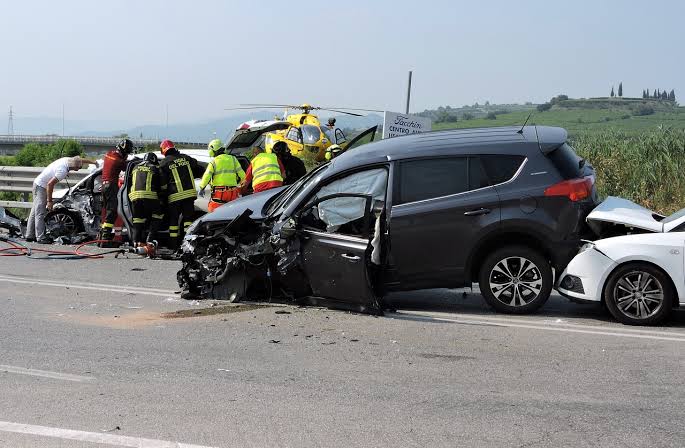
Speeding feels normal on Nigerian city roads. Everyone seems to be in a hurry, danfo drivers race for passengers, okadas weave through gaps, and private cars push to beat the next light. But the numbers tell a different story. Speed is consistently one of the top causes of road crashes in urban areas, according to Federal Road Safety Corps (FRSC) reports and police records from Lagos, Abuja, Port Harcourt, and other major cities. The consequences go far beyond dents and repairs: they include permanent injuries, families losing breadwinners, and lives cut short.
At higher speeds, everything becomes harder to control. Reaction time does not change, but the distance you travel while reacting increases dramatically. At 50 km/h, you need roughly 14 meters to stop in good conditions. At 80 km/h, that distance jumps to about 30 meters. Add potholes, pedestrians stepping out suddenly, or a motorcycle cutting across, and the margin for error disappears. Many crashes happen in residential areas, markets, or near schools where people expect slower speeds. A driver doing 90 km/h in a 50 km/h zone has almost no chance of stopping in time for a child who runs into the road.
The impact force multiplies with speed. In physics, kinetic energy increases with the square of velocity. Doubling speed from 50 km/h to 100 km/h quadruples the energy in a collision. That difference turns survivable crashes into fatal ones. FRSC data shows that a large percentage of fatal accidents on city roads involve speeds above the posted limit, often on expressways within urban boundaries like the Lagos-Badagry or Third Mainland Bridge. Even minor collisions at higher speeds cause severe whiplash, broken bones, and head injuries.
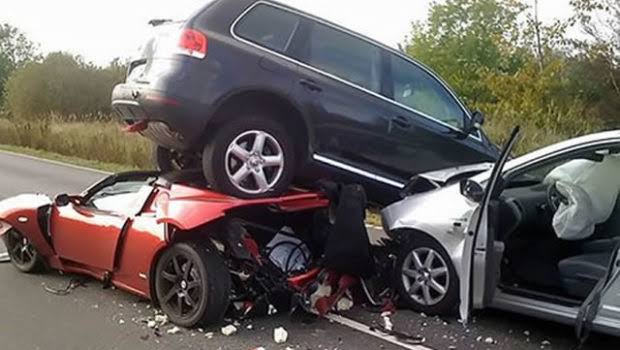
Speeding also reduces the effectiveness of safety features. Seatbelts, airbags, and crumple zones are designed for certain impact speeds. When you hit 100 km/h or more, those margins are exceeded, and injuries become much worse. Unbelted passengers are thrown around inside the vehicle, while belted ones still face greater forces. Motorcyclists and pedestrians suffer the most because they have no protection at all. A speeding car striking a motorcycle or person at 80 km/h is often fatal.
City conditions make speeding particularly dangerous. Traffic is unpredictable: buses stop suddenly for passengers, tricycles pull out without warning, and hawkers cross anywhere. Potholes force sudden swerves, and poor street lighting hides obstacles. In rain, wet roads reduce grip, so braking distance doubles. Speeding through these situations leaves almost no room for error. FRSC crash analyses repeatedly list excessive speed as the leading factor in urban fatalities, especially during peak hours when roads are crowded.
The human cost is heavy. Survivors often face long hospital stays, permanent disability, and loss of income. Families lose parents, children lose guardians. The economic burden includes medical bills, funerals, and lost productivity. Hospitals in Lagos and Abuja treat hundreds of road traffic victims every month, many from high-speed crashes in city limits. Preventing these starts with drivers accepting that speed limits exist for a reason: they match the road’s design, visibility, and expected hazards.
Slowing down is the most effective defense. Drive according to conditions, not what the car can do. In busy areas, markets, school zones, and residential neighborhoods, 40–50 km/h is often the maximum safe speed. On urban expressways, 80–100 km/h may be posted, but rain, heavy traffic, or poor visibility demands lower speeds. Leave earlier so you do not feel pressured to rush. Anticipate sudden stops, keep a safe following distance, and avoid overtaking in congested zones.
Speeding is a choice, not an accident. Every time you ease off the accelerator, you give yourself more time to react, reduce impact force, and protect everyone around you. The roads will always have challenges, but driving slower is one thing you can control every single day.