
Tire pressure might seem like a small detail, but it is one of those things that quietly affects every part of your drive. Picture this: you are on a busy road, hitting a pothole, and suddenly your car pulls to one side because the tires are not inflated right. That scenario plays out too often, leading to accidents, extra fuel costs, or even blowouts. Regular tire pressure checks are a simple habit that pays off big in safety, savings, and performance. Tires are the only part of your car touching the road, so keeping them at the right pressure ensures they grip properly, handle turns, and stop when you need them to.
What exactly is tire pressure? It is the amount of air inside your tires, measured in pounds per square inch (PSI). The right level keeps the tire’s shape, allowing it to roll efficiently and absorb bumps. Too low, and the tire flexes more, building heat that weakens the structure and increases blowout risk. Too high, and the tire becomes rigid, reducing traction on wet or uneven roads. Your car’s manual or the sticker on the driver’s door jamb lists the recommended PSI usually 30–35 for most sedans, higher for trucks. Factors like load, weather, and road type affect it, so checking regularly adjusts for that.
Safety is the biggest reason to stay on top of this. Underinflated tires overheat faster, especially at highway speeds, leading to sudden failures. The Federal Road Safety Corps reports that tire-related issues contribute to a notable share of crashes, often from blowouts that cause loss of control. Proper pressure improves braking distance studies show low tires add up to 20% more stopping space on dry roads, even more on wet ones. It also enhances handling: well-inflated tires respond better to steering, helping you avoid potholes or swerve around obstacles like wandering animals. Overinflation makes the ride bouncy and reduces contact patch, slipping easier on rain-slicked surfaces. Regular checks catch slow leaks early, preventing flats that strand you in unsafe spots.
Beyond safety, it saves money. Tires at the right pressure wear evenly, lasting 20–30% longer. Underinflation causes the edges to wear faster, while overinflation hits the center. That means replacing a set of four tires (₦80,000–₦150,000 average) less often. Fuel efficiency improves too low pressure increases rolling resistance, burning 5–10% more fuel. With petrol prices fluctuating, that adds up quickly on daily commutes. The U.S. Department of Energy estimates proper inflation saves about 1–2 km per liter, translating to real savings here.
Performance gets a boost as well. Correct pressure means smoother rides, less vibration, and better stability at speed. Your suspension works as designed, absorbing bumps without extra strain on shocks or struts. In Nigeria’s mix of smooth expressways and rough side streets, this keeps the car comfortable and reduces fatigue on long drives.
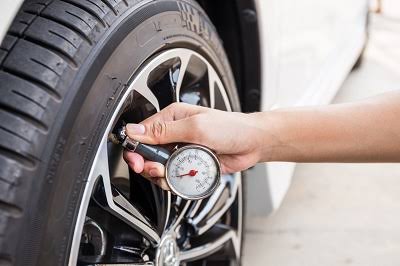
How often should you check? Aim for once a month, or before long trips. Tires lose about 1 PSI per month naturally, more in heat. Check when cold after parking for at least three hours because driving heats them, inflating readings by 4–6 PSI. Use a digital gauge (₦2,000–₦5,000) for accuracy; gas station ones are often off. Attach to the valve stem, read the number, and compare to the recommended. If low, inflate at a station; if high, release air slowly. Do all four tires plus the spare. Remember, pressure changes with temperature cold mornings drop it 1 PSI per 5°C cooler.
Avoid common mistakes like ignoring the spare (it deflates too) or overinflating for “better mileage” that reduces grip. Do not rely on tire pressure monitoring systems (TPMS) alone; they warn when low but are not always precise. Clean valve stems regularly to prevent leaks from dust.
Regular tire pressure checks are easy, free, and take five minutes. They prevent blowouts, save fuel, extend tire life, and make driving safer. Make it a habit your wallet and well-being will thank you.