
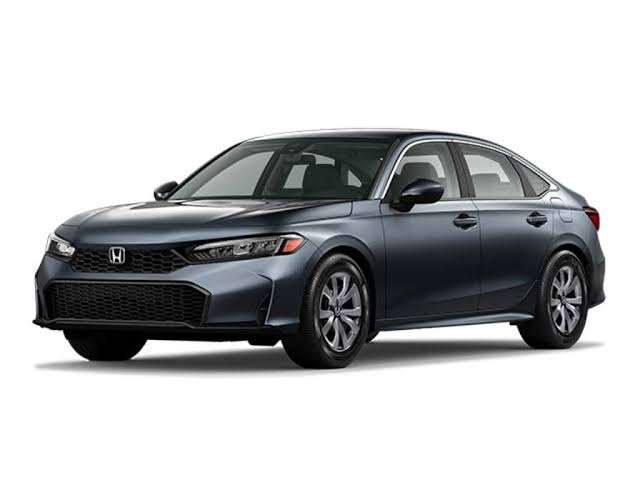
The Honda Civic keeps showing why it has stayed one of the most trusted compact cars for decades. For 2026, Honda made small but thoughtful changes that improve comfort, efficiency, and everyday usability without trying to reinvent the car. In Nigerian conditions—where city traffic is heavy, roads have sudden potholes, and fuel prices can jump unexpectedly—the Civic continues to be a practical choice for commuters, families, and young professionals. It is not the most exciting car to drive, but it is built to last, easy to live with, and cheap to own over time. Here is what you need to know about the 2026 version.The exterior design carries forward the sharp, athletic look from the previous generation. The front grille is a little cleaner, with slimmer LED headlights that give the face a more focused appearance. The hood line flows smoothly, and the side profile keeps the long wheelbase and strong shoulder line that make the Civic look planted and modern. Rear taillights are full-width with updated internal graphics that stand out at night. Ground clearance is around 130–135 mm—enough for most urban potholes and speed bumps but not for very rough rural paths. The overall shape is aerodynamic, which helps keep wind noise low on highways and improves fuel economy.Powertrain choices are focused on efficiency. The base engine is a 2.0-liter four-cylinder producing about 158 horsepower and 138 lb-ft of torque. It pairs with a CVT that shifts smoothly in traffic. Real-world fuel economy in Nigerian mixed driving (heavy city plus some highway) typically lands at 12–15 km/l, which is strong for the class.
The hybrid version, available on most trims, combines a 2.0-liter four-cylinder with electric motors for a total system output of around 200 horsepower. The hybrid returns 18–22 km/l in city conditions and can touch 24 km/l on open roads significant savings when petrol prices rise or stations run dry. The hybrid battery carries an eight-year or 160,000 km warranty, and Honda’s hybrid reliability is excellent.The interior is where the 2026 Civic feels most refined. Materials are a step up more soft-touch surfaces on the dash and door panels, less hard plastic in high-contact areas. The dashboard layout is clean and driver-focused, with physical knobs for climate control that are easy to adjust without looking away from the road. The standard 9-inch touchscreen is sharp and responsive, with wireless Apple CarPlay and Android Auto on most trims. Higher models get a 12.3-inch screen that integrates well with the digital gauges. Front seats are supportive with good cushioning, and rear legroom is generous for adults. Trunk space is around 408 liters—plenty for weekend luggage or market shopping.
Safety is a strong point. Honda Sensing is standard across the range. It includes collision mitigation braking with pedestrian detection, lane keeping assist, adaptive cruise control with low-speed follow, road departure mitigation, and traffic sign recognition. In real Nigerian driving, the adaptive cruise makes stop-go traffic far less tiring, and lane assist helps on highways when fatigue sets in. Blind-spot monitoring and rear cross-traffic alert are standard or optional depending on trim, and they are valuable in crowded cities. The Civic consistently earns top marks in global crash tests, with strong structure and good occupant protection.
Ride quality is tuned for comfort. The suspension soaks up potholes better than most rivals, and road noise is well controlled for the class. Steering is light and precise, making it easy to maneuver in tight urban streets or park in crowded markets. The cabin stays quiet at highway speeds, which is appreciated on longer drives.
Ownership costs are low. Parts are widely available and affordable, mechanics know the Civic inside out, and insurance premiums stay reasonable. Fuel efficiency, especially in the hybrid, keeps running costs down. Resale value holds strong Civics consistently top used-car listings because buyers trust their durability.
The 2026 Civic is not trying to be exciting to drive. It is trying to be the car you can depend on for years without constant worry. In Nigeria, where reliability, low running costs, and practicality often matter more than anything else, it remains one of the most balanced compact cars you can buy. Test drive the hybrid version if possible the efficiency and smooth power delivery will likely convince you.