
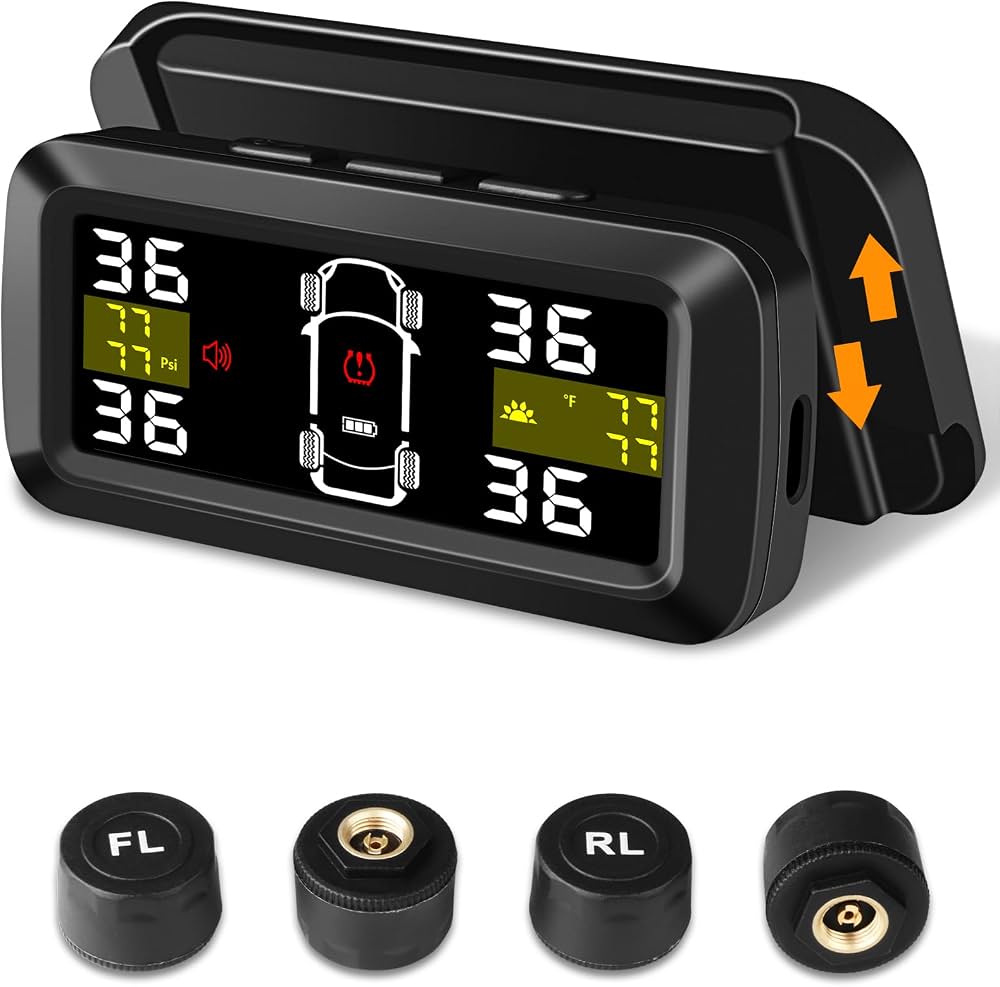
Maintaining correct tyre pressure is one of the simplest ways to improve safety and fuel economy, yet many Nigerian drivers neglect it until problems appear. Tyre Pressure Monitoring Systems (TPMS) provide real-time alerts when pressure drops, helping prevent blowouts, uneven wear, and excessive fuel consumption. For budget-conscious drivers, several reliable options under reasonable prices offer good performance and durability even in our challenging road and climate conditions.
TPMS sensors measure air pressure inside each tyre and send data to a display unit or your phone. There are two main types: direct systems with sensors inside the tyre and indirect systems that use the car’s ABS sensors to detect pressure differences through wheel speed. Direct systems provide more accurate readings but are more expensive to install and maintain. Indirect systems are cheaper but less precise and cannot measure absolute pressure.For Nigerian drivers, direct TPMS systems with external sensors or valve cap designs often prove more practical. These are easier to install on existing wheels and can be transferred between vehicles.
Look for systems with good battery life, strong signal range, and resistance to heat and vibration. In our hot climate, sensors need to withstand high temperatures without losing accuracy or failing prematurely.Several budget-friendly options have gained popularity among mechanics and car owners in Lagos, Abuja, and other cities. Basic valve cap TPMS kits are among the most affordable and easiest to install. These replace the normal valve caps with sensors that display pressure on a small monitor inside the car. While not as advanced as factory systems, they provide useful alerts and work well for most daily drivers.
Mid-range systems that connect to your phone via Bluetooth offer more convenience. Many of these come with apps that show individual tyre pressures, temperature, and historical data. They are particularly useful for drivers who cover long distances or carry heavy loads where maintaining correct pressure is critical for safety and tyre life.When choosing a budget TPMS, focus on build quality rather than the lowest price. Look for sensors with good IP ratings for dust and water resistance, as Harmattan dust and rainy season flooding can damage cheaper units. Strong signal strength is important for reliable readings, especially on larger vehicles or when the monitor is mounted further from the wheels.
Installation is usually straightforward for most systems. Many valve cap sensors can be fitted by any tyre technician in minutes. More advanced systems may require professional installation to ensure proper pairing and calibration. After installation, check the readings regularly during the first few weeks to confirm accuracy and make any necessary adjustments.Proper maintenance extends the life of your TPMS. Clean the sensors when changing tyres and check battery status according to the manufacturer’s recommendations. Most sensors last 3–5 years before battery replacement becomes necessary. In Nigeria’s heat, replacing batteries proactively rather than waiting for failure helps avoid sudden loss of monitoring.
Using a TPMS helps you catch slow leaks, under-inflation from temperature changes, and punctures early. Many drivers report improved fuel economy, longer tyre life, and greater peace of mind after installing these systems. The initial investment usually pays for itself through reduced tyre wear and fewer roadside emergencies.For best results, combine your TPMS with regular visual tyre checks and proper inflation habits. These systems work best as an alert tool rather than a replacement for good maintenance practices. Drivers who check their tyre pressures weekly and respond promptly to TPMS alerts see the greatest benefits.
Budget TPMS options that last well in Nigerian conditions offer practical value for most drivers. By choosing quality sensors, installing them properly, and maintaining them regularly, you can enjoy better safety and lower running costs without spending a fortune on premium factory systems.The right tyre pressure monitoring solution helps protect your investment and keep you safer on our demanding roads.
With several reliable options available at accessible prices, there is little reason to drive without this important safety feature in today’s Nigeria