
Every rainy season in Nigeria turns many urban and suburban roads into temporary rivers. Lagos streets, parts of Port Harcourt, Benin, and even sections of Abuja can fill with water deep enough to stall ordinary cars and cause expensive engine damage. Drivers who regularly face these conditions quickly learn that ground clearance, the height of the air intake, and overall vehicle sealing matter far more than styling or fuel economy when water starts rising.
The vehicles that cope best share a few practical traits. They sit higher off the ground so the underbody, exhaust, and electrical components stay above shallow floodwater for longer. Their air intakes are positioned higher or better protected, reducing the risk of hydrolock. Body-on-frame construction common to many pickups and traditional SUVs tends to keep critical systems farther from the water than unibody crossovers. Four-wheel-drive or all-wheel-drive systems also help maintain traction on submerged or muddy surfaces, though clearance remains the first line of defence.
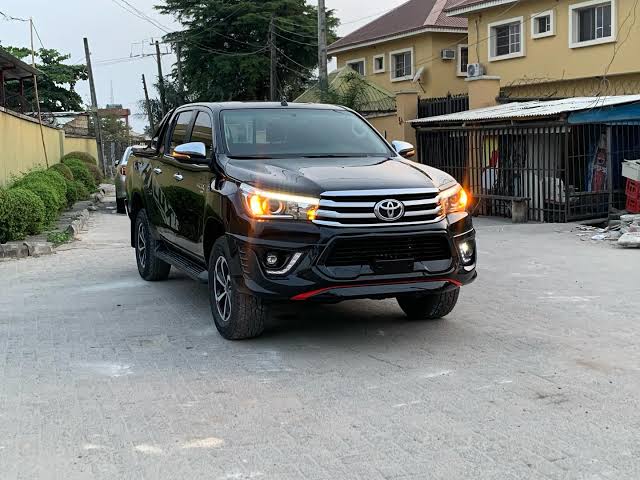
Among the most proven options on Nigerian roads is the Toyota Hilux. This pickup has earned its reputation through years of hard use in both commercial and private hands. High ground clearance, a robust ladder-frame chassis, and relatively elevated mechanical components allow it to pass through water that would stop most saloon cars. Many operators report that a well-maintained Hilux can continue moving when the water reaches levels that force other vehicles to turn back, provided the driver moves slowly and steadily. Spare parts remain widely available, which is important after any water exposure that requires inspection or cleaning.
The Toyota Land Cruiser and its Prado variants rank equally high for flood resilience. These vehicles combine substantial ground clearance with strong sealing and proven durability in tough environments. Older and newer examples alike are frequently chosen by people who live or work in areas known for poor drainage. The Land Cruiser’s height keeps the engine bay and cabin higher above the water line, while the drivetrain is designed to handle demanding conditions. Although fuel consumption and purchase price are higher than compact cars, the ability to keep moving during heavy rains often justifies the cost for owners in flood-prone zones.
Other capable choices include the Toyota 4Runner and similar body-on-frame SUVs. These models offer good clearance and a tough platform that resists the kind of underbody damage common when cars scrape through debris-filled floodwater. The Ford Ranger is another pickup that performs well in wet conditions, with respectable wading ability and the strength expected of a modern light truck. In the used market, older high-riding SUVs such as certain generations of the Honda Pilot, Nissan Pathfinder, or first-generation Highlander can also prove useful if they remain mechanically sound and their air intakes have not been modified downward.
Newer vehicles with official wading ratings, including some Land Rover models and certain modern pickups, advertise specific depths they can safely cross. These figures are helpful as guidelines, yet real Nigerian floodwater often contains debris, uneven surfaces, and unpredictable currents that demand extra caution regardless of the stated rating. No production car is designed to swim, and even the most capable models can suffer damage if water enters the engine through the intake or reaches sensitive electronics.
Driving technique remains as important as the vehicle itself. The safest approach is to avoid flooded sections whenever possible. When crossing is unavoidable, move slowly in a low gear to create a small bow wave and maintain steady momentum without creating a large splash that can push water into the engine bay. Never attempt to cross water that is moving quickly or whose depth cannot be judged. After any significant water exposure, it is wise to have the vehicle checked for moisture in the air filter, fluids, and electrical connectors before continuing normal use.
Low-slung saloons and many modern crossovers sit at a clear disadvantage. Water that reaches the bottom of the doors or the lower grille can quickly find its way into the engine or soak carpets and wiring. Even if the car restarts, hidden corrosion and electrical faults may appear later. Owners of these vehicles often find themselves waiting for water to recede or seeking alternative routes during peak rainy periods.
Choosing a higher, more robust vehicle does not eliminate risk, but it expands the margin of safety on roads that regularly flood. The Toyota Hilux, Land Cruiser family, 4Runner, and similar high-clearance pickups and SUVs have demonstrated the ability to keep their owners moving when lower cars are forced to stop.
Pair any of these with careful driving habits and prompt post-flood inspection, and the combination offers one of the more practical responses to Nigeria’s challenging rainy-season roads.