
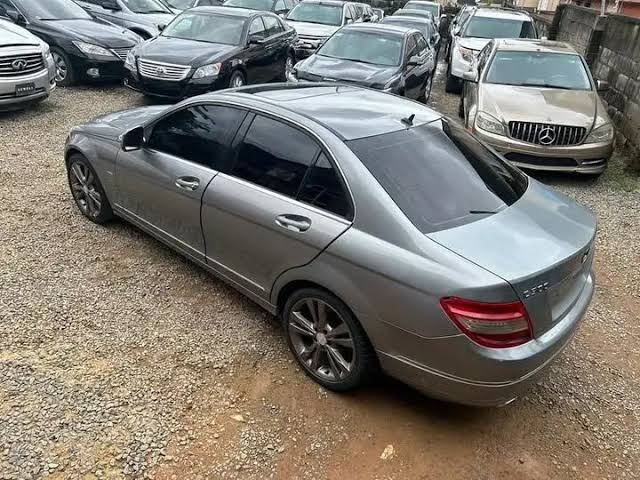
The Mercedes-Benz C-Class W205 generation, produced roughly between 2014 and 2021, remains a popular choice among Nigerian buyers seeking a premium saloon with modern styling and a refined driving experience. Many examples arrive as foreign-used vehicles and continue to attract attention for their comfort and brand prestige. Ownership in local conditions, however, brings a set of recurring issues that prospective buyers and current owners should understand clearly.
One of the most frequently discussed concerns involves the automatic transmission. Earlier W205 models used the 7G-Tronic gearbox, while later ones adopted the 9G-Tronic. Both units deliver smooth performance when properly maintained, yet they are sensitive to fluid condition and driving patterns. In Nigerian stop-start traffic, neglected fluid changes can lead to harsh shifts, hesitation, or delayed engagement. Owners often notice the problem first during cold starts or when moving from rest in traffic. A fluid and filter service combined with software updates resolves many cases, but more advanced valve-body work becomes expensive if the issue is left unattended. Regular transmission maintenance is therefore essential rather than optional.
The four-cylinder turbocharged petrol engines, particularly the 2.0-litre units found in popular C200 and C300 variants, present another area of attention. Some early examples developed issues related to piston or wrist-pin wear that could progress to knocking sounds and, in severe cases, more serious internal damage. Fuel quality in Nigeria adds further pressure. These engines were designed around higher-octane fuel than is consistently available at local pumps, and prolonged use of lower-grade petrol can contribute to pre-ignition, carbon build-up, and increased stress on the turbocharger and related components. Oil consumption between services is also reported by some owners, making regular level checks important. Using quality oil at the correct specification and avoiding extended drain intervals helps reduce risk.
Suspension components wear faster on Nigerian roads than on smoother European surfaces. Control-arm bushes, ball joints, and related links commonly develop play, producing knocks over bumps or during low-speed manoeuvres. Models fitted with air suspension introduce an additional cost centre. Air springs and the compressor can fail with age or after repeated exposure to rough surfaces, causing the car to sit unevenly or the system to disable itself. Conventional coil-spring versions avoid this particular expense but still require periodic attention to bushes and dampers.
Electrical and electronic gremlins appear with some regularity. The COMAND infotainment system on certain years can freeze, reboot, or lose Bluetooth connectivity. Sensor faults, including those related to the engine management or exhaust systems, may trigger warning lights. Battery drain issues have also been noted, sometimes linked to modules that fail to sleep properly. Diagnosis usually requires a capable Mercedes-compatible scanner, and repair costs vary depending on whether a simple software update or a module replacement is needed.
Cooling-system components such as the water pump and thermostat are known wear items. A failing water pump can lead to coolant loss and elevated temperatures if not addressed promptly. In the heat of Nigerian traffic, any cooling weakness becomes more noticeable and potentially more damaging. Air-conditioning performance is generally strong, yet blend-door actuators and related parts can develop faults that affect temperature control on one side of the cabin.Body and interior items tend to hold up reasonably well, although panoramic sunroof mechanisms on equipped cars can become noisy or slow with age, and some interior trim pieces may show wear or minor cracking.
Rust has been reported on certain underbody areas and subframes in markets with harsh winters, but it is less of a dominant issue in dry Nigerian conditions provided the car has not spent years in corrosive environments before importation.The overarching theme for Nigerian owners is that the W205 rewards attentive maintenance and punishes neglect more quickly than simpler Japanese alternatives. Parts are available through specialist channels and some main dealers, yet they carry premium pricing. Labour at independent Mercedes specialists is usually more affordable than official workshops, provided the technician has proper diagnostic equipment and experience with these models.
A careful pre-purchase inspection remains the best defence. A full diagnostic scan, a thorough road test that includes cold and warm transmission behaviour, an underbody check for suspension wear, and verification of service history can reveal most developing problems. Cars with documented fluid changes, especially for the gearbox and engine, generally prove more predictable.The W205 C-Class can still deliver the comfort and presence that attract buyers to the three-pointed star.
Understanding the common transmission sensitivities, engine care requirements, suspension wear patterns, and electronic quirks allows owners to budget realistically and address issues before they escalate. With disciplined servicing and realistic expectations about running costs, many examples continue to provide satisfying ownership. Without that attention, the same cars can become expensive companions on Nigerian roads.