
Transmission fluid is the lifeblood of both automatic and manual gearboxes. It lubricates moving parts, transfers power, cools the unit, and in automatics it enables smooth gear changes. On Nigerian roads the fluid faces unusually harsh conditions that shorten its useful life. Heat from prolonged traffic, frequent stop-and-go shifting, dust that enters through seals, and the occasional hard impact from potholes all accelerate breakdown. Following the longer “normal” intervals printed in many overseas owner’s manuals often proves optimistic under local use.
Most manufacturers publish two schedules: one for normal driving and a shorter one for severe service. Daily driving in Lagos, Abuja, Port Harcourt or any major Nigerian city almost always qualifies as severe service. Long periods of idling with the air-conditioning running raise fluid temperature. Stop-and-go traffic multiplies the number of shifts the transmission must perform. High ambient temperatures prevent the fluid from cooling effectively between loads. Dust and occasional water crossings can introduce contaminants. Under these conditions the fluid oxidises faster, loses its friction properties, and accumulates metallic particles from normal wear.
For conventional automatic transmissions a practical interval under Nigerian conditions is typically between 40,000 and 60,000 kilometres, or roughly every two to three years, whichever comes first. Some drivers who spend most of their time in heavy traffic or who use the vehicle for commercial purposes prefer to stay closer to the 40,000-kilometre mark. Continuously variable transmissions, or CVTs, are even more sensitive to fluid condition and heat. Many specialists recommend changes in the 30,000 to 50,000-kilometre range for CVT-equipped cars operating in local traffic.Manual gearboxes are generally more tolerant, yet they still benefit from regular fluid changes.
An interval of 60,000 to 80,000 kilometres is realistic for most passenger cars on Nigerian roads. Vehicles that carry heavy loads or see frequent rough-road use may need attention sooner. The fluid in a manual transmission does not experience the same heat cycling as an automatic, but it still becomes contaminated with wear particles and moisture over time.Claims of “lifetime” transmission fluid should be treated with caution. Lifetime in this context usually assumes ideal operating conditions and a vehicle life measured in years rather than the extended high-mileage service common in Nigeria. Many independent transmission specialists have observed that fluid left unchanged beyond 80,000 or 100,000 kilometres under severe conditions becomes dark, loses its proper smell, and contributes to harsh shifts, slipping, or eventual internal damage.
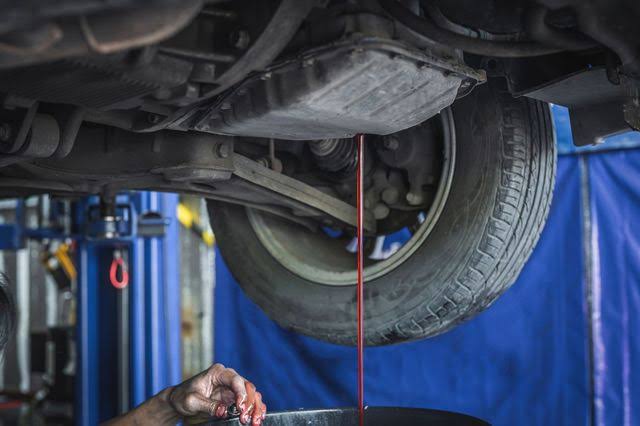
The method of changing the fluid matters as much as the interval. A simple drain-and-fill removes only part of the total fluid volume because a significant amount remains in the torque converter and cooler lines. Performing two or three drain-and-fill services spaced a few thousand kilometres apart gradually refreshes most of the fluid and is considered safer for higher-mileage transmissions that may contain accumulated debris. A full machine flush can exchange nearly all the fluid in one visit, but on neglected or high-mileage units it sometimes dislodges particles that then clog valves or passages. For most Tokunbo and Nigerian-used cars the conservative drain-and-fill approach is preferred.
Always use the exact fluid specification required by the manufacturer. Automatic transmissions are particularly sensitive to the friction characteristics of the fluid. Using a generic or incorrect ATF can cause shifting problems even when the fluid is new. Checking the dipstick, where fitted, for colour and smell between changes provides useful early warning. Fresh fluid is typically red or light amber and has a slightly sweet odour. Dark brown or black fluid with a burnt smell indicates it is overdue for replacement.Ignoring transmission fluid condition is one of the more expensive maintenance mistakes an owner can make.
A complete transmission overhaul or replacement costs many times more than regular fluid services. On Nigerian roads, where heat and traffic are constants rather than exceptions, treating the shorter severe-service interval as the normal schedule is the more reliable way to keep the gearbox shifting smoothly for the long term. Regular changes with the correct fluid remain one of the simplest and most effective forms of protection available to any driver.