
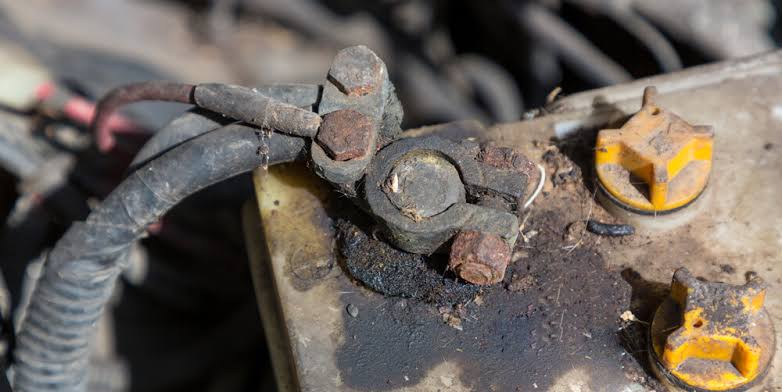
White or bluish-green crust forming on the battery terminals is one of the most common under-bonnet sights on Nigerian cars. The powdery build-up increases electrical resistance, making the starter work harder, dimming lights, and eventually preventing the car from starting. While cleaning removes the immediate problem, lasting results require understanding why the corrosion appears and stopping the process at its source.Corrosion begins when sulfuric acid vapour escapes from the battery and reacts with the metal terminals in the presence of air and moisture. Even sealed “maintenance-free” batteries release small amounts of gas through microscopic imperfections around the posts.
Heat accelerates the process. In high ambient temperatures the battery expands and contracts, stressing the seals and allowing more vapour to escape. Overcharging makes the problem worse. When the alternator’s voltage regulator fails or is set too high, the battery boils internally, producing excess hydrogen gas that exits around the terminals and rapidly forms the familiar crust. Corrosion concentrated on the positive terminal often points to overcharging, while heavier build-up on the negative side can indicate chronic undercharging or a poor earth connection.
Leaking electrolyte is another direct cause. A cracked battery case, damaged post seals, or overfilling of a serviceable battery allows liquid acid to reach the terminals. Loose cable clamps also contribute. Movement and poor contact generate heat and create gaps where moisture collects, speeding up oxidation. Dust and humidity common on Nigerian roads simply provide additional conductive material that helps the reaction continue.
Cleaning restores the connection but does not by itself prevent recurrence. The process is straightforward. First disconnect the negative cable, then the positive, to avoid accidental short circuits. Mix a solution of baking soda and water and apply it to the corroded areas. The alkaline mixture neutralises the acid and loosens the crust. A dedicated battery terminal brush or a wire brush cleans the posts and the inside of the cable clamps until bright metal is visible. Rinse carefully with clean water, avoiding the spread of residue onto painted surfaces, and dry everything thoroughly.
Once the metal is clean and dry, protection becomes the permanent part of the fix. Thin felt washers impregnated with anti-corrosion compound can be placed over the posts before the clamps are refitted. A layer of dielectric grease, petroleum jelly, or a purpose-made battery terminal protectant spray is then applied to the posts and clamps. These coatings form a barrier that keeps moisture and air away from the metal, dramatically slowing the return of corrosion. After reconnection positive cable first, then negative the clamps must be tightened firmly. A loose connection will generate heat and defeat the protective layer.
Addressing the root causes turns a temporary clean-up into a longer-term solution. Have the charging system tested to confirm the alternator is not overcharging. Replace any battery that shows cracks, swelling, or persistent leakage. Ensure the battery is securely held down so vibration does not stress the terminals or cables. Keeping the top of the battery clean and dry also helps, because dirt mixed with moisture can create a conductive path between the posts.
In hot climates the protective grease or spray should be checked every few months and reapplied as needed. Terminal covers, where fitted, provide an extra physical barrier against dust and accidental contact. If corrosion repeatedly returns despite these measures, the cables themselves may have been damaged internally. Green corrosion that has travelled up inside the copper strands increases resistance permanently and usually requires cable replacement.
Battery terminal corrosion is rarely a mysterious fault. It is the visible result of acid vapour, heat, moisture, and sometimes a charging-system problem. Cleaning removes the symptom. Applying a proper protective barrier and correcting any overcharging or leakage removes the cause. With these steps most vehicles remain free of significant corrosion for long periods, delivering reliable starting and protecting the rest of the electrical system from unnecessary strain.