
I have looked into this topic quite a bit, checking out guides from reliable sources like Toyota service tips, RAC Drive in the UK, and even some mechanic forums on Reddit, plus hands-on advice from auto sites like Car and Driver and Chapel Hill Tire. What I found is that while the basics have not changed much, with more modern cars on the road in 2025, things like hybrid batteries and advanced electronics mean you have to be extra careful. Jump-starting a dead battery is something every driver should know, especially if you are stuck in traffic or far from help. A dead battery often comes from leaving lights on, extreme heat or cold, or just an old battery giving up. Done right, jump-starting gets you going without damage. Done wrong, you risk sparks, fires, or frying your car’s computer. Let us walk through it clearly, with safety first.
Before you start, gather what you need. You will want a set of jumper cables at least 10 to 20 feet long, with thick gauges for better current flow, say 4 to 6 gauge. Thinner ones can overheat. Also, safety glasses and gloves to protect from acid or sparks. A portable jump starter pack is even better these days, many under 20,000 naira, and they avoid needing another car. Check your owner’s manual too, some cars like hybrids have specific rules. For example, Toyota warns against jump-starting certain models without following exact steps to avoid damaging the hybrid system.
The process works by using a good battery to charge the dead one enough to start the engine. Always do this on a flat, dry surface away from traffic. If the battery is leaking, swollen, or frozen, do not try, call a tow. Okay, here is how to do it safely with another car.
First, position the vehicles. Park the good car close to the dead one, noses facing if possible, but not touching. Turn off both engines, set parking brakes, and shift to neutral or park. Pop both hoods and locate the batteries. In some cars, the battery is in the trunk or under a seat, check your manual. Remove any plastic covers over the terminals.
Second, identify the terminals. The positive is usually red with a plus sign, negative black with a minus. Clean any corrosion with a wire brush or baking soda mix if needed, but wear gloves, battery acid burns.
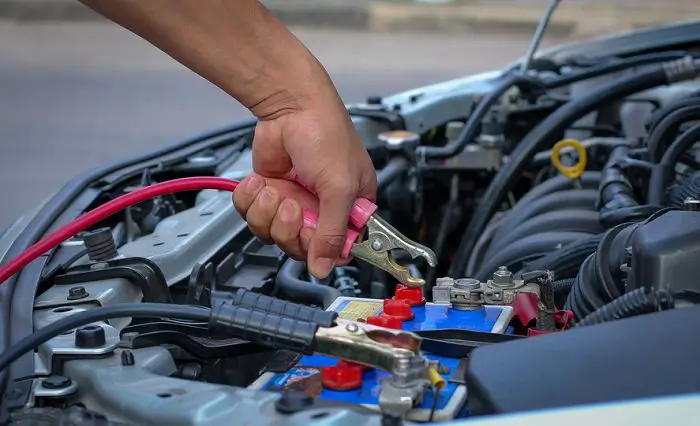
Third, connect the cables in this order to avoid sparks near the dead battery. Attach one red clamp to the positive terminal of the dead battery. Then, clamp the other red to the positive of the good battery. Next, black clamp to the negative of the good battery. Finally, the last black clamp to an unpainted metal part on the dead car’s engine block or frame, away from the battery and fuel lines. This grounds it safely and prevents explosions if hydrogen gas is around the battery.
Fourth, start the good car and let it idle for 5 to 10 minutes at about 2000 RPM to charge. Some sources say 2 to 5 minutes is enough for newer cars, but in hot weather like we have, give it longer if the battery is really drained.
Fifth, try starting the dead car. If it does not turn over, wait another few minutes. Once it starts, let both run for at least 5 minutes to build charge.
Sixth, disconnect in reverse order. Remove the black clamp from the metal ground on the dead car first. Then, black from the good battery. Red from the good battery next, and last, red from the dead battery. Do this carefully, no touching clamps.Seventh, drive the jumped car for 20 to 30 minutes to recharge fully. Avoid turning it off right away, or it might die again. Get the battery tested at a shop soon, it might need replacing if old.
For jump packs, it is simpler. Connect red to positive, black to negative or ground, turn on the pack, and start the car. Follow the pack’s instructions, many have safety features like reverse polarity protection.
Safety is key, and I dug into why things go wrong. Sparks can ignite battery gases, so no smoking or open flames. Connect and disconnect with engines off to prevent surges that damage electronics. In 2025, with more cars having sensitive computers, use surge-protected cables if possible. For electric or hybrid vehicles, many manuals say do not jump-start the 12-volt battery the usual way, use the designated points or call service to avoid high-voltage risks.
Common mistakes include wrong cable order, leading to short circuits or blown fuses. Connecting both negatives to batteries can cause explosions if the dead one off-gasses. Using damaged cables with exposed wires is risky. If the good car is running when connecting, it might spike voltage. After jumping, if your alternator light stays on or the car runs rough, get it checked, you might have damaged something.
When to call a professional: If the battery is over five years old, or the car clicks but does not start, it could be the starter or alternator, not just the battery. For diesels, they need more amps, so ensure cables are heavy-duty. In rainy weather, dry terminals first to avoid shorts.
From what I learned, prevention beats jumping. Test your battery every six months, especially before long trips. Keep terminals clean, and replace batteries every three to five years in our heat. A trickle charger at home helps if you park for weeks.
Jump-starting safely gets you out of a bind, but treat it as a temp fix. I have seen too many folks damage their cars rushing it. Take your time, follow the steps, and you will be fine. Drive safe out there.