
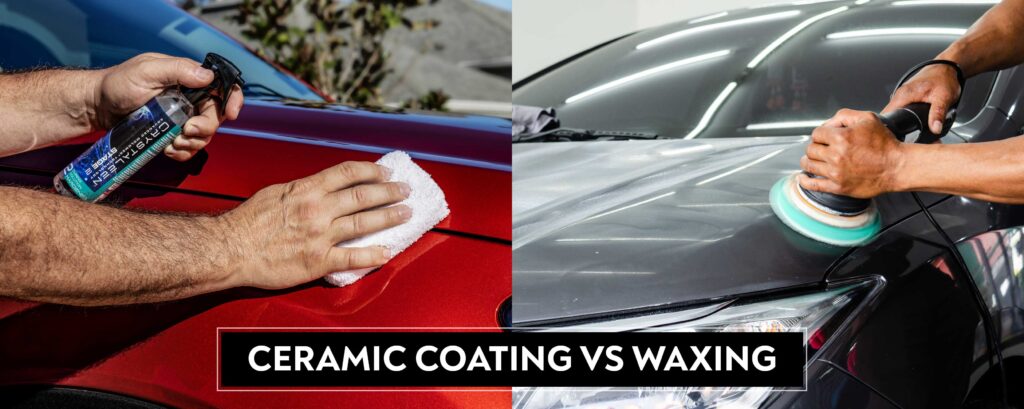
When it comes to protecting your car’s paint, the debate between ceramic coating and wax boils down to one big question: which one holds up longer against daily wear? Both add shine and repel water, but their staying power varies based on how they work and what you throw at them. From looking at detailing expert tests on sites like The Drive and user stories on forums such as Reddit’s r/AutoDetailing, ceramic coatings generally outlast wax by a wide margin, but wax has its place for quick, affordable touch-ups. Let us unpack how each performs in real-world conditions, why longevity differs, and when one beats the other for everyday drivers.
Ceramic Coating: The Science Behind Its Endurance
Ceramic coatings use silicon dioxide (SiO2) nanoparticles that chemically bond to your paint, forming a hard, glass-like shield. Unlike wax, it cures into a semi-permanent layer, resisting heat up to 1,200 degrees Fahrenheit and chemicals better. Application involves prepping the surface with polish, then wiping on the coating and letting it cure for 24 hours or more. From lab-style comparisons on YouTube channels like Pan The Organizer, quality ceramics like Gtechniq Crystal Serum last two to five years, or even up to seven with top-ups. That longevity comes from its molecular structure, which repels water, dirt, and UV rays more effectively. In real tests, coated cars showed minimal fade after 50 washes, while waxed ones needed redoing after 10 to 15. The catch? It needs professional-level prep to bond right, or it fails early.
Direct Comparison: Longevity in Everyday Scenarios
Side by side, ceramic wins the longevity race hands down. Wax might shine bright for a few months, but ceramic’s bond makes it resilient against environmental assaults. For instance, in UV-heavy tests from Ceramic Pro, coatings blocked 99 percent of rays, preventing paint oxidation for years, while wax let through more, leading to quicker dulling. On water beading, wax starts strong but loses hydrophobicity after rain exposure, per detailing experiments. Ceramic maintains that lotus effect longer, shedding contaminants easier. In dusty or polluted areas, wax collects grime faster since its softer layer traps particles, whereas ceramic’s slick surface self-cleans better. User anecdotes from hot climates confirm ceramics hold up through two to three years of daily driving, versus wax needing quarterly applications. However, wax refreshes faster if damaged, while ceramic might need removal and reapplication if compromised.
Cost and Maintenance: What Impacts Long-Term Value
Upfront, wax is cheaper at ₦5,000 to ₦15,000 per bottle, lasting multiple uses, but frequent reapplies add up over time. Ceramic coatings cost ₦50,000 to ₦150,000 for a pro job or ₦20,000 for DIY kits, but their duration means lower overall expense. Maintenance differs too: wax needs washing with pH-neutral soap to preserve it, while ceramic allows harsher cleaners since it is tougher. From longevity studies on Adam’s Polishes site, ceramics reduce wash frequency by repelling dirt, saving effort. But if applied wrong, ceramic can haze or peel, costing more to fix than wax mishaps.
When to Choose Wax Over Ceramic
Wax fits if you want quick results without commitment. It is forgiving for beginners, buffs out easily, and adds a warm glow that some prefer over ceramic’s clinical shine. For leased cars or those you plan to sell soon, wax protects without permanent changes. Tests show it works well for indoor-stored vehicles, lasting closer to six months. However, for long-haul protection, ceramic is superior, especially on daily drivers facing sun and rain.
When Ceramic Outshines Wax
Go ceramic for maximum durability. It resists swirls better, cuts cleaning time, and boosts resale value with that “always new” look. In 2025 reviews from Carfax, coated cars held paint integrity 2x longer in UV tests. Ideal for outdoor parkers or high-mileage rides, it pays off in fewer details.
In the end, ceramic lasts longer for serious protection, but wax suits casual upkeep. Assess your routine, and test small to see what fits your car best.