
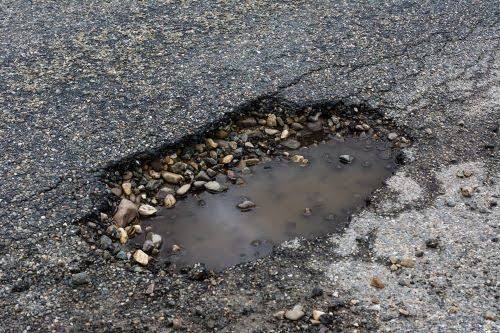
Potholes are part of the landscape on Nigerian roads. They lurk on highways like Lagos-Ibadan, sneak up in city streets during rainy season, and turn rural paths into obstacle courses. Hitting one wrong can bend rims, burst tires, or knock out your alignment, leading to expensive fixes or even accidents. The key to dealing with them is not just dodging them but knowing how to drive in a way that minimizes damage when you cannot. Potholes form from heavy rain eroding weak asphalt, overloaded trucks cracking the surface, and poor maintenance letting small cracks grow. On busy routes, they appear overnight after storms, so staying alert is essential. Let us look at practical ways to handle them, from spotting them early to what to do if you hit one hard.
Spot Potholes Before They Spot You
The best defense is seeing them coming. Scan the road 10–15 seconds ahead, not just the car in front. Look for dark patches on the asphalt—they often mean water-filled holes or fresh breaks. In rain, puddles hide deep ones, so assume every standing water is a trap and slow down. At night, headlights cast shadows that reveal dips; use high beams when safe, but dip for oncoming traffic. On familiar roads, remember where repeat offenders are—many highways have “famous” potholes that drivers know by name. Apps like Waze or Google Maps let users mark hazards, so check them before trips. In cities like Abuja or Port Harcourt, construction zones breed new ones—watch for uneven patches where work stopped halfway.
Drive Smart to Avoid or Minimize Impact
Speed is the enemy. The faster you hit a pothole, the more force transfers to your suspension, wheels, and frame. Slow down in areas known for bad roads aim for 40–60 km/h on highways with issues, even if the limit is higher. Weave only if the lane is clear; sudden swerves cause sideswipes with okadas or buses. If you spot one late, brake gently before impact hard braking shifts weight forward, making the hit worse. Straddle small ones if safe, letting the tire edges take the blow instead of the center. For unavoidable big ones, release the brake just before contact so the suspension absorbs it better. Keep tires inflated to spec (check monthly) underinflated ones flex more and damage rims easier. On wet roads, potholes fill with water, so reduce speed further to avoid hydroplaning into one.
What to Do If You Hit a Pothole
Even careful drivers get caught sometimes. If you feel a jolt, pull over safely as soon as possible. Check for flat tires, bent rims, or leaking fluids. Listen for new noises like thumping (bent wheel) or scraping (damaged mudguard). Test steering does it pull to one side? That means alignment is off. Inspect the undercarriage with a flashlight for bent exhaust or suspension parts. If the car drives funny, do not push it call a tow or drive slowly to a mechanic. Document the spot with photos and GPS for possible claims against road authorities, though success varies. Hitting potholes often leads to immediate issues like flats or long-term ones like worn shocks replace damaged parts promptly.
Prevent Damage with Regular Maintenance
Your car takes the beating, so keep it tough. Rotate tires every 10,000 km for even wear uneven tread makes impacts worse. Upgrade to all-season tires with good sidewall strength if you drive highways often. Check alignment and balance yearly; misaligned wheels amplify pothole stress. Stronger shocks or struts (replace every 50,000 km) absorb blows better. Avoid overloading extra weight crushes tires into holes harder. In rainy season, clean under the car to prevent rust from splashed mud weakening parts.
Report Potholes to Make Roads Better
One person cannot fix the roads, but reporting helps. Use FRSC apps or hotlines (122) to flag bad spots. Community groups on WhatsApp or Facebook often alert local governments. If enough people complain, repairs happen faster.Potholes are a fact of Nigerian driving, but handling them well keeps you safe and your car intact. Slow down, stay alert, maintain your vehicle, and report issues. These habits turn frustrating drives into manageable ones. Safe travels.