
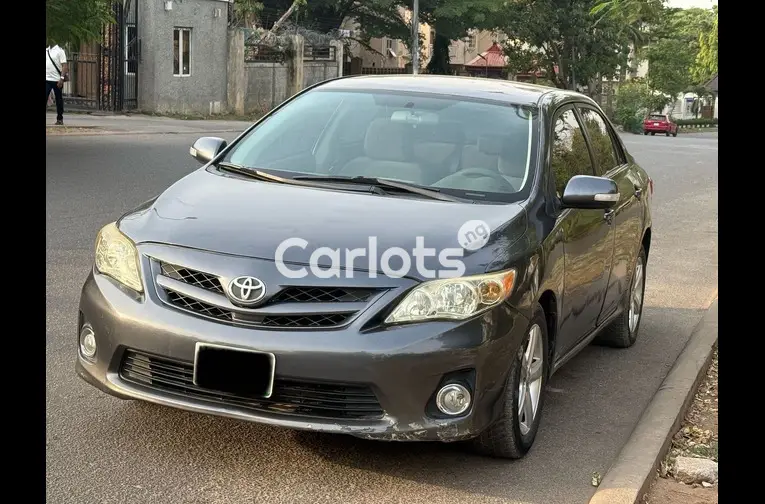
When comparing a Nigerian-Used Toyota Camry 2010 and a Tokunbo Toyota Corolla 2012, many buyers focus only on the sticker price and assume the cheaper local option is the smarter buy. In practice, the true cost of ownership tells a more complex story. After years of observing real-world data from mechanics, fleet operators, and private owners, the Tokunbo Corolla often proves more economical in the long run despite a higher initial price.Purchase prices in 2026 typically show the Nigerian-Used Camry 2010 selling between ₦2.8 million and ₦3.6 million, while a clean Tokunbo Corolla 2012 ranges from ₦4.2 million to ₦5.1 million. The Camry appears to offer better value on paper a bigger car for less money. However, this initial saving is frequently erased by higher maintenance expenses within the first two to three years of ownership.
Nigerian-Used Camrys have usually spent their entire lives on local roads, enduring potholes, heavy traffic, adulterated fuel, and inconsistent maintenance. This results in accelerated wear on suspension components, engine mounts, steering systems, and the exhaust. Mechanics in Ladipo and Berger commonly report that these cars need frequent suspension work, gearbox attention, and electrical repairs. Average annual maintenance costs for a 2010 Nigerian-Used Camry often fall between ₦450,000 and ₦750,000 after the first year, especially if the previous owner was not diligent with servicing.
The Tokunbo Corolla 2012, by contrast, typically arrives with better overall condition because it spent most of its early life on smoother roads with stricter maintenance schedules. Even with higher mileage, the engine, transmission, and major components often show less stress. Owners and mechanics consistently note lower repair frequency, with annual maintenance costs usually ranging from ₦280,000 to ₦450,000. The Corolla’s simpler and lighter design also contributes to better fuel economy often 13–16 km/l in city conditions compared to the heavier Camry’s 10–13 km/l.
Parts availability is similar for both models since they are Toyotas, but the frequency of repairs makes a big difference. The Camry’s larger size and more complex systems mean that when something fails, the replacement cost is usually higher. Common issues like AC compressor failure, power steering leaks, and transmission problems appear earlier and more often in the Nigerian-Used Camry.Resale value further widens the gap. A well-maintained Tokunbo Corolla 2012 holds its value better and sells faster because buyers trust its history. Nigerian-Used Camrys often sit longer on the market and command lower prices when sold, as buyers factor in the higher risk of hidden problems.
Fuel costs also favour the Corolla. Over 30,000 kilometres per year, the difference in fuel consumption can save the owner ₦150,000 to ₦300,000 annually. When combined with lower maintenance, the Tokunbo Corolla frequently becomes cheaper to own after 18 to 24 months, even though it cost more upfront.That said, the Nigerian-Used Camry can still make sense in certain situations. If the car has a verified full service history from a meticulous owner, was used mainly for private purposes rather than as a taxi, and passes a thorough inspection, the lower purchase price can be justified for buyers planning short-term ownership of 2–3 years. Some buyers also prefer the Camry’s larger size and more comfortable ride for family use.The key to making the right choice lies in proper evaluation. Never rely on the seller’s claims alone.
Hire an experienced independent mechanic for a comprehensive inspection that includes checking the engine compression, transmission behaviour, suspension condition, and electrical systems. Compare the total cost of ownership over three to five years rather than focusing only on the buying price.For most average Nigerian drivers who want lower long-term stress and costs, the Tokunbo Corolla 2012 usually represents better value. The Nigerian-Used Camry 2010 can work well for those who are mechanically knowledgeable, can maintain the car diligently, and accept higher repair frequency in exchange for more interior space at a lower entry price.
In the end, the real cost of a car in Nigeria is not what you pay to buy it, but what you continue to pay while owning it. Taking time to understand these differences helps you make a decision that aligns with both your budget and your peace of mind on our demanding roads