
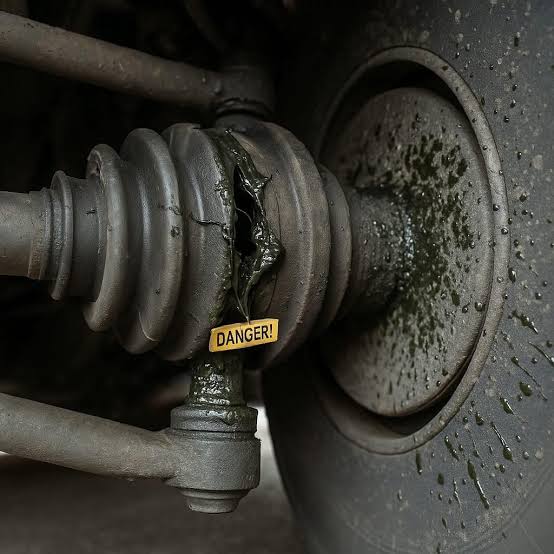
Nigerian roads, with their deep potholes, sharp edges, and sudden drops, are particularly harsh on the drivetrain components that connect the engine to the wheels. Among the most vulnerable parts are the Constant Velocity (CV) joints and drive shafts. These components endure constant stress, and many car owners only notice problems after expensive damage has already occurred. Understanding how potholes destroy them and what you can do to slow down the wear helps you avoid sudden breakdowns and high repair bills.CV joints are flexible couplings that allow the drive shaft to transmit power to the wheels while accommodating up and down movement from suspension travel and steering angles. They are protected by rubber boots filled with grease. Drive shafts are the metal tubes that connect the transmission or differential to these joints. On Nigerian roads, potholes create repeated heavy impacts that the suspension cannot fully absorb. Each time a wheel drops into a deep hole or hits a sharp edge at speed, tremendous force travels through the CV joint and shaft.The rubber boots are usually the first to fail. Constant flexing over potholes causes cracks and tears. Once the boot is damaged, grease leaks out and dirt, water, and sand get inside. This contamination turns the grease into an abrasive paste that grinds away the precision bearings inside the joint. Over time, the joint develops play, makes clicking or knocking sounds during turns, and eventually fails completely. A torn boot can destroy a CV joint within a few months of regular driving on bad roads.
Drive shafts themselves suffer from the same repeated shocks. Potholes cause vibrations and bending forces that fatigue the shaft and its support bearings. In front-wheel-drive cars, which are common in Nigeria, the shorter shafts on the driver’s side often wear faster because they experience more angular stress. Many mechanics report seeing CV joint and shaft failures much earlier on cars driven primarily in cities with terrible roads compared to those used mainly on smoother expressways.
Common symptoms include a clicking or popping sound when turning, especially at low speeds, vibration during acceleration, and a clunking noise when shifting from reverse to drive. In advanced stages, the car may pull to one side or lose power delivery. Ignoring these signs usually leads to complete joint failure, which can leave you stranded or cause further damage to the transmission or wheel hub.
Nigerian conditions accelerate this damage in several ways. Overloading is very common, especially with commercial vehicles and family cars used for weekend trips. Bad wheel alignment, which often results from pothole impacts, puts uneven stress on the joints. Low tyre pressure and worn shock absorbers also transfer more road shock directly to the drivetrain.
Prevention and MaintenanceThe best protection starts with careful driving habits. Slow down significantly when approaching potholes or rough patches. Avoid hitting them at speed whenever possible. Maintaining correct tyre pressure and ensuring good shock absorbers and suspension bushes reduces the force reaching the CV joints.
Regular inspection is essential. During every service, ask your mechanic to check the CV boots for cracks or grease leaks. Replacing a torn boot early (usually ₦25,000–₦45,000 per side) is far cheaper than replacing the entire joint later (often ₦120,000–₦250,000 per side, including labour). Using high-quality grease during boot replacement also extends joint life.For cars that frequently travel on very bad roads, some mechanics recommend slightly heavier-duty CV joints or reinforced drive shafts when replacements are needed.
Choosing original or good-quality aftermarket parts pays off because cheap copies fail much faster under our road conditions.If you live in areas with particularly terrible roads, consider vehicles with higher ground clearance or stronger drivetrain components when buying your next car. Many experienced drivers also avoid overloading and distribute weight evenly to reduce stress on the suspension and drivetrain.
CV joint and drive shaft problems are expensive and disruptive, but they are not inevitable. By driving more carefully around road hazards, maintaining proper tyre pressure and suspension, and catching boot damage early, you can significantly extend the life of these components. Many Nigerian car owners who follow these practices report going 80,000 to 120,000 kilometres or more without major CV joint issues, even on challenging local roads.
Taking care of your drivetrain is one of the smartest ways to reduce long-term ownership costs. A few careful habits and timely maintenance can keep your car moving reliably and save you from sudden, expensive repairs caused by our demanding roads.