
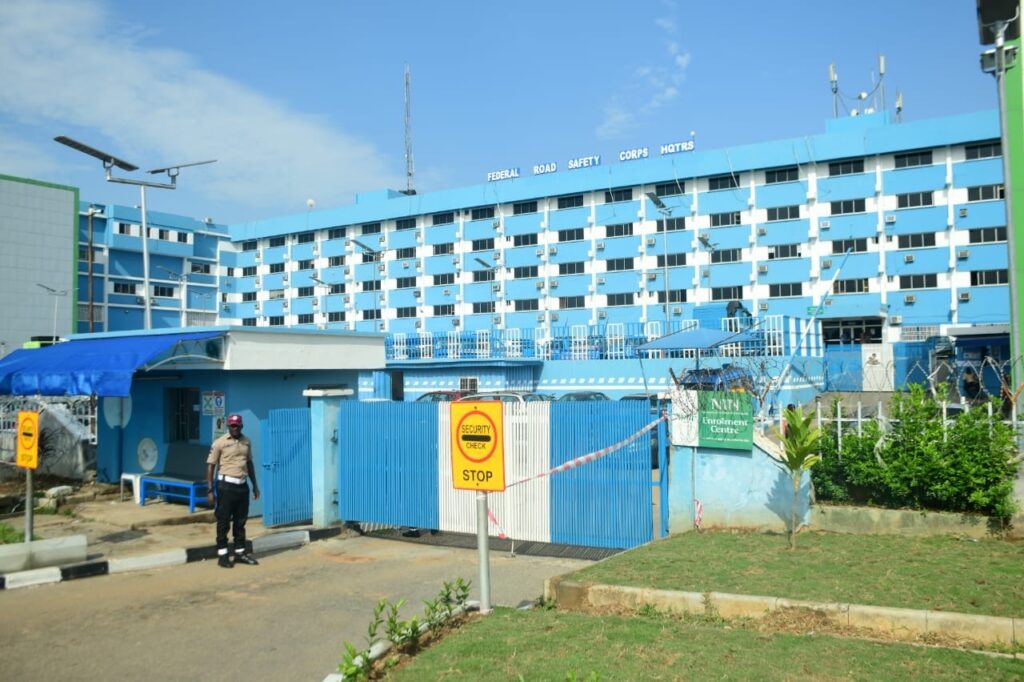
When the world gathered at the United Nations Headquarters in New York to confront one of the most persistent but often underestimated global development challenges, road traffic deaths and injuries, Nigeria was not merely represented. It was strategically positioned to contribute to the conversation.
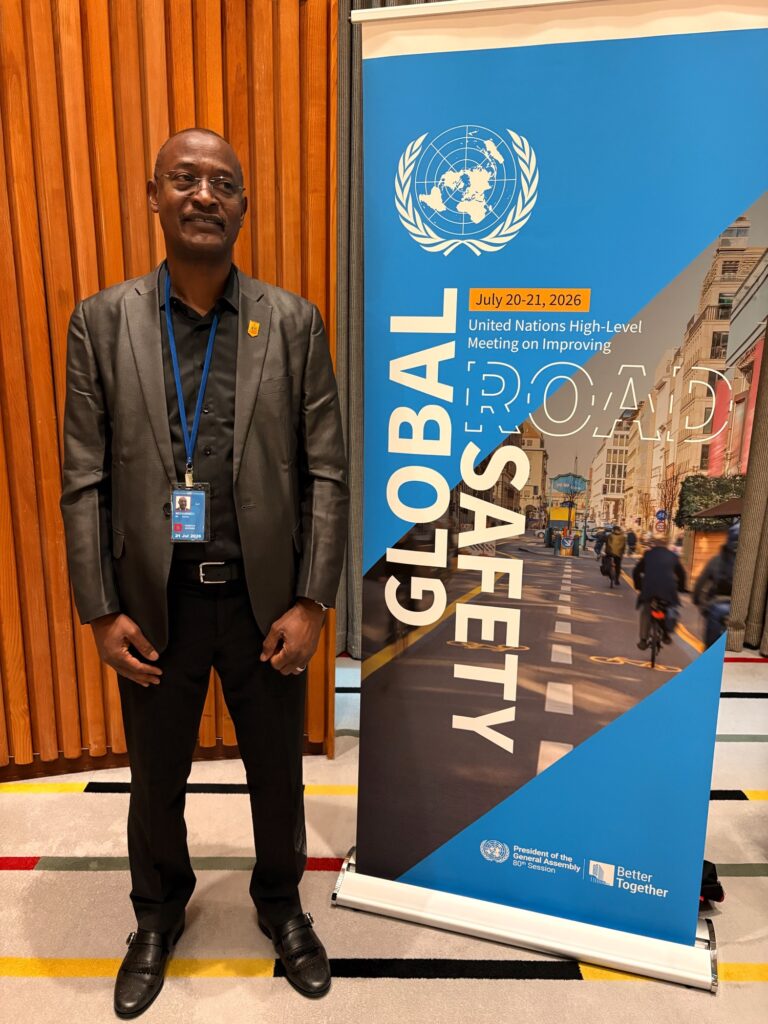
At the centre of Nigeria’s participation was the Corps Marshal of FRSC, Shehu Mohammed, who led Nigeria’s delegation to the United Nations High-Level Meeting on Improving Global Road Safety and presented Nigeria’s national statement on behalf of President Bola Ahmed Tinubu.
The significance of the assignment extends beyond the personality of the Corps Marshal or the institution he leads. It represents a growing recognition that road safety is no longer simply a matter of traffic enforcement. It is a global public health, economic, governance, infrastructure, mobility and sustainable development issue.
The UN High-Level Meeting, held on 20–21 July 2026, focused on “Scaling up and accelerating implementation of commitments to halving road traffic deaths and injuries by 2030.” The meeting brought together heads of government, ministers, policymakers, international organisations, civil society, the private sector and road safety experts to assess progress and accelerate action under the UN Decade of Action for Road Safety 2021–2030.
United Nations
From road enforcement to global policy leadership
The participation of the FRSC Corps Marshal at such a high-level international forum is a reflection of the changing strategic identity of the Corps.
Created to address Nigeria’s road safety challenges, the FRSC has progressively evolved into an institution whose work intersects with global road safety governance. Its responsibilities now extend across enforcement, driver licensing, public education, emergency response, data, technology, road infrastructure safety and inter-agency collaboration.
At the UN meeting, the Corps Marshal presented Nigeria’s road safety experience as part of the global search for practical solutions to a crisis that claims nearly 1.2 million lives annually and disproportionately affects low and middle-income countries. Road crashes remain a leading cause of death among children and young people aged 5–29.
The presentation therefore placed Nigeria’s road safety realities within a broader international framework, demonstrating that the challenges confronting Nigerian motorists and road users are part of a global road safety crisis requiring shared knowledge, financing, innovation and political commitment.
The strategic meaning of the Corps Marshal’s assignment
The decision by President Bola Ahmed Tinubu to direct the FRSC Corps Marshal to lead Nigeria’s delegation to the UN High-Level Meeting is a significant political statement about the importance of road safety to national development. It also signals confidence in the FRSC as Nigeria’s leading road safety institution and in its ability to articulate the country’s road safety priorities before the international community.
At a time when road crashes continue to impose enormous human and economic costs on nations, the role of the FRSC is becoming increasingly strategic. Every crash prevented protects not only a life but also a family, a workforce, an investment and a component of national productivity.
This is why road safety must be viewed beyond the traditional image of traffic officers on highways. The modern road safety institution is simultaneously an enforcement agency, a public education platform, an emergency response partner, a data institution, a policy contributor and an international development stakeholder.
The FRSC’s presence at the UN meeting reflects this broader reality.
A national institution with continental relevance
One of the most important messages from Nigeria’s presentation was that the country is increasingly positioning itself as a contributor to, rather than merely a beneficiary of, global road safety knowledge.
The Corps Marshal highlighted institutional reforms, technology-driven enforcement, improved emergency response and public enlightenment initiatives as elements of Nigeria’s efforts to strengthen its road safety system.
He also drew attention to the Nigeria Road Assessment Programme (NigeriaRAP), developed in collaboration with the International Road Assessment Programme (iRAP), as an example of applying the Safe System Approach to improve the safety of road infrastructure.
This is significant because the Safe System philosophy recognises that human beings make mistakes, but those mistakes should not inevitably result in death or serious injury. The approach therefore demands that roads, vehicles, speeds, enforcement systems and emergency services work together to protect human life.
The FRSC’s role in this evolving framework is particularly strategic. It provides the operational link between policy and the road user. It sees the consequences of unsafe roads, unsafe vehicles and unsafe behaviour in real time. It also possesses a national operational footprint capable of translating international commitments into practical interventions on Nigerian roads.
The African dimension
Nigeria’s role extends beyond its national borders.
The country’s hosting of the Secretariat of the African Association of Road Safety Lead Agencies (AARSLA) provides an important platform for African road safety agencies to share experiences, strengthen institutional capacity and develop common responses to challenges that often transcend national boundaries.
Across Africa, road safety agencies face common problems: inadequate financing, weak enforcement capacity, unsafe infrastructure, poor emergency response, limited data and rapid changes in transportation technology.
By hosting a continental platform for collaboration, Nigeria is positioned to contribute to the development of African solutions to African road safety challenges.
This is an important dimension of the FRSC’s strategic role in the global space. The Corps is not only implementing road safety policies within Nigeria; it is also participating in the exchange of knowledge and institutional practices that can strengthen road safety administration across the continent.
Technology and the future of mobility
Another important aspect of the Corps Marshal’s presentation was the recognition that the future of road safety will be inseparable from technology. The rapid growth of intelligent transport systems, automated enforcement, electric vehicles, compressed natural gas vehicles, connected vehicles and other emerging technologies is fundamentally changing the transportation environment. Nigeria’s efforts to align its transportation future with sustainability objectives through initiatives involving Compressed Natural Gas (CNG) and electric vehicles require a corresponding focus on safety standards, regulation and enforcement.
The strategic role of the FRSC, therefore, is expanding. The Corps must not only enforce existing traffic rules; it must anticipate emerging risks and help shape regulatory frameworks for new forms of mobility.
This is why the Corps Marshal’s call for greater international cooperation in intelligent enforcement technologies, road infrastructure safety assessment, institutional capacity development and technology transfer is significant. The future of road safety will increasingly depend on how effectively nations share knowledge and access innovations that can save lives.
A call for international cooperation
Perhaps one of the strongest messages from Nigeria’s participation in New York is that no country can achieve the global road safety target in isolation. The objective of reducing road traffic deaths and injuries by at least 50 per cent by 2030 is ambitious. It requires political commitment, adequate funding, strong institutions, evidence-based policies, safer infrastructure, responsible road users and effective emergency care. The UN meeting itself acknowledged the need for stronger multisectoral coordination and whole-of-government and whole-of-society action, including sustainable financing and enhanced capacity.
For Nigeria, this means that road safety must continue to be treated as a shared responsibility involving federal and state governments, transport agencies, road owners, vehicle manufacturers, professional associations, the media, civil society, development partners and the motoring public. The FRSC remains a critical coordinating force within this ecosystem, but the Corps cannot and should not carry the entire burden alone.
From global commitments to local action
The real test of international meetings is not the quality of speeches delivered or declarations adopted. It is the extent to which global commitments are translated into measurable improvements in the daily lives of citizens.
For Nigeria, the global target of halving road deaths and injuries by 2030 must ultimately be measured on Nigerian roads: in fewer crashes, fewer deaths, fewer serious injuries, safer vehicles, better designed roads, more responsible drivers and faster emergency response.
The Corps Marshal’s presentation in New York has therefore provided an opportunity to showcase Nigeria’s progress, articulate its needs and strengthen international partnerships. But it also creates an important responsibility to sustain the momentum and convert international commitments into stronger national action.
The strategic role of the FRSC in the global space is consequently clear. The Corps is both a national institution and an increasingly important participant in the international road safety architecture.
As the world enters the critical second half of the Decade of Action for Road Safety, Nigeria’s voice is now part of the global conversation on how to save lives on the roads and at the centre of that conversation, the FRSC is demonstrating that road safety leadership is no longer confined to the highways of Nigeria. It is increasingly being shaped in the corridors of global policy and Nigeria is taking its seat at the table.
With numerous initiatives being put in place by the FRSC to change the present narratives on road safety management in Nigeria, what the agency requires is political will, enhanced capacity for the work force, stronger legislative framework and traffic laws and co-ordinated approach cutting across all strata of the society to ensure that the commitments made in New York are felt on every Nigerian road.
Osondu Ohaeri, a Fellow of the Nigerian Institute of Public Relations is a Deputy Corps Commander and Corps Public Education Officer at the FRSC National Headquarters Abuja
By Ohaeri Osondu