
The Lagos Chamber of Commerce and Industry (LCCI) has warned that policy inconsistency, inadequate infrastructure, and high costs are stalling Nigeria’s clean mobility transition despite the Federal Government’s aggressive push for Compressed Natural Gas (CNG) and Electric Vehicles (EVs).
The warning comes as adoption of CNG remains far below expectations nearly two years after fuel subsidy removal. Private sector leaders say usage is still largely confined to Lagos and Abuja, with little penetration in other major cities.
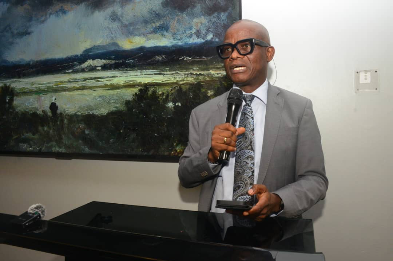
LCCI Director-General, Chinyere Almona, said the rollout has suffered from poor planning and weak public sensitization.
“On the CNG issue, it’s not catching up as quickly as we expected. There has to be sufficient sensitisation, and that hasn’t been done enough from the government level. In most places you can’t find refuelling stations,” she said.
LCCI Vice President, Akinbo Akin-Olugbade, identified gas supply as the most critical barrier. He noted that even large industrial operators like the Dangote Refinery, which has acquired thousands of CNG trucks, face supply shortages despite investing in CNG production.
“One of the additional points is that supply is one of the most critical aspects. Even if I go to the refinery with 4,000 trucks, there’s not enough CNG there,” he said.
Pi-CNG Chairman, Ismaeel Ahmed, defended the government’s progress, stating that refuelling stations have grown from fewer than 10 to about 75 nationwide, with 115 more in development, while conversion centres have increased to about 350.
He said President Bola Tinubu sees CNG and EV mobility as a long-term alternative to petrol, aimed at reducing transport costs and energy dependence.
However, LCCI President, Leye Kupoluyi, urged government to make conversion affordable.
“Many people want to do it. But because of converting a present petrol-driven car, we need to make it attractive to Nigerians,” he said.
The Chamber called for policy consistency, investment in gas distribution, nationwide refuelling corridors, and mass education to unlock cheaper, cleaner transport.