
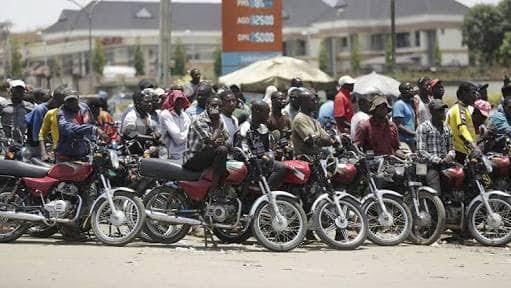
Commercial motorcycle operations, popularly known as okada, face restrictions in several parts of Nigeria in 2026. These bans and limitations exist mainly for security, road safety, and traffic management reasons. Rules differ by state and even by local government area, so riders and passengers need to stay informed about the specific zones where commercial motorcycles are prohibited or tightly regulated.
Lagos State continues to enforce one of the strictest and most consistent bans. Commercial okada operations remain prohibited in ten Local Government Areas and fifteen Local Council Development Areas. The affected Local Governments are Kosofe, Oshodi-Isolo, Somolu, Mushin, Apapa, Ikeja, Lagos Island, Lagos Mainland, Surulere, and Eti-Osa. The corresponding LCDAs include areas such as Ojodu, Onigbongbo, Yaba, Coker Aguda, Itire-Ikate, Iru Victoria Island, Ikoyi-Obalende, Ikosi-Isheri, Agboyi-Ketu, Isolo, Ejigbo, Bariga, and others within those councils. State authorities have repeatedly confirmed that the ban is still fully in force. Impounded motorcycles may be crushed under the Lagos State Transport Reform Law. Enforcement by the Task Force remains active, and both riders and passengers can face serious consequences if caught operating in the restricted zones.
In the Federal Capital Territory (Abuja), commercial motorcycles and keke Napep remain banned from the city centre. The FCT Administration has restated this position for security reasons. While a complete territory-wide ban is considered difficult to enforce, designated central areas continue to prohibit these commercial operations. Riders should avoid the core city districts where enforcement is regular.
Abia State introduced restrictions in 2026 covering the metropolitan areas of Umuahia, Aba, and Ohafia. Commercial motorcycle operations are banned within these designated urban zones. The government has set a fine of ₦20,000 for defaulters and requires registration and documentation of motorcycles. Private motorcycles are generally allowed but may not carry passengers under the rules. Enforcement is handled by a state task force in collaboration with security agencies.On federal infrastructure, the Federal Ministry of Works has banned commercial motorcycles and tricycles from operating on the Lagos-Calabar Coastal Highway and related bridges in Lagos. This measure aims to protect the new highway infrastructure from misuse and premature wear. Signage has been installed and task force officials are deployed to enforce the restriction.Other states apply more localized or temporary measures.
In parts of Kogi State, for example, commercial motorcycle operations have been restricted in certain hinterland corridors of Kabba/Bunu Local Government Area for security reasons linked to banditry concerns. Some states in the South-East have long-standing preferences for tricycles over commercial motorcycles in major urban centres, though specific enforcement intensity varies.It is important to note that okada regulations are primarily state and local matters rather than a single nationwide law. FRSC focuses more on general road safety rules for all riders, such as helmet use, lighting, and licensing, while state governments and the FCT Administration set the operational bans and restricted zones.
Rules can change, and enforcement intensity often increases during security crackdowns or special operations.For commercial riders, the practical advice is clear. Know the exact boundaries of restricted areas in your state. Register your motorcycle where required. Avoid carrying passengers in zones where private motorcycles are permitted only for personal use. Dispatch and delivery riders should also confirm whether their permits allow them to operate on specific routes, as some states treat passenger-carrying differently from pure delivery work.
Passengers share responsibility. Boarding an okada in a banned zone can expose both the rider and the passenger to penalties. Choosing legal alternatives such as registered tricycles, buses, or ride-hailing cars in restricted areas reduces risk.Because these rules are updated periodically and enforcement can be localized, the safest approach is to check official state transport ministry announcements, local government notices, or recent statements from task force and security agencies before operating or boarding a commercial motorcycle. What is allowed in one local government may be strictly prohibited in the neighbouring one.
Okada bans reflect ongoing efforts to balance livelihood concerns with public safety and security. Riders who stay within permitted areas and follow registration and safety rules face fewer problems, while those who ignore restricted zones risk fines, impoundment, or worse. Staying informed about the current list of banned zones in your state remains the best way to operate legally and safely on Nigerian roads in