
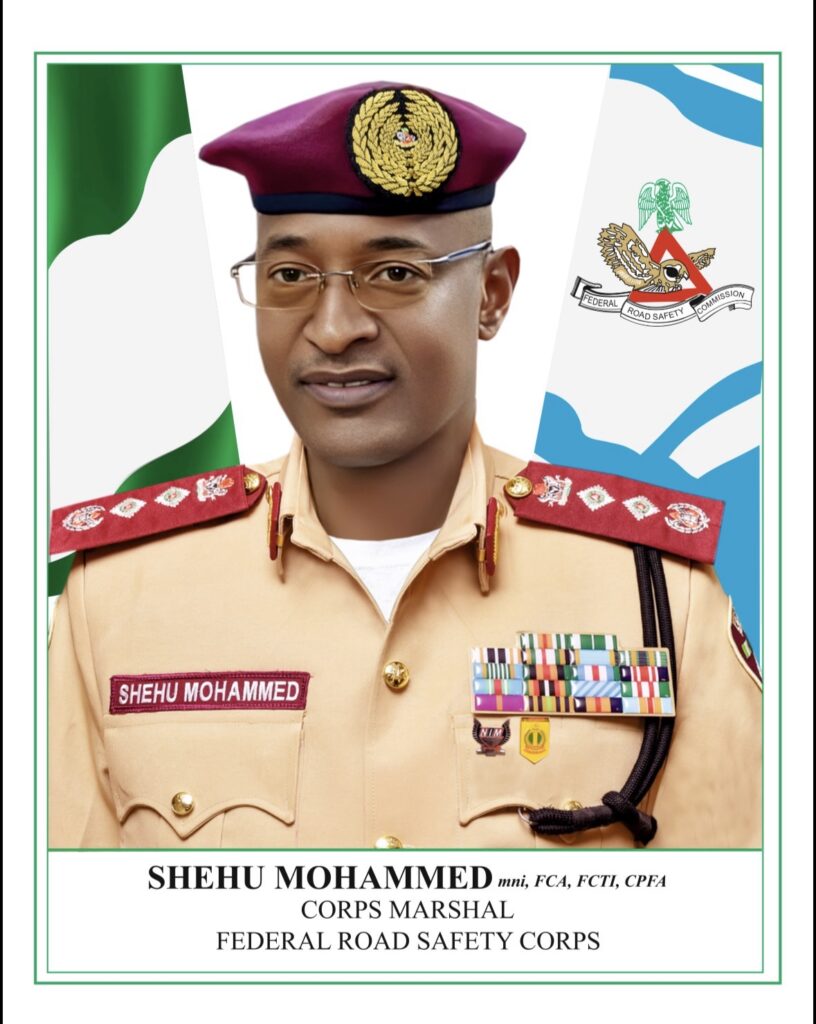
The recent training programme organised by the Federal Road Safety Corps in collaboration with Rashtriya Raksha University Gujarat in India on stress management and emotional well-being for personnel of the Corps and other security agencies has no doubt, not only underscored Corps’ stand-out role as the nation’s lead agency on road safety management but also a stronger indication of FRSC strategic investment in the human capacity required to strengthen road safety management in addition to highlighting the critical connection between the welfare of frontline personnel, effective road, emergency response and national security.
The 10-day capacity building programme which witnessed the training of 1,000 personnel of the Corps and other participants drawn from the Nigeria Police, Nigeria Customs Service, Nigeria Correctional Service, Nigeria Immigration Service, Nigeria Security and Civil Defense Corps and the Federal Fire Service in Abuja and the FRSC Academy in Enugu State, comes at a time when personnel operating on Nigeria’s highways are increasingly exposed to demanding operational conditions, including prolonged traffic management duties, road traffic crashes, emergency response, difficult motorists, congestion, adverse weather conditions and other high-pressure situations.
For an organisation whose personnel are routinely required to make quick decisions in potentially dangerous environments, effective management of occupational stress is not only a welfare issue but also a critical component of operational effectiveness, public safety and national security.
Stress management as a road safety and emergency response imperative
Road safety management and emergency response depends heavily on the competence, alertness, emotional stability and professionalism of personnel deployed to the nation’s roads. A stressed or psychologically overwhelmed officer may be more vulnerable to fatigue, poor judgement, communication difficulties and reduced effectiveness.
The training therefore represents an important shift towards recognising that the wellbeing of road safety personnel and other participants is directly connected to the quality of services they provide to the public.
For FRSC personnel and other participants, particularly those involved in patrol operations, traffic control, crash rescue, crime management, emergency response, enforcement and public education, stress management skills can contribute to improved concentration and better decision-making during critical operations.
The benefits extend beyond the individual officer. When personnel are better equipped to manage pressure, they are more likely to maintain professional relationships with motorists, communicate effectively and respond appropriately to emergencies.
Strengthening inter-agency road safety collaboration
The participation of personnel from other security agencies also gives the programme an important inter-agency dimension. Nigeria’s road safety environment involves several institutions with complementary responsibilities. FRSC works alongside the Nigeria Police Force, Nigeria Security and Civil Defence Corps, Federal Fire Service, State Traffic Management Agencies, emergency management institutions and other relevant stakeholders in managing traffic, responding to crashes, securing accident scenes and maintaining order on the nation’s highways. Training personnel from different agencies together can promote a common understanding of stress, occupational pressure and effective coping mechanisms.
It can also strengthen inter-agency coordination, particularly during major road crashes, festive-season operations, traffic emergencies, disasters and other situations requiring multiple agencies to work together.
From personnel welfare to operational readiness
One of the significant impacts of the programme is its potential to re-define personnel welfare as an integral part of operational readiness. Road safety officers are often the first responders at crash scenes. They may encounter fatalities, severe injuries, distressed victims and grieving families. Repeated exposure to such incidents can impose significant psychological and emotional demands on responders.
A structured approach to stress management can help personnel identify early warning signs of excessive stress and adopt appropriate coping strategies before such challenges begin to affect their professional performance.
For the participants, this could translate into improved personnel alertness and concentration; better decision-making under pressure; improved communication with motorists and other members of the public in the line of duty; reduced occupational fatigue and burnout; stronger teamwork during emergency operations; improved morale and personnel productivity;
enhanced professionalism in enforcement activities; and greater resilience among first responders.
Potential impact on motorists and road users
The ultimate beneficiary of the training should be the Nigerian road user. A road safety officer who is physically and psychologically prepared for the demands of the job is better positioned to discharge responsibilities professionally. This can improve the quality of interaction between enforcement personnel and motorists and contribute to greater public confidence in road safety institutions.
The programme also reinforces an important principle: road safety is not achieved by enforcement alone. It requires competent, healthy, motivated and resilient personnel working within an effective institutional framework.
Relevance to national security
The programme’s participation by personnel from other security agencies further demonstrates the intersection between road safety and national security.
Nigeria’s highways constitute critical economic and social corridors. They facilitate the movement of people, agricultural produce, goods, emergency services and security personnel across the country. Any disruption caused by serious crashes, traffic gridlock, emergencies or security incidents can have consequences beyond transportation.
Consequently, personnel responsible for maintaining safety and security on these corridors must be equipped to function effectively under pressure. Stress management training can therefore contribute to a broader national objective of developing a resilient security architecture capable of responding effectively to emergencies while maintaining professionalism and public confidence.
A model for continuous capacity development
The collaboration with an international academic institution also highlights the importance of exposing Nigerian road safety and security personnel to contemporary knowledge, research and professional practices. However, the long-term impact of such training will depend on how effectively the knowledge acquired is integrated into everyday operations.
The Federal Road Safety Corps could strengthen the gains by incorporating stress management and psychological resilience into regular personnel development programmes, leadership training, supervisory practices and emergency response preparedness.
Periodic refresher programmes, peer-support mechanisms, confidential counselling structures and appropriate workload-management strategies could further institutionalise the lessons from the training.
FRSC’s collaboration with the Indian University to train its personnel and members of other security agencies in stress management is more than a conventional capacity building exercise. It is an investment in the human infrastructure of road safety and national security.
As Nigeria continues to confront the complex challenges of road traffic crashes, congestion, emergency response and highway security, the effectiveness of the institutions responsible for managing these challenges will depend not only on equipment and technology but also on the resilience and wellbeing of their personnel.
By placing stress management within the broader framework of professional development, the training has the potential to produce personnel who are more resilient, more responsive and better prepared to protect lives and maintain safety on Nigeria’s roads.
Ultimately, safer roads require not only safer motorists and safer vehicles, but also well-trained, mentally resilient and professionally equipped personnel to manage the road environment, the nation’s borders and protect the nation’s critical infrastructures among others.
Osondu Ohaeri, a Fellow of the Nigerian Institute of Public Relations is a Deputy Corps Commander and Corps Public Education at the FRSC National Headquarters Abuja
By Ohaeri Osondu