
A sharp jolt from a deep pothole is a familiar experience on many Nigerian roads. Sometimes the car simply continues as before. Other times a new clunk, rattle or knock appears, especially when the suspension compresses over the next bump. That noise is the car’s way of signalling that something has shifted, loosened or broken. Knowing what to examine first can prevent a small problem from becoming a safety issue or a more expensive repair.
Begin with a careful visual inspection of the tyres and wheels. A hard impact can bend a rim, break a tyre bead or create a sidewall bulge that is easy to miss at a glance. Walk around the car and look for uneven gaps between the tyre and the wheel arch, or any visible deformity in the wheel itself. A damaged wheel or tyre can produce noises that mimic suspension problems and should be ruled out immediately.
Next, listen closely to the character of the noise. A single heavy clunk when the suspension compresses or rebounds often points to play in a ball joint, control-arm bushing or strut mount. A lighter, more metallic rattle that occurs over a series of small irregularities frequently comes from a worn or broken sway-bar link. Noting whether the sound is louder at the front or rear, and whether it changes when turning or braking, helps narrow the search.
Sway-bar links, also called stabiliser links, are among the most common casualties of pothole strikes. These relatively slender components connect the anti-roll bar to the suspension and absorb a lot of the sudden vertical movement. When the rubber boots tear or the ball sockets wear, the link develops free play and produces a distinctive clunk or rattle over bumps. They are usually straightforward to inspect by looking for torn boots or by prying gently to detect movement.Control-arm bushings and ball joints deserve equal attention. The control arm positions the wheel and manages its movement. A sharp impact can tear the rubber bushing that isolates the arm from the chassis or knock a ball joint out of tolerance.
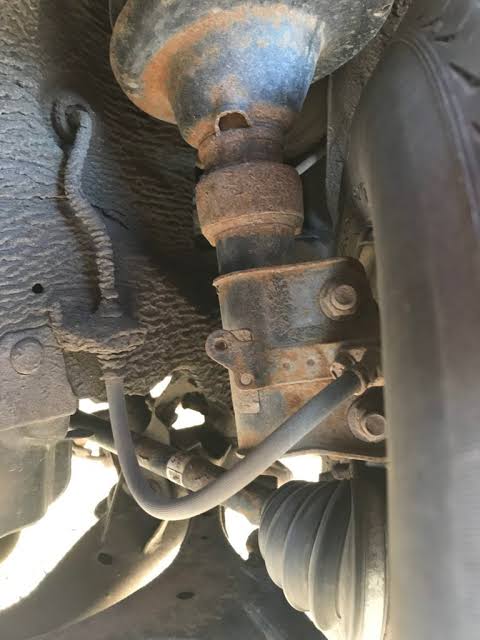
Once the bushing fails, metal can contact metal and create a solid clunk. Ball joints that have developed play often announce themselves with a similar noise, sometimes accompanied by a vague or wandering feeling in the steering.Struts and shock absorbers can also suffer. The sudden compression may damage internal valves or cause fluid to leak past the seals. A leaking strut is often visible as oily residue on the body of the unit. Even without a visible leak, a strut that no longer controls rebound will allow the suspension to bounce excessively and may produce a knocking sound as the internal components bottom out. Pushing down firmly on each corner of the car and watching how it settles can give a rough indication of damping performance.
Strut mounts and bearings at the top of the assembly are another frequent source of noise after impacts. These parts allow the strut to pivot and isolate road shock from the body. When the rubber degrades or the bearing is damaged, a clunk or creak appears, particularly during low-speed turns or when the suspension moves over uneven surfaces.While checking these items, also look at the outer and inner tie-rod ends. Although they belong to the steering system, they sit in the same area and can be affected by the same impact.
Excessive play here often produces a clunk and can change the car’s alignment, leading to uneven tyre wear if left unaddressed.A practical sequence helps keep the process efficient. First confirm the tyres and wheels are intact. Then, with the car safely supported, inspect the sway-bar links for torn boots or obvious looseness. Move on to the control-arm bushings and ball joints, looking for cracked rubber or detectable play. Check the struts for leaks and the upper mounts for deterioration.
Finally, examine the steering linkages. Any component that shows clear damage or excessive movement should be replaced rather than ignored.Driving briefly with the radio off and the windows open over a familiar stretch of rough road can help confirm which corner is producing the noise. Avoid high speeds or heavy loads until the source is identified. A loose ball joint or severely worn control-arm bushing can compromise control, especially during emergency manoeuvres.
Pothole damage rarely improves on its own. What begins as an occasional clunk often grows louder and more frequent as the affected part continues to move beyond its intended range. Addressing the problem early protects the remaining suspension components, preserves tyre life, and restores the car’s intended handling and comfort. A methodical check of the most vulnerable parts after a hard impact remains the most effective way to turn an unsettling new noise into a clear and manageable repair.