
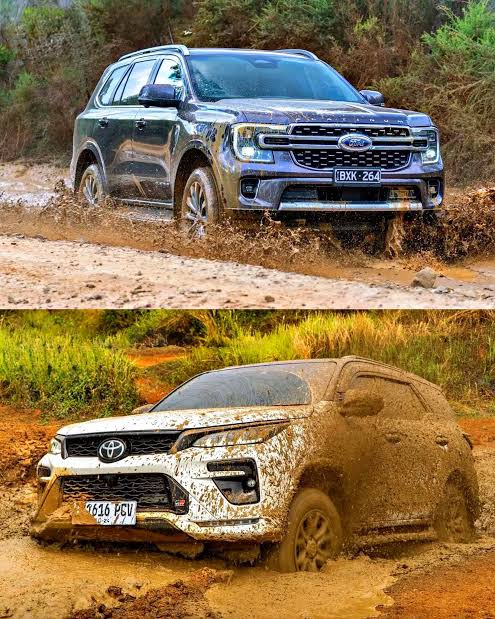
Nigerian roads punish low-slung vehicles. Deep potholes, broken shoulders, speed bumps that feel like walls, and seasonal flooding turn ordinary journeys into tests of underbody strength. Ground clearance the distance between the lowest point of the vehicle and the ground determines how much of that punishment the car can absorb before scrapes, damaged exhausts, bent suspension arms or water ingress occur.
Choosing an SUV with appropriate clearance is one of the most practical decisions a buyer can make.Ground clearance is usually measured in millimetres. As a rough guide for local conditions, anything below 180 mm starts to feel vulnerable on poorly maintained urban roads. The 190–210 mm range covers most competent crossovers and is adequate for city potholes and moderate flooding if the driver remains careful. Above 220 mm the vehicle enters more serious territory, better able to clear deep holes, wade through standing water and cope with unpaved or rural stretches. Clearance alone is not everything approach and departure angles, suspension travel, tyre sidewall height and underbody protection also matter but it is the figure most buyers can compare directly.Popular compact and mid-size crossovers sit in the practical middle. The Toyota RAV4 typically offers around 200–210 mm depending on generation and market specification. That height, combined with a relatively robust suspension, allows it to handle the majority of urban potholes and shallow flood water without constant anxiety. The Honda CR-V usually measures close to 198–208 mm. It feels composed over broken surfaces and remains one of the more comfortable options for daily mixed driving. Nissan X-Trail examples often reach approximately 210 mm, giving a slight edge in clearance that drivers notice on uneven sections.
Hyundai Tucson and similar Korean crossovers generally fall in the 180–200 mm band; they manage ordinary potholes but require more caution when water depth increases or when holes have sharp edges.Stepping up in size improves both clearance and the ability to absorb impacts. The Toyota Highlander commonly provides around 200 mm or a little more, with a longer wheelbase and heavier construction that help it stay stable when one wheel drops into a depression. Larger body-on-frame or more off-road-oriented models raise the numbers further. Toyota Land Cruiser Prado and related Land Cruiser variants frequently exceed 220 mm, with some configurations reaching the mid-220s or higher. These vehicles, along with the Toyota 4Runner and certain Nissan Patrol examples, combine generous clearance with strong suspension and, in many cases, genuine four-wheel-drive systems. They are better suited to routes that regularly include deep potholes, unpaved sections or prolonged rainy-season flooding.
Flooded roads add a second dimension. Clearance helps keep critical components above the water line, but the vehicle’s sealing, air-intake height and electrical protection determine how far it can safely go. Even a high-clearance SUV can suffer if water reaches the engine air intake or soaks sensitive electronics. Drivers should still avoid moving water of unknown depth and should never assume that extra millimetres make a vehicle amphibious. Slow, steady progress and knowledge of the route remain essential.Other factors influence real-world performance. Sidewall height and tyre pressure affect how much impact is transmitted to the suspension and body. A modest increase in tyre profile can improve the effective ability to drop into and climb out of holes.
Suspension design matters: long-travel, well-damped systems cope better than stiff, low-profile setups even when static clearance figures look similar. Underbody shields and the routing of exhaust and fuel lines reduce the chance of expensive damage when contact does occur. Four-wheel-drive or all-wheel-drive systems help when one or more wheels lose traction on a broken or flooded surface, but they do not increase clearance itself.For most Nigerian city and intercity drivers, a crossover in the 200 mm range such as a RAV4, CR-V or similar offers the best daily compromise. These vehicles clear ordinary potholes and light flooding while remaining fuel-efficient and easy to park. Drivers who regularly face severe road damage, rural stretches or deep seasonal water should look toward models with 220 mm and above, accepting the trade-offs in fuel use, purchase price and size. In every case, the condition of the specific vehicle especially suspension components, bushes and tyres matters as much as the brochure clearance figure.
Ground clearance is not a guarantee of invulnerability. It is a margin of safety. On roads where the surface can change without warning, that margin determines how often the driver winces, how frequently the workshop sees underbody damage, and how confidently the vehicle can complete the journey. Matching the clearance figure to the actual roads you drive is one of the clearest ways to choose an SUV that will survive Nigerian conditions with fewer expensive surprises.