
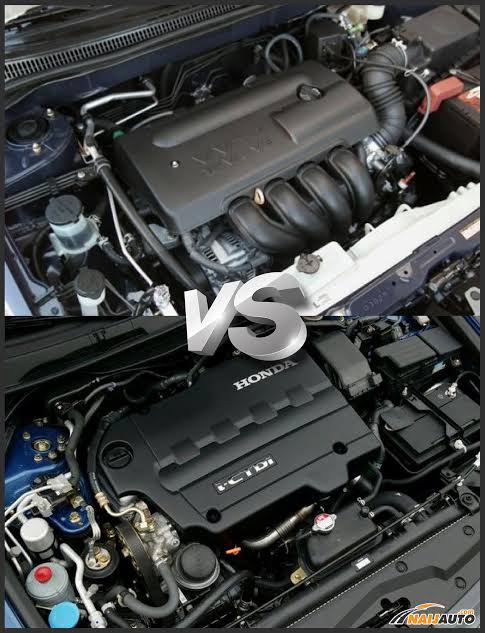
The Toyota Corolla remains one of the most common cars on Nigerian roads for good reason. Its engines are simple, durable and well understood by local mechanics. To judge whether a particular Corolla will suit daily driving here, it helps to understand what the power, torque and fuel figures actually mean once the car faces Lagos traffic, Nigerian petrol, heat and air-conditioning use.
Most Tokunbo and newer Corollas in Nigeria carry a 1.8-litre four-cylinder petrol engine. In typical mid-2010s to early-2020s examples this engine produces roughly 130 to 140 horsepower and around 170 to 175 Nm of torque, depending on the exact year and market specification. Newer non-hybrid 2.0-litre versions found in some later imports deliver higher outputs, often in the region of 160 to 170 horsepower and stronger mid-range torque. Hybrid Corollas combine a 1.8-litre petrol engine with an electric motor for a combined system output that feels responsive at low speeds while keeping fuel use low.Power tells you how much the engine can deliver at higher revs and how confidently the car can overtake or climb. Torque is what you feel when moving off from traffic lights or pulling away in slow-moving queues. In Nigerian city driving, usable low- and mid-range torque matters more than peak horsepower numbers. The Corolla’s 1.8-litre unit is not a high-performance engine, yet it provides enough pull for everyday needs without feeling strained when the car is carrying four adults and the air-conditioning is running.
Fuel efficiency is where the Corolla earns much of its reputation. Official laboratory figures look impressive, but real Nigerian conditions change the picture. In heavy Lagos or Abuja traffic with frequent stops, air-conditioning on and average speeds low, many 1.8-litre Corollas return roughly 11 to 13 kilometres per litre. On freer mixed routes the same cars often achieve 13 to 15 km/l or better. Highway runs with light throttle can push figures toward 16 to 18 km/l for well-maintained examples. These numbers assume reasonable driving and regular servicing. Aggressive acceleration, a dirty air filter, under-inflated tyres or prolonged idling will reduce them.Heat and air-conditioning extract a clear penalty. Running the AC compressor places extra load on the engine, commonly cutting 1 to 2 km/l from the consumption figure in city conditions. Petrol quality also plays a role. Inconsistent fuel can affect combustion efficiency and long-term engine cleanliness, so using reputable filling stations remains important. The Corolla’s relatively simple engine design tolerates average fuel better than more highly strung turbocharged units, which is one reason it continues to thrive here.Transmission choice influences the driving experience. Many recent Corollas use a continuously variable transmission. In traffic the CVT keeps the engine in an efficient range and contributes to the good fuel figures, although some drivers find the rising revs under hard acceleration less engaging than a conventional automatic. Older examples with traditional automatics or manuals are still common and remain easy to maintain.
Hybrid Corollas change the equation further. The electric motor supplies instant torque from standstill, which feels helpful in stop-go traffic, while regenerative braking recovers energy that would otherwise be lost. Real-world urban consumption for hybrids is often noticeably better than the pure-petrol equivalents, sometimes reaching the mid-to-high teens in kilometres per litre under careful driving. The trade-off is higher purchase price and the need for hybrid-specific knowledge when servicing is required, though Toyota hybrids have a strong reliability record.For Nigerian conditions the 1.8-litre petrol Corolla offers the best balance for most buyers. It delivers adequate power and torque for city and intercity use, returns respectable fuel economy even with air-conditioning, and benefits from widespread parts availability and mechanic familiarity. The 2.0-litre versions provide stronger performance for those who frequently carry loads or prefer more responsive overtaking, at a modest cost in fuel. Hybrids suit high-mileage urban drivers who can absorb the initial premium and want the lowest running costs.
Understanding these figures in local context prevents disappointment. Brochure horsepower and laboratory fuel numbers describe ideal conditions. On Nigerian roads the practical questions are whether the engine pulls cleanly from low speeds with the AC on, how many kilometres it returns in the traffic you actually drive, and whether parts and expertise are easy to find. On all three counts the mainstream Corolla engines continue to make a strong case.