
The Standards Organisation of Nigeria (SON) says Nigeria’s transition to Electric Vehicles (EVs) and Compressed Natural Gas (CNG) will only succeed with robust standards, certification and enforcement.
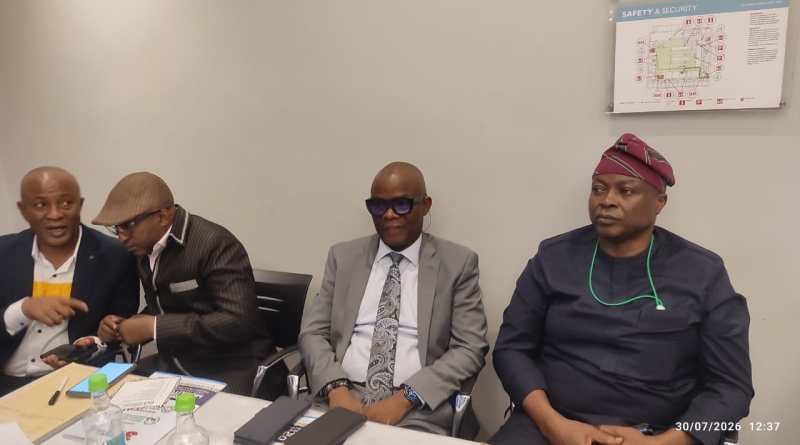
Director-General of SON, Dr. Ifeanyi Chukwunonso Okeke, stated this at the 3rd Nigeria Auto Industry Summit (NAISU) organised by the Nigeria Auto Journalists Association (NAJA) in Lagos on Thursday.
Okeke, represented by Deputy Director, Research and Statistics, Engr. Olalekan Omoniyi, spoke on “The Role of SON in Building a Safe, Sustainable and Investment-Ready EV and CNG Ecosystem.”
He said standards are the foundation for safety, consumer confidence, quality assurance and investment in clean mobility.
According to him, Nigeria’s shift to cleaner transport offers opportunities for growth, energy diversification and environmental sustainability, but requires a strong quality assurance framework to prevent influx of unsafe vehicles and substandard components.
SON has already developed over 80 Nigerian Industrial Standards (NIS) for CNG road vehicles and related equipment, plus 87 standards and the National Nigerian Guideline (NNG 1214:2024) for CNG vehicle conversions. It is also expanding standards to cover EVs, charging infrastructure, traction batteries, connectors and battery-swapping systems.
Under the SON Act No. 14 of 2015, the agency is empowered to develop standards, certify products, inspect facilities and remove substandard products.
Okeke said SON is implementing conformity programmes including SONCAP, MANCAP and the new Vehicle Conformity Assessment Scheme (VehCAS/VehCAP) being developed with NADDC and NESREA to ensure all imported and locally assembled vehicles meet safety and environmental requirements.
He warned that incidents involving uncertified CNG cylinders and poorly installed conversion kits show the danger of ignoring standards.
SON is collaborating with NADDC, EMPAN, NESP III and other partners to align standards with international best practice. This, he said, will protect consumers, boost local manufacturing, enable exports under AfCFTA, and improve investor confidence.
He listed challenges including uncertified conversion centres, inadequate testing labs, evolving technology and low awareness.
“Nigeria’s clean mobility future will be built on public trust. That trust is created through standards, verified by certification and protected by enforcement,” Okeke said, calling for mandatory certification, licensing of conversion centres, investment in labs and stronger inter-agency coordination.