
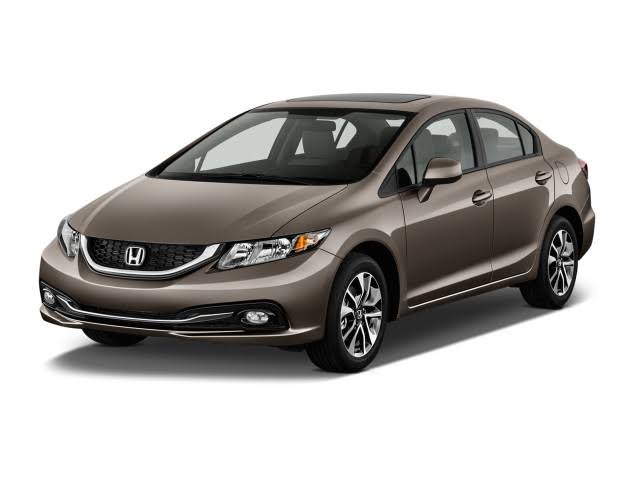
The Honda Civic models from 2015 to 2022 cover the end of the ninth generation and the full run of the tenth generation. These years are popular in the Nigerian Tokunbo market because they combine modern styling, improved safety equipment and engines that balance performance with reasonable fuel use. Knowing what each period actually offers helps buyers avoid surprises and match a car to their needs.The 2015 models still belong largely to the previous generation. Many of these cars use a 1.8-litre naturally aspirated four-cylinder engine that produces around 140 horsepower. The interior is functional rather than flashy, with basic audio systems, manual or automatic climate control depending on trim, and a relatively upright driving position.
Safety equipment typically includes multiple airbags, anti-lock brakes and stability control. Higher trims may add a rear camera and better audio, but advanced driver-assistance features are limited or absent. These cars are simple, easy to maintain and widely understood by Nigerian mechanics.The tenth-generation Civic, which arrived for the 2016 model year in many markets, marks a clear step forward. The design is lower, wider and more assertive. Inside, the cabin feels more modern, with improved materials on higher trims and a greater emphasis on technology.
Two main petrol engines dominate the range that reaches Nigeria. The base 2.0-litre naturally aspirated four-cylinder delivers roughly 158 horsepower and provides smooth, predictable power suited to everyday driving. The optional 1.5-litre turbocharged engine offers stronger mid-range torque and higher output, commonly around 174 to 180 horsepower depending on the exact year and tune. Both are usually paired with a continuously variable transmission in automatic form, although manuals exist in some markets.
Fuel efficiency in real Nigerian conditions is respectable for the class. The 2.0-litre versions typically return solid mixed figures when driven moderately, while the turbo 1.5 can be equally economical on light throttle yet thirstier when the turbo is working hard in traffic or with the air-conditioning under heavy load. As with most cars here, actual consumption depends heavily on traffic density, driving style and maintenance state.Safety equipment improved significantly across this generation. Many 2016–2020 Civics, especially EX and higher trims, began offering Honda Sensing or equivalent packages. These systems can include collision mitigation braking, forward collision warning, lane-keeping assistance, road-departure mitigation and adaptive cruise control. Later years expanded availability so that even lower trims often carried a useful set of driver aids. A rearview camera became widespread, and some models added lane-watch or blind-spot related features. Structural improvements and a strong complement of airbags further raised the safety baseline compared with the previous generation.Interior technology also advanced. Touchscreen infotainment systems became standard on most trims, with Apple CarPlay and Android Auto appearing on many examples from the later years of the decade. Push-button start, dual-zone climate control, better instrument clusters and improved connectivity are common on mid and upper trims. Base LX or equivalent models remain more basic, with smaller screens and fewer convenience features, yet they still feel more current than the 2015 cars.
Practical details matter for Nigerian use. The Civic’s boot space is competitive for a compact sedan, and the rear seats accommodate adults for moderate journeys. Ground clearance is typical of the class, so speed bumps and occasional rough patches require the same care as in most Japanese sedans. Parts availability is good for common service items, although some turbo-specific or electronics components can be pricier than those on simpler older Hondas. The 2.0-litre non-turbo engine is generally the more straightforward choice for buyers who prioritise long-term simplicity and widespread mechanic familiarity.
Trim differences affect what you actually receive. Lower trims focus on the essentials: reliable powertrain, decent safety basics and functional cabin. Mid trims add alloy wheels, better audio, keyless entry and more of the driver-assistance suite. Higher trims bring leather or upgraded upholstery, larger screens, remote start, premium audio and the fullest set of Honda Sensing features. When inspecting a Tokunbo example it is worth confirming which systems are present and working, because feature content varies by original market and year.
Across the 2015–2022 window the Civic evolved from a simple, proven compact into a better-equipped, more sophisticated car while retaining the core attributes that made it popular. Buyers who want maximum simplicity and lower purchase price can look at late ninth-generation 2015 models. Those seeking stronger performance, modern safety aids and better cabin technology will find the tenth-generation cars from 2016 onward more satisfying, with the 2.0-litre versions often striking the best balance for Nigerian conditions.
Checking service history, verifying that electronic features function, and confirming the exact engine and trim remain the practical steps that turn brochure knowledge into a sound purchase.