
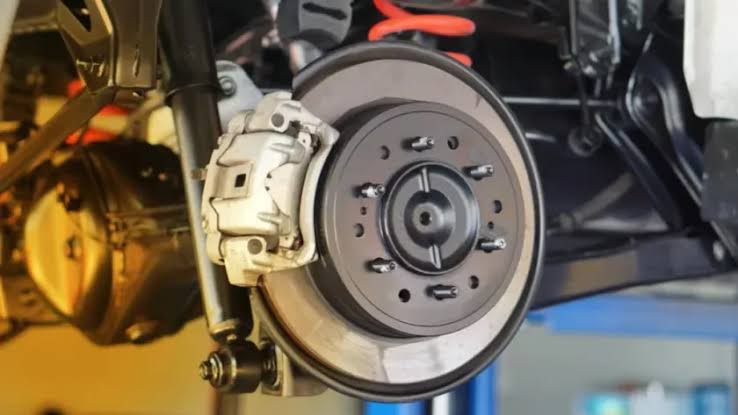
Modern cars carry several electronic helpers that intervene when you press the brake pedal hard. Three of the most important are Anti-lock Braking System, Electronic Brakeforce Distribution and Brake Assist. On Nigerian roads, where surfaces change quickly, traffic stops without warning and potholes appear in the middle of a braking zone, these systems can mean the difference between a controlled stop and a skid or collision. Understanding what each one does helps drivers use them properly and recognise when something is wrong.
Anti-lock Braking System, or ABS, prevents the wheels from locking up under heavy braking. When a wheel begins to stop rotating while the car is still moving, the tyre loses grip and the vehicle can skid. ABS uses sensors at each wheel to detect this rapid deceleration. The moment lock-up is detected, the system rapidly reduces and reapplies brake pressure many times per second. The driver feels a pulsing sensation through the pedal. That pulsing is normal; it is the system working. By keeping the wheels rotating, ABS allows the driver to maintain steering control even while braking hard. On a dry, smooth dual carriageway this is useful. On a rain-slicked Lagos expressway, a laterite stretch after a downpour, or a section with loose gravel, it becomes critical. Without ABS a panicked stamp on the pedal can send the car sliding in a straight line with no ability to steer around an obstacle. With ABS the driver can still turn while the car slows down.
Electronic Brakeforce Distribution, often abbreviated EBD, works alongside ABS. Its job is to apportion braking force between the front and rear axles, and sometimes between left and right wheels, according to the load and road conditions. A car with passengers in the back or a loaded boot needs more braking force at the rear than an empty one. EBD uses the same wheel-speed sensors and the car’s electronic brain to calculate the ideal share of braking effort. On Nigerian roads this matters when the surface is uneven. One side of the car may be on relatively good asphalt while the other drops into a depression or sits on a patch of oil or sand. EBD helps keep the car stable by adjusting pressure so that no single wheel locks or loses grip prematurely.
The result is a more balanced stop and reduced risk of the rear stepping out or the car pulling strongly to one side.Brake Assist addresses a different human factor. Many drivers, even experienced ones, do not press the brake pedal hard enough or fast enough in a genuine emergency. Research and real-world data show that people often freeze or apply only moderate pressure when they should be braking at maximum capacity. Brake Assist detects a rapid, forceful movement of the pedal that signals panic braking. Once triggered, the system automatically applies full or near-full braking power, even if the driver’s foot pressure is not absolute. It works with ABS so that the wheels do not lock while maximum retardation is achieved. In the chaotic flow of Nigerian city traffic, where a danfo or okada can stop or swerve with little warning, the extra fraction of a second and the extra braking force can shorten stopping distance noticeably.
These three systems are designed to cooperate. ABS keeps the wheels turning, EBD balances the force across the car, and Brake Assist ensures that the maximum available braking is actually used when the situation demands it. Together they give the average driver a much better chance of avoiding or reducing the severity of a collision.On Nigerian roads their value is heightened by local conditions. Potholes and broken surfaces can unload one or more wheels momentarily; ABS and EBD help the car remain controllable when grip returns. Mixed traffic of cars, buses, motorcycles and pedestrians produces frequent emergency stops. Wet season rains turn dusty roads into slippery tracks and create deep puddles that hide surface changes.
Heat and poor maintenance can also affect tyre condition, making electronic intervention more important. At the same time, these systems are not magic. They cannot create grip where none exists. Worn tyres, severely under-inflated tyres, or brakes that are already faded from repeated hard use will limit what ABS, EBD and Brake Assist can achieve. The electronics work with the mechanical brakes and the tyres; they do not replace them.Drivers should also know the warning signs. An ABS warning light that stays on after start-up usually means the system is disabled. The ordinary brakes will still function, but the anti-lock function will not. The same applies to related warning lights for the broader electronic stability or brake systems. Ignoring these lights removes the safety net precisely when it may be needed most.
Regular inspection of brake pads, discs, fluid and tyres remains essential. Clean wheel-speed sensors and healthy wiring help the electronics read conditions accurately.In daily driving the correct technique is straightforward. In normal stops, brake progressively and smoothly. In an emergency, press the pedal firmly and decisively and allow the systems to do their work. Do not pump the brakes on an ABS-equipped car; the computer already does that faster and more precisely than a human can. Keep both hands on the wheel so you can steer around trouble while the car slows.
ABS, EBD and Brake Assist are no longer exotic features reserved for expensive imports. They appear on a wide range of vehicles sold and used in Nigeria, from popular Japanese sedans to locally assembled models. Understanding how they function turns them from mysterious dashboard lights into practical tools. On roads that demand constant attention and frequent hard stops, these systems give drivers a measurable advantage in control and stopping performance, provided the rest of the car is properly maintained and the driver uses the brakes with confidence when it counts.