
Seatbelts save lives, and on Nigerian roads, they matter more than most people realize. With high speeds on highways, sudden stops in traffic, and frequent crashes involving buses, trucks, and okadas, a seatbelt is often the difference between walking away from an accident and not surviving it. The Federal Road Safety Corps (FRSC) and hospital records show that many fatalities and severe injuries could be prevented if more people buckled up. The physics is simple: during a collision, your body keeps moving at the same speed as the vehicle until something stops it. Without a seatbelt, that something is usually the dashboard, steering wheel, or windshield.
In a head-on crash at 80 km/h, an unbelted person can be thrown forward with the force of several tons. The seatbelt spreads that force across the strongest parts of the body, chest, pelvis, and shoulders, while holding you in place so you stay inside the vehicle. Studies from crash tests and real-world data consistently show that seatbelts reduce the risk of death by about 45–60 percent for front-seat passengers and up to 75 percent for rear-seat passengers in certain types of crashes. In Nigeria, where many vehicles are older and lack airbags, the seatbelt is the primary restraint system.
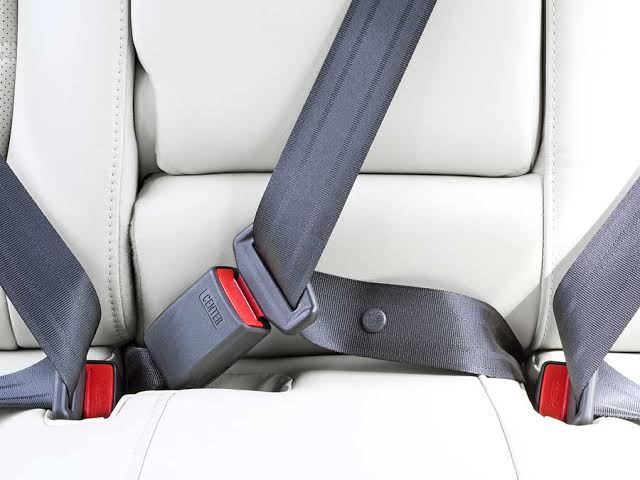
The rear seatbelt is especially overlooked. Many passengers in the back think they are safe because they are farther from the front impact. In reality, unrestrained rear passengers can be thrown forward into the front seats, injuring or killing those in front. FRSC statistics highlight that rear-seat occupants without belts suffer head and chest injuries far more often than belted ones. Even in low-speed crashes, the sudden jolt can cause whiplash or broken bones. Every seat in the car should be used with a belt, no exceptions.
Children face even higher risks. A child sitting on an adult’s lap or held loosely is not protected; in a crash, the child becomes a projectile. Proper child restraints, age-appropriate car seats or boosters, combined with seatbelts are proven to reduce injury risk by up to 70 percent. In Nigeria, where child seats are still rare, many parents rely on holding children, which is extremely dangerous. The law requires children under 12 to be properly restrained, and enforcement is increasing in major cities.
Common excuses for not wearing seatbelts include “I’m just going a short distance,” “the road is slow,” or “it feels uncomfortable.” Short trips cause a large number of crashes because people feel relaxed. Low-speed accidents still generate enough force to cause injury. Comfort concerns are real, some belts fit poorly on certain body types, but adjusting the shoulder belt to sit across the chest (not the neck) and the lap belt low across the hips makes a big difference. Modern belts have adjustable anchors and pretensioners that tighten automatically in a crash.
The law is clear: the FRSC Act requires all occupants to wear seatbelts where fitted. Fines for not buckling up are enforced more often now, especially in Lagos, Abuja, and Port Harcourt. Beyond fines, the real cost is personal. Survivors of crashes often face lifelong injuries, spinal damage, brain trauma, broken limbs, that could have been avoided. Families lose breadwinners, children lose parents, and the emotional toll lasts far longer than any fine.
Making seatbelts a habit is the best protection. Start every trip by buckling up yourself, then remind passengers. Check that rear belts are not twisted or stuck. For children, invest in a proper booster or car seat that fits their age and size. Regular vehicle maintenance ensures belts retract smoothly and lock properly in a crash.
Seatbelts are not perfect, but they are the single most effective safety feature in any car. They work every time they are used, no matter the speed or type of crash. On Nigerian roads, where help can be far away and medical care is not always immediate, buckling up is the smartest decision you can make. It takes two seconds and can save your life or the life of someone you care about.