
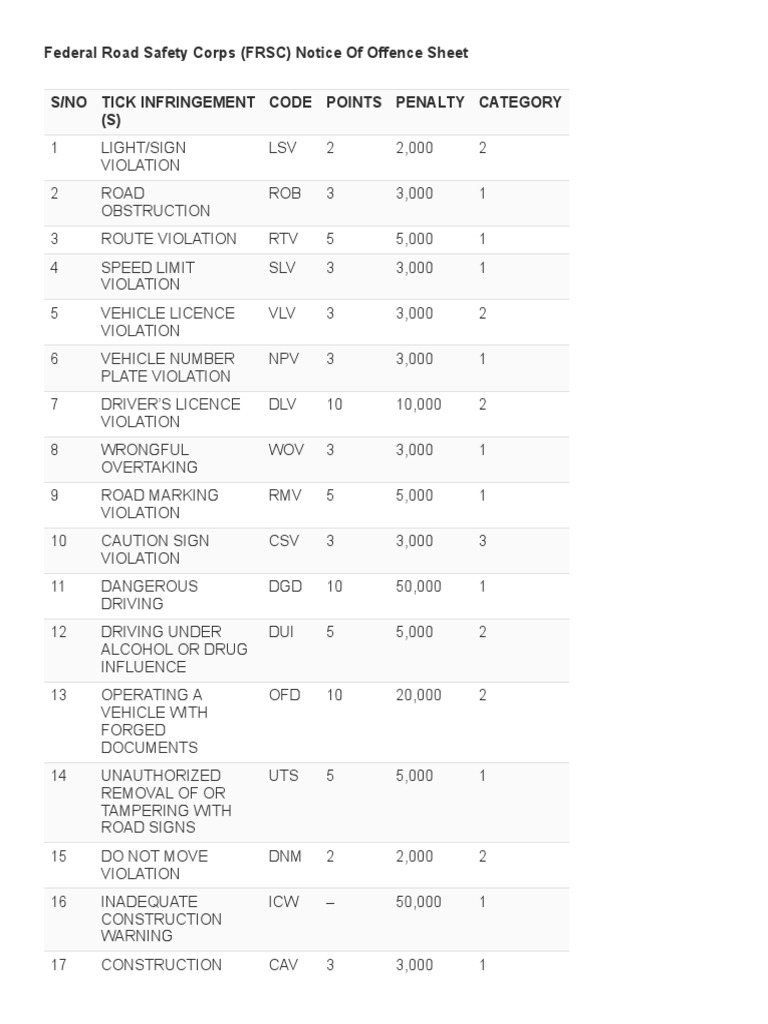
Nigeria’s roads demand constant vigilance, and the Federal Road Safety Corps (FRSC) continues to enforce strict measures to reduce accidents and promote responsible driving. Understanding common traffic offences and their penalties helps drivers avoid unexpected fines, vehicle impoundment, or even prosecution. The current framework, guided by the FRSC Act 2007 and National Road Traffic Regulations, uses a points-based system alongside monetary fines. Accumulating too many points can lead to licence suspension or revocation.f3f7b7One of the most frequent violations involves driving without a valid licence or with an expired one. This offence carries a ₦10,000 fine and significant penalty points. Many drivers assume an old licence remains acceptable, but FRSC checks both validity and proper class for the vehicle type. Always renew on time through official portals to stay compliant. Similarly, operating a vehicle without proper registration or number plates attracts ₦3,000, as it hinders identification and accountability on the road.c6b33fSpeeding remains a leading cause of crashes, especially on highways. Exceeding posted limits results in a ₦3,000 fine plus points. In construction zones, the same violation costs the same but poses higher risks due to workers and altered road conditions. FRSC patrol teams use mobile speed detectors, making enforcement consistent across major routes. Defensive driving—maintaining safe distances and adjusting for weather helps avoid this trap.8c48a3Using a mobile phone while driving is another widespread issue. Whether calling, texting, or scrolling, this distraction earns a ₦4,000 penalty in many updates, though exact figures align with broader signal violations around ₦2,000–₦4,000. The danger lies in divided attention; even hands-free options can impair reaction times. Many drivers pulled over claim it was “just a quick check,” but officers rarely accept excuses. Put the phone away or use voice commands safely parked.
Seat belt and child safety violations highlight FRSC’s focus on occupant protection. Failing to wear a seat belt costs around ₦3,000, while improper child seating or lack of restraints also attracts ₦3,000 with higher points (often 6). Children under certain ages should not ride in front seats. These rules exist because unrestrained passengers suffer far worse injuries in collisions. Parents and commercial drivers should double-check every trip.Failing to use warning triangles or caution signs after breakdowns leads to a ₦3,000 fine. When your vehicle stops unexpectedly, placing reflective triangles at adequate distances prevents rear-end collisions, especially at night or on busy roads. Many drivers skip this step thinking help will arrive quickly, but the regulation protects everyone on the highway.
Dangerous or reckless driving ranks among the most serious everyday offences, with a hefty ₦50,000 penalty. This covers overtaking improperly, sudden lane changes without signaling, or driving in a manner likely to endanger others. Related violations like route violations (wrong-way or prohibited roads) cost ₦5,000. These behaviours contribute heavily to fatal crashes, prompting FRSC to prosecute some cases in court beyond just fines.
ther notable common offences include road obstruction (₦3,000), such as parking on highways or blocking traffic flow, and driving under the influence of alcohol or drugs. The latter carries severe penalties, often leading to arrest and court proceedings due to its high risk. Failure to report an accident you witness or are involved in also attracts ₦20,000 and points, as timely reporting aids emergency response and investigations.
Vehicle condition matters too. Driving without functional lights, faulty signals, or missing fire extinguishers results in fines around ₦2,000–₦3,000. Overloading or weight violations cost ₦2,000, while operating commercial fleets without proper compliance can reach ₦200,000 for major breaches. These ensure mechanical reliability and prevent strain on roads and brakes.
How the Penalty Points System WorksFRSC assigns points to most offences, ranging from 2 to 10 or more. Accumulating points over time triggers graduated sanctions. Minor repeated infractions can lead to mandatory re-training or temporary suspension. Serious ones, like assaulting a marshal (₦10,000 and 10 points) or attempting bribery, face immediate stiff penalties and possible jail time. This system encourages long-term behavioural change rather than one-off payments.
Practical Tips to Stay Off the Offence ListAlways carry your original driver’s licence, vehicle papers, and insurance.
Photocopies often fail scrutiny.
Perform quick vehicle checks before trips: lights, tyres, wipers, extinguisher, and triangles.
Obey speed limits, signals, and road markings religiously, especially in urban areas and at night.
Avoid alcohol before driving and designate a sober driver for social outings.If stopped, remain calm and cooperative.
Arguing or offering bribes worsens the situation.
Use approved apps or the FRSC portal to check your licence status and pay fines promptly to avoid compounding issues.FRSC operations have become more tech-driven, with cameras, mobile patrols, and digital ticketing improving consistency nationwide. While some complain about enforcement intensity, the goal remains fewer preventable deaths on Nigerian roads. Road safety is a shared responsibility drivers, pedestrians, and authorities alike.
By familiarising yourself with these common offences, you drive more confidently and legally. Small habits like buckling up, avoiding distractions, and maintaining your vehicle make a big difference. Stay informed via the official FRSC website and prioritise safety over speed. Responsible driving not only saves money on fines but protects lives yours and others on the road.