
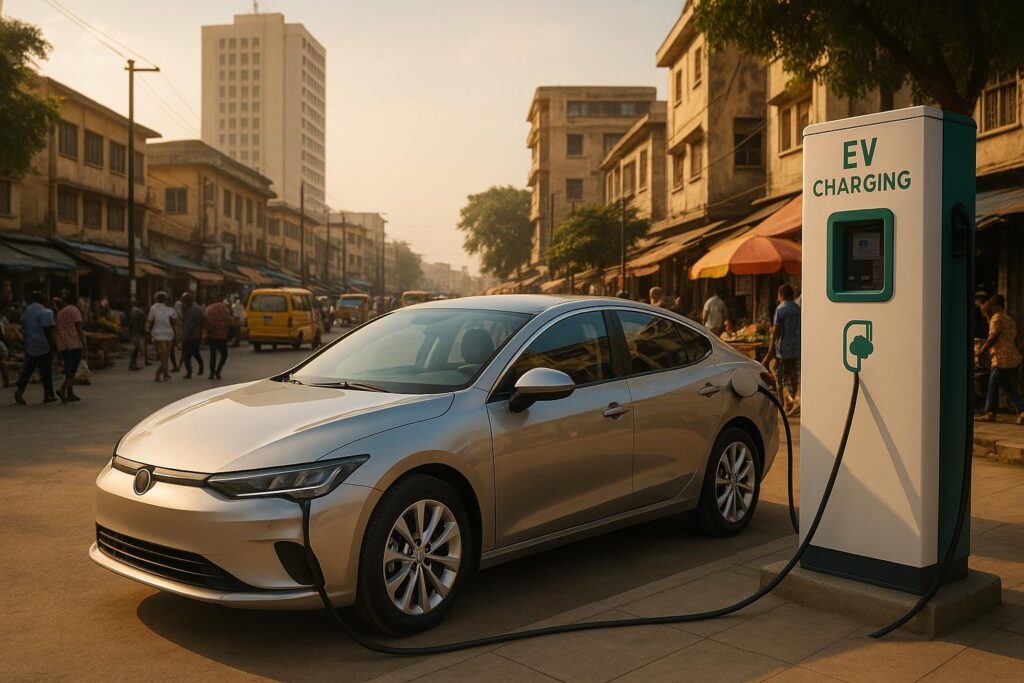
Electric vehicles are gradually gaining attention in Nigeria as fuel prices continue to rise and more people look for cheaper long-term alternatives. In 2026, brands like Tesla, BYD, MG, and some Toyota hybrids are becoming more visible, especially in Lagos, Abuja, and Port Harcourt. However, adopting electric cars in Nigeria comes with unique realities that every potential buyer must understand, particularly regarding charging infrastructure, electricity supply, and actual running costs.
Charging stations remain one of the biggest limitations for electric car owners. As of 2026, public charging infrastructure is still very limited. Lagos has the highest concentration with stations at some shopping malls, hotels, and a few dedicated EV hubs along the Lekki-Epe axis and Victoria Island. Abuja has a growing number around the airport and central business district, while other major cities have almost none.
Most owners rely heavily on home charging using Level 2 chargers installed in their garages. A full charge on a typical family EV like the BYD Atto 3 or MG ZS EV can take 6 to 10 hours on a standard home setup, making overnight charging the most practical option.The cost of installing a home charger ranges from ₦450,000 to ₦1.2 million depending on capacity and solar integration. Some forward-thinking owners combine solar panels with battery storage to reduce dependence on the grid. Public fast chargers, when available, can add 80% charge in 30-45 minutes but often come with high fees of ₦150 to ₦300 per kWh, making them expensive for regular use.The NEPA reality presents the most serious challenge.
Nigeria’s electricity supply remains unstable in most areas. Many neighbourhoods experience between 4 to 12 hours of power daily, with frequent voltage fluctuations that can damage expensive EV chargers and batteries. Owners in areas with relatively stable power enjoy significant benefits, but those in areas with poor supply often wake up to find their car not fully charged, forcing them to use expensive generators or public stations. This unpredictability makes long-distance travel stressful, as range anxiety becomes real when chargers are few and power is unreliable.Running costs, however, tell a more positive story.
Electricity in Nigeria is significantly cheaper than petrol when the car is charged at home. A typical electric SUV consumes about 15-20 kWh per 100 kilometres. At current residential rates of around ₦65-₦85 per kWh, this translates to roughly ₦1,000 to ₦1,700 for 100 kilometres. Compare this to a similar petrol SUV that may consume 12-15 litres per 100 kilometres at ₦1,000 per litre, costing ₦12,000 to ₦15,000 for the same distance. This means electric cars can be 7 to 10 times cheaper to run on electricity than petrol equivalents.Maintenance costs are also lower. Electric vehicles have fewer moving parts, no oil changes, no spark plugs, and simpler brake systems due to regenerative braking. Many owners report spending 40-60% less on servicing compared to traditional cars.
However, battery replacement after 8-10 years remains a major future expense, though most manufacturers now offer 8-year or 160,000 km warranties.When you factor in the total cost of ownership, electric cars become attractive after the second or third year for people with stable home charging solutions. The high initial purchase price, which is still 20-40% higher than comparable petrol cars due to import duties and limited local assembly, remains the biggest barrier for most Nigerians.
For those considering an electric car in Nigeria today, the best candidates are people who have reliable power supply at home, primarily drive within city limits, and can afford the higher upfront cost. Starting with a used or nearly new EV with a strong battery warranty makes more sense than jumping into brand new premium models.The future looks promising as more charging stations are being planned and some states are introducing EV-friendly policies. However, until the electricity situation improves significantly and charging infrastructure expands to major highways, electric cars will remain a lifestyle choice for the minority rather than a mass-market solution.
Electric vehicles offer impressive running cost savings and environmental benefits, but Nigeria’s current charging limitations and power challenges mean buyers must be realistic. Proper planning and honest assessment of your electricity situation are essential before making the switch.