
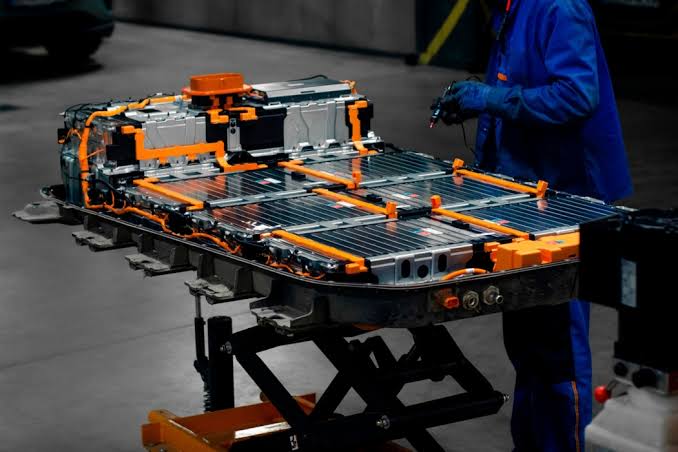
As electric vehicles and battery-powered devices spread across developing markets, a quieter problem is accumulating in parallel: what happens to the batteries when they reach the end of their useful life. Lithium-ion batteries contain valuable metals and also hazardous materials. In countries with limited formal waste systems, turning those batteries into a safe, economic resource is proving far more difficult than deploying the vehicles themselves.
The first major obstacle is collection. In many developing economies there are few organised take-back points for end-of-life EV or energy-storage batteries. Owners and workshops often do not know where to send them. As a result, batteries enter the same informal scrap channels that already handle lead-acid batteries, electronics and mixed metal waste. Once inside those channels, tracking disappears and the chance of environmentally sound treatment drops sharply.The informal sector itself presents a second challenge. Across parts of Africa, South Asia and Latin America, millions of people earn livelihoods by collecting and processing waste. Their methods are typically low-cost and labour-intensive. For lithium-ion batteries those methods are frequently unsafe. Crude dismantling can release toxic fumes, cause fires or leaks, and expose workers and nearby communities to heavy metals and other harmful substances. Formal recyclers struggle to compete for feedstock because informal operators can offer immediate cash without the overhead of environmental controls.Even when batteries reach formal facilities, economics remain difficult. Proper recycling of lithium-ion batteries requires specialised processes mechanical separation followed by hydrometallurgical or pyrometallurgical recovery to extract lithium, cobalt, nickel and other materials at usable purity. These plants need consistent volume to operate efficiently. In markets where EV penetration is still low, the annual flow of end-of-life traction batteries is often too small to justify large-scale investment. Announced recycling capacity sometimes exceeds actual available feedstock, leaving plants under-utilised and financially strained.
Technical and safety barriers compound the problem. EV batteries are heavy, complex assemblies with different chemistries and designs. Safe handling, transport and storage demand trained personnel, proper packaging and fire-suppression measures. Many developing markets lack sufficient certified technicians, specialised transport permits and storage infrastructure. A single incident involving thermal runaway can deter further investment and reinforce public caution.Regulatory frameworks are frequently incomplete or weakly enforced. Some countries have introduced extended producer responsibility rules that place collection and recycling obligations on manufacturers and importers. In practice, the absence of convenient collection networks, clear reporting systems and consistent penalties limits effectiveness. Without reliable enforcement, responsible companies that invest in proper channels face cost disadvantages against those who do not.
Second-life applications offer a partial bridge. Batteries that no longer meet automotive standards may still retain significant capacity for stationary storage, solar backup or lower-demand uses. Yet realising this potential requires testing protocols, performance standards and business models that are still rare in many developing markets. Without them, batteries that could have been reused move prematurely into disposal or informal channels.International dimensions add further complexity. Some regions restrict or tightly control the export of battery waste and “black mass” to protect domestic recycling industries or prevent environmental dumping. Developing countries that lack local processing capacity can find themselves unable to send material to advanced facilities abroad while also lacking the scale to build their own. The result is stockpiling, leakage into informal streams, or pressure to adopt lower-standard local solutions.
Despite these obstacles, the issue is not unsolvable. Countries that have begun to make progress typically combine clearer regulations with practical collection incentives, support for formal recyclers, and efforts to integrate rather than simply displace informal workers through training and safer practices. Partnerships that bring technology, capital and offtake agreements for recovered materials can improve project viability. Early planning before EV volumes become large is consistently more effective than trying to retrofit systems after batteries have already entered uncontrolled waste streams.
Electric mobility and battery storage bring clear benefits in reduced local emissions and lower operating costs. Those benefits will be more durable if the materials inside the batteries are recovered safely and returned to productive use. In developing markets the gap between rising battery deployment and adequate end-of-life systems remains wide. Closing it requires deliberate attention to collection, safety, economics and regulation, not just to the vehicles themselves.