
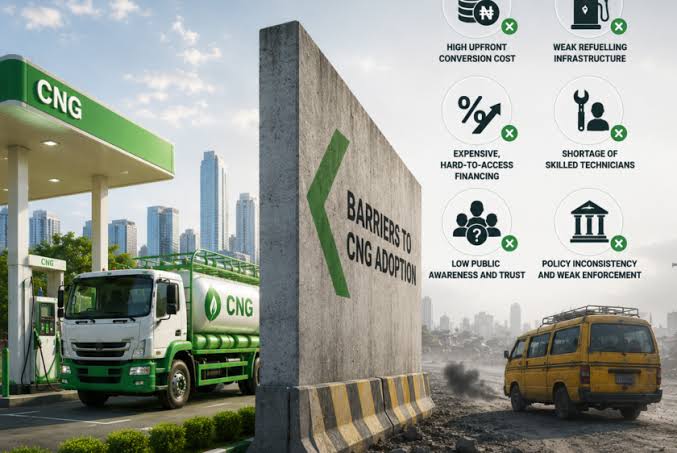
Nigeria’s push to expand compressed natural gas as a transport fuel sits against a backdrop of high petrol prices and substantial domestic gas resources. Several countries have already built large CNG vehicle fleets under varying conditions. Their experiences offer practical lessons that can improve the design and execution of Nigeria’s own programme.The most consistent lesson is that a clear and durable price advantage over petrol and diesel is essential. In Argentina, Pakistan and Iran, drivers switched because CNG was significantly cheaper on a per-kilometre basis. When that differential narrows or becomes unpredictable, conversion rates slow. Nigeria must therefore ensure that gas pricing for transport remains competitive and transparent over the long term, rather than subject to frequent policy shifts that undermine confidence.Infrastructure density matters as much as price.
Argentina’s success rests on a nationwide network of thousands of stations that makes refuelling convenient for both private and commercial users. Early stations in most countries were concentrated where high-utilisation vehicles operated taxis, buses and delivery fleets. These vehicles recover conversion costs quickly and create steady demand that justifies further station investment. Nigeria’s current concentration of stations in a few cities leaves large gaps. Prioritising corridors and commercial clusters before attempting nationwide coverage is a proven sequence.
Public and commercial fleets provide the fastest route to scale. Delhi’s court-mandated conversion of buses and taxis to CNG created immediate volume, improved urban air quality and demonstrated reliability to private owners. Similar fleet-focused approaches in other cities generated the utilisation rates that stations need to be profitable. Targeting ride-hailing vehicles, urban buses, logistics fleets and government vehicles can deliver visible results while the wider retail network grows.Safety and quality control cannot be treated as secondary. Countries that built lasting CNG markets invested early in standards for conversion kits, cylinders, workshops and station equipment. Poor-quality conversions and uncertified cylinders create accidents that damage public trust for years. Mandatory certification of kits by vehicle type, licensed conversion centres, periodic cylinder testing and clear liability rules are non-negotiable. Argentina’s emphasis on codes and standards helped normalise CNG as a safe everyday fuel.
Private-sector participation accelerates progress when the rules are clear. Pakistan and Argentina attracted investment in stations and conversion businesses by reducing bureaucratic barriers and aligning incentives. Heavy reliance on government-funded stations alone often leads to slow rollout and maintenance problems. Enabling qualified private operators to build and run stations under transparent licensing, while ensuring fair access to gas, has produced denser networks elsewhere.Sequencing is critical. Successful programmes rarely try to convert the entire national fleet at once. They begin with cities or corridors that already have gas supply, high vehicle density and political commitment. They establish a critical mass of converted vehicles and stations in those zones, prove the economics, then expand. Attempting simultaneous nationwide coverage before supply, standards and skills are ready usually produces under-used stations and frustrated drivers.
Finally, communication and skills development support adoption. Drivers and mechanics need clear information on costs, safety and maintenance. Training programmes for conversion technicians and station operators reduce errors and build local capacity. Countries that treated CNG as a long-term industrial opportunity rather than a short-term subsidy scheme developed domestic expertise in kits, cylinders and station technology.Nigeria already possesses the fundamental resource advantage of domestic natural gas.
The global record shows that resource alone is not enough. Sustained price competitiveness, focused early deployment on high-utilisation fleets, rigorous safety standards, private investment under clear rules, and patient geographic sequencing have separated lasting CNG markets from short-lived experiments. Applying these lessons with discipline can turn Nigeria’s CNG initiative from a series of pilots into a durable part of the transport fuel mix.