
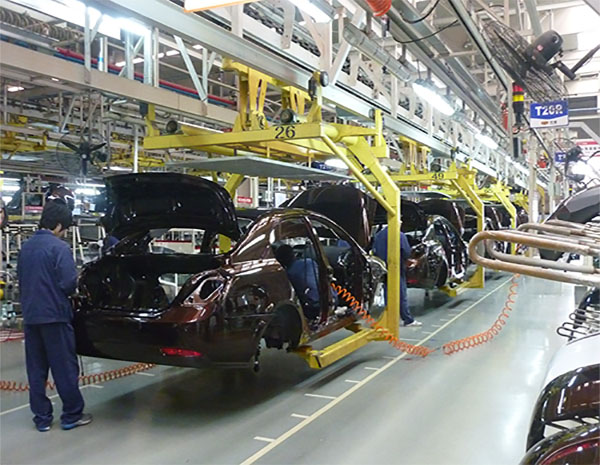
Nigeria often dominates conversations about West African vehicle assembly, yet significant manufacturing and assembly activity is spreading across the continent. Several countries have built or expanded plants that produce vehicles for domestic use and, in some cases, for export. The result is a more distributed African automotive map in which Morocco, South Africa, Egypt, Kenya, Ghana and others each play distinct roles.Morocco has emerged as one of the most successful export-oriented hubs. Large plants operated by Renault and Stellantis produce hundreds of thousands of vehicles annually, many of them destined for European markets. Proximity to Europe, competitive labour costs, trade agreements and sustained industrial industrial policy have attracted sustained investment. The country has moved beyond basic assembly into higher-value components and is now positioning itself for electric vehicles and battery-related manufacturing. This export focus distinguishes Morocco from markets that primarily serve local demand.
South Africa remains the continent’s most established and diversified producer. Decades of investment by global manufacturers including Toyota, Volkswagen, Ford, BMW and Mercedes-Benz have created a deep supplier base and significant export volumes, particularly of light commercial vehicles and passenger cars. While overall continental rankings occasionally shift, South Africa continues to account for a large share of Africa’s total vehicle output. Recent interest from Chinese firms, including plans to repurpose existing plants for electrified models, shows that the country is adapting to new technology and ownership patterns rather than standing still.
Egypt combines a sizable domestic market with growing assembly activity. Long-standing operations by international brands sit alongside newer partnerships, including collaborations involving Chinese manufacturers. State-linked companies have also returned to more active production. The country’s industrial base and access to regional trade routes support both local sales and limited exports.Further south and east, smaller but purposeful hubs are taking shape. Kenya hosts assembly operations for commercial vehicles and passenger models, often through partnerships that bring in completely knocked-down or semi-knocked-down kits. Ghana has developed indigenous efforts such as Kantanka alongside licensed assembly, reflecting a desire to build local capability rather than rely solely on imports. Other countries, including Ethiopia, Uganda and Rwanda, have pursued bus, truck or lighter vehicle projects, frequently with technology partners from Asia.
Several forces drive this geographic spread. Governments across the continent view automotive assembly as a route to industrialisation, job creation and reduced import bills. Policies that raise duties on fully built-up vehicles while offering incentives for local content encourage manufacturers to set up plants. Chinese companies, facing trade barriers in some Western markets and seeking growth, have become active investors and technology suppliers.
European and Japanese manufacturers continue to maintain or expand existing footprints where scale and export access justify the investment.The character of these hubs differs. Morocco is tightly integrated into European supply chains. South Africa retains a broad, export-capable industry with a strong commercial-vehicle segment. North African and East African plants often focus first on domestic and regional demand, using assembly of established global or Chinese models as a stepping stone. Indigenous brands remain smaller in volume but carry symbolic and developmental importance.Challenges are real and shared. Achieving high local content is difficult when component industries are thin. Scale remains modest compared with Asian or European plants, which affects cost competitiveness. Reliable power, logistics and skills availability vary widely.
Currency volatility and policy inconsistency can deter long-term capital. Nevertheless, the direction of travel is clear: more African countries are moving from pure importation toward some form of local vehicle production.For the wider continent the rise of these hubs matters in several ways. It diversifies sources of vehicles, creates industrial employment, and gradually builds technical capability. It also changes trade patterns, as regional value chains slowly form under frameworks such as the African Continental Free Trade Area.
Nigeria remains an important market and assembly location, yet it is no longer the only significant story. Morocco’s export success, South Africa’s depth, Egypt’s recovery and the quieter progress in Kenya, Ghana and elsewhere show that African auto manufacturing is becoming a multi-centred reality rather than a single-country phenomenon.