
Knowing how far a family car can travel on a full tank matters as much as its fuel economy figure. Tank size determines how often you stop to refuel, how comfortable long trips feel, and how much buffer you have when stations run dry or prices spike. In Nigeria, where traffic, air-conditioning use and variable fuel quality all affect consumption, combining published tank capacity with realistic kilometres-per-litre figures gives a clearer picture of actual range.Most compact and midsize saloons that dominate family use carry tanks between 50 and 60 litres. The Toyota Corolla typically holds around 50 to 55 litres depending on the generation. With real-world mixed consumption often falling between 11 and 14 km/l in Nigerian conditions, a full tank commonly delivers 550 to 700 kilometres. In heavy Lagos or Abuja traffic with the air-conditioning running, the lower end of that range is more realistic. On freer intercity roads the higher figures become achievable. Drivers who average 12 km/l from a 55-litre tank can expect roughly 660 kilometres before the tank is empty, though running to absolute empty is never advisable.The Honda Civic sits in a similar bracket. Tank capacity is usually close to 47 to 50 litres on many recent examples. Real-world economy mirrors the Corolla’s in most driving, so total range often lands between 500 and 650 kilometres depending on conditions and driving style. The difference is small enough that both cars feel comparable on a full tank for daily family use and weekend trips.
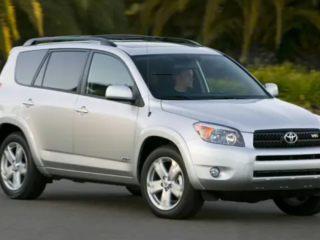
Stepping up to midsize saloons increases capacity modestly. Toyota Camry models commonly offer tanks around 60 litres. Honda Accord figures are often in the same region, sometimes a little lower or higher by a few litres according to year and market. With mixed consumption typically between 10 and 13 km/l under local conditions, a Camry or Accord can deliver 600 to 750 kilometres on a full tank when driven moderately. Highway runs with light loads push the higher numbers; city commuting with frequent stops and constant air-conditioning pulls them down. The extra capacity compared with a Corolla translates into fewer fuel stops on long journeys such as Lagos to the East or Abuja to the North, which families notice and appreciate.SUVs and crossovers trade some efficiency for space and ground clearance, and their tanks are sized accordingly. A Toyota RAV4 often carries approximately 55 to 60 litres. Real-world consumption in the 9 to 12 km/l range is common once air-conditioning, load and mixed roads are factored in. That produces a practical range of roughly 500 to 650 kilometres. The Honda CR-V follows a similar pattern. Larger seven-seaters such as the Toyota Highlander usually have tanks in the 65 to 70-litre area. Their higher consumption, often 8 to 11 km/l in typical Nigerian use, still yields total ranges in the 550 to 700-kilometre band because of the bigger fuel volume. The extra capacity is useful when the vehicle is fully loaded with family and luggage.
Several factors shrink real-world range below the simple multiplication of tank size by best-case economy. Air-conditioning is one of the largest. In hot weather the compressor adds measurable load and can reduce economy by 1 to 2 km/l or more in city driving. Heavy traffic forces prolonged idling and repeated acceleration, both of which burn fuel without covering distance. Short trips that never allow the engine to reach efficient operating temperature also hurt averages. Tyre pressure, wheel alignment, roof loads and aggressive driving further reduce the kilometres extracted from each litre. Conversely, steady highway speeds, light throttle use and a well-maintained engine help the car approach the better end of its range potential.
Fuel quality and the habit of keeping a reserve also matter. Many drivers treat the last quarter of the tank as a safety buffer rather than usable range, especially on routes where stations may be scarce or closed. Calculating range on 80 percent of the tank capacity produces a more conservative and practical figure for planning. A Corolla with a 55-litre tank used this way still offers over 500 kilometres of planned range at 12 km/l, which is sufficient for most family trips with a comfortable margin.When comparing cars it is useful to look beyond the tank size alone. A vehicle with a slightly smaller tank but better real-world economy can match or exceed the range of a thirstier model with a larger tank. The Corolla and Civic illustrate this: their modest capacities still deliver strong total distance because they use fuel efficiently. Larger saloons and SUVs compensate for higher consumption with bigger tanks, so the net range often ends up in a similar practical band for typical family distances.
For everyday Nigerian family use the differences are manageable. Compact saloons provide more than enough range for weekly commuting and regular intercity travel when driven sensibly. Midsize saloons and compact SUVs add a useful buffer for longer journeys or heavier loads. The key is to pair the published tank capacity with honest local consumption figures rather than laboratory claims, then subtract a reserve for peace of mind. Doing so turns a simple specification into a reliable predictor of how often the family will need to stop for fuel and how far the car can realistically go on a full tank.