
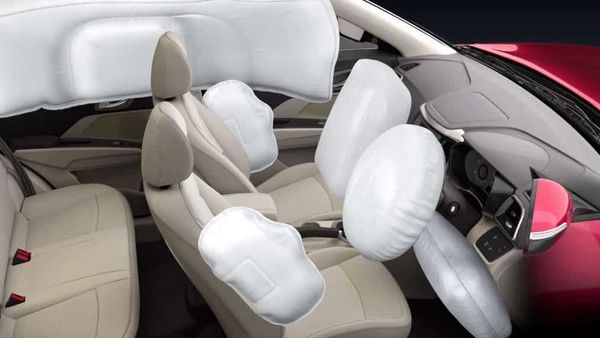
Dual airbags appear on the specification list of almost every popular Tokunbo car sold in Nigeria. The phrase sounds reassuring, yet many buyers are not entirely sure what the two airbags actually do, when they deploy, or how much protection they provide on their own. Understanding their role, and the limits of that role, helps set realistic expectations about safety in everyday models such as the Toyota Corolla, Camry, Honda Accord, Civic and similar Japanese saloons that dominate the used market.Dual airbags almost always mean a driver’s airbag in the steering wheel and a front passenger airbag in the dashboard. These are frontal airbags designed to inflate in a serious head-on or near head-on collision. Sensors detect the sudden deceleration of a crash and trigger an inflator that fills the bags with gas in a fraction of a second. The inflated bags create a cushion that helps keep the driver’s and passenger’s heads and chests from striking the steering wheel, dashboard or windscreen. Once their work is done the bags deflate quickly so that occupants can move or be assisted out of the vehicle.
The protection they offer is real and well proven. In a frontal impact the airbags reduce the risk of serious head and chest injuries when used together with seatbelts. Seatbelts remain the primary restraint; the airbags are a supplementary system. Without a fastened seatbelt an occupant can be out of position when the bag deploys, reducing its effectiveness or even causing injury. This is why every responsible explanation of airbags stresses that belts must be worn at all times.Dual airbags are not a complete safety package. They do nothing in side impacts, rear collisions or rollovers unless the car is also equipped with side airbags, curtain airbags or other systems. Many older Tokunbo cars that advertise dual airbags have only the two frontal units. Later models increasingly add side airbags mounted in the seats and curtain airbags that deploy from the roof rails to protect heads in side crashes or when the vehicle tips. The difference matters. A car with only dual frontal airbags still leaves occupants more exposed in the kinds of side collisions that occur at junctions or when another vehicle strikes the flanks.
Crash sensors and the electronic control unit decide whether and when the bags should fire. The system is calibrated for impacts above a certain severity. Minor bumps, low-speed parking incidents or gentle rear-end contacts normally will not trigger deployment. This is intentional. Airbags are pyrotechnic devices; replacing them after deployment is expensive, so they are reserved for crashes where the benefit outweighs the cost and the disruption. A warning light on the dashboard monitors the system. If the light stays on after the engine starts, the airbags may be disabled and should be checked without delay.In the Nigerian context several practical points arise.
First, many Tokunbo cars are several years old by the time they arrive. Airbag systems are designed to last, but age, previous minor accidents, water exposure or improper electrical work can affect sensors and wiring. A pre-purchase inspection should include confirmation that the airbag light behaves normally and, where possible, a diagnostic check of the system.
Second, after any significant frontal collision the bags that deployed must be replaced and the sensors and control unit inspected or reset by competent technicians. Simply clearing a warning light without proper repair leaves the car without its intended protection.Third, dual airbags work best when the rest of the safety equipment is present and functional. Anti-lock brakes, electronic brakeforce distribution and stability control help the driver avoid the crash in the first place or reduce its severity. Strong body structure and proper seatbelt pretensioners ensure that occupants are held in the correct position for the airbags to do their job. Relying on dual airbags alone while neglecting tyres, brakes or seatbelt condition undercuts the whole system.
Buyers sometimes treat the presence of dual airbags as a simple yes-or-no tick box. A more useful approach is to ask what else the car has. Does it have side or curtain airbags? Is there a knee airbag on newer examples? Are the seatbelts equipped with pretensioners and load limiters? Does the car carry electronic stability control? The answers paint a clearer picture of overall crash protection than the dual-airbag label by itself.For popular models the situation has improved over time. A mid-2010s Corolla or Civic with dual frontal airbags already offered meaningful protection compared with cars that had none. Later examples of the same nameplates often added more airbags and electronic aids as standard or as common options. Checking the specific year and trim, and verifying that the systems still function, remains essential because specification varied by market and equipment level.
Dual airbags are a valuable part of modern vehicle safety. They reduce the severity of injuries in frontal crashes when seatbelts are worn and the system is in working order. They are not a shield against every type of accident, nor a substitute for careful driving, proper maintenance and the full set of available safety features. Understanding exactly what those two airbags offer, and what they do not, allows buyers of Tokunbo cars to make clearer judgements about the protection they are actually purchasing.