
Driving in Nigeria means dealing with rough roads, sudden potholes, and weather that swings from scorching heat to heavy rains. Those conditions take a toll on your car, making breakdowns more common than they should be. The good news is that basic maintenance can keep things running smooth and save you from expensive mechanic visits. You do not need a full workshop just a handful of tools that handle the most frequent issues like flat tires, dead batteries, or oil changes. These essentials are affordable, easy to store in your trunk, and straightforward to use even if you are not a pro. Let us go through what you need, why each one matters, and how to get started with them.
First up is a good jack and jack stands. In Nigeria, flats happen often from sharp debris or bad roads, so changing a tire is a must-know skill. The scissor jack that comes with most cars works in a pinch, but upgrade to a hydraulic floor jack for easier lifting it handles heavier loads and lifts higher. Always pair it with jack stands for safety; never work under a car held only by the jack. Jack stands lock in place to hold the weight. Practice in your driveway: position the jack under the frame’s lift points (check your manual), pump it up, then slide stands under and lower onto them. A decent set costs ₦10,000–₦20,000 and prevents accidents while you fix things.
Next, a lug wrench or tire iron is non-negotiable for wheel changes. The one in your spare tire kit is often flimsy, so get a cross-shaped or telescoping one for better leverage. It loosens the lug nuts that hold the wheel on. Loosen them slightly before jacking up, then remove fully once lifted. Tighten in a star pattern when putting the wheel back to avoid warping. This tool also helps with basic brake checks. Spend ₦2,000–₦5,000 on a sturdy one it beats struggling with a weak factory version.
A tire pressure gauge is small but mighty. Underinflated tires overheat and blow out faster on hot asphalt, while overinflation reduces grip on wet roads. Check pressure monthly when tires are cold attach the gauge to the valve stem, read the PSI, and compare to the sticker on your door jamb (usually 30–35 PSI for sedans). Digital gauges are accurate and easy, costing ₦1,000–₦3,000. Proper pressure saves fuel (up to 10% better mileage) and extends tire life by 20,000 km or more.
Screwdrivers both flathead and Phillips are basics for everything from battery terminals to interior panels. A set with magnetic tips holds screws in place, handy for tight spots. Use them to clean corrosion off battery posts or adjust loose clips causing rattles. Get a multi-bit driver for versatility, around ₦2,000.
Pliers come in handy for gripping, bending, or cutting. Needle-nose pliers reach into small spaces like fuse boxes, while slip-joint pliers handle larger tasks like hose clamps. They are great for electrical fixes or removing stuck parts. A good pair runs ₦1,500–₦3,000.
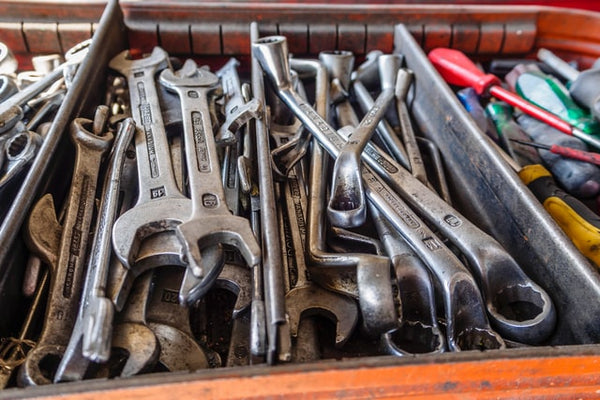
An adjustable wrench or crescent wrench tackles nuts and bolts of different sizes, like oil drain plugs or battery clamps. Socket sets with ratchets are even better for speed—get a basic metric set (8mm–19mm common) for ₦5,000–₦10,000. They make oil changes or brake work quicker.
A multimeter tests electrical issues, like why your battery dies or lights dim. Set to volts, check battery at 12.6V off, 13.7–14.7V running. It is essential for alternator or fuse problems, costing ₦3,000–₦7,000.
An oil filter wrench grips the filter during changes get a strap or claw type for ₦2,000. A funnel (₦500) prevents spills when adding fluids.
Jumper cables are lifesavers for dead batteries. Get thick, 4–6 gauge ones (₦5,000) with clamps that grip well. Connect positive to positive, negative to ground.
A headlamp or flashlight illuminates dark spots under the hood. Gloves protect hands from grease and chemicals.
Store everything in a trunk organizer for quick access. Buy from reputable spots like Ladipo or online to avoid fakes. Start with basics like the jack, wrench, and gauge build from there. Regular use keeps your car reliable on our roads.