
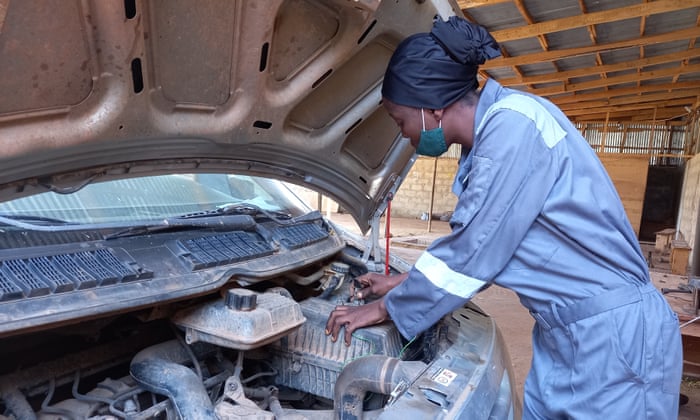
The Nigerian auto industry has long been seen as a male-dominated space, but a quiet revolution is happening. More women are stepping into roles as mechanics, car dealers, spare parts sellers, and professional drivers, challenging old stereotypes and bringing fresh energy to the sector. Their growing presence reflects changing attitudes, economic necessity, and a desire for financial independence in a tough economy.
For many years, women who worked in auto-related businesses were mostly limited to office roles or selling accessories. Today, you can find female mechanics in workshops in Lagos, Abuja, and Port Harcourt fixing engines, changing brake pads, and diagnosing electrical faults with confidence. Some own thriving workshops, while others specialize in areas like auto electrical repairs, panel beating, or air-conditioning servicing. Their success comes from determination, continuous training, and building trust with customers who initially doubted their skills.
Female car dealers are also on the rise. Many started by importing a few tokunbo vehicles and gradually grew their businesses. They often succeed because of strong attention to detail, honest dealings, and good customer service qualities that help them build loyal client bases. Some focus on specific niches, such as reliable family cars or SUVs suitable for Nigerian roads. Their understanding of family needs gives them an advantage when advising buyers.
Professional female drivers, including those working with ride-hailing services, delivery companies, and corporate transport, have increased significantly. Many cite better income and flexible hours as major attractions. Others have become truck drivers or long-distance bus operators, proving that physical strength is less important than skill, discipline, and safety consciousness.
Despite the progress, challenges remain real. Societal skepticism is still common. Many male customers hesitate to give their cars to female mechanics, assuming they lack technical knowledge. Access to capital for starting dealerships or importing vehicles is harder for women due to traditional banking practices. Training opportunities can also be limited, as many technical schools and apprenticeship programs are still male-oriented. Safety concerns, especially for those working late hours or travelling long distances, add another layer of difficulty.
However, women who succeed in this field often share similar strategies. They invest heavily in proper training through FRSC-approved programs, technical colleges, or mentorship under experienced mechanics. Many build strong networks by joining women-focused business groups or auto associations. They focus on professionalism clean workshops, proper uniforms, clear communication, and honest pricing which helps overcome initial doubts from customers. Some have found success by specializing in areas where patience and attention to detail matter most, such as diagnostics, interior detailing, or customer relations.
Government policies and private initiatives are slowly creating more opportunities. The Federal Road Safety Corps and some state governments have programs encouraging women in transport and auto-related skills. Several NGOs and corporate social responsibility projects now offer scholarships and training specifically for women in automotive technology. Banks and microfinance institutions are also beginning to design products tailored for female entrepreneurs in the auto sector.
For young women considering a career in the auto industry, the path is clearer than ever before. Start with solid foundational training. Learn basic mechanical skills, electrical systems, and customer service. Build practical experience through apprenticeships or entry-level positions. Save money to gradually acquire tools or invest in a small business. Most importantly, develop confidence in your abilities and ignore discouraging voices.
The financial rewards can be substantial. Skilled female mechanics often earn more than many office workers, while successful dealers can build significant wealth. Beyond money, many women speak about the satisfaction of mastering a technical skill and the respect they eventually earn from customers and colleagues.The Nigerian auto industry still has a long way to go before achieving full gender balance, but the momentum is clear. Every woman who succeeds as a mechanic, dealer, or driver opens the door wider for others. Their stories prove that with determination, proper training, and smart business practices, women can thrive in this traditionally male field.
Parents, educators, and policymakers should continue supporting girls who show interest in technical fields. As more women enter the auto industry, they bring diversity of thought, better customer service, and fresh approaches to problem-solving. The road ahead may still have bumps, but the direction is promising.
Nigeria’s auto sector needs more skilled hands, honest dealers, and safe drivers. Women are increasingly filling these roles and redefining what is possible. Their growing participation strengthens the industry and creates more opportunities for everyone