
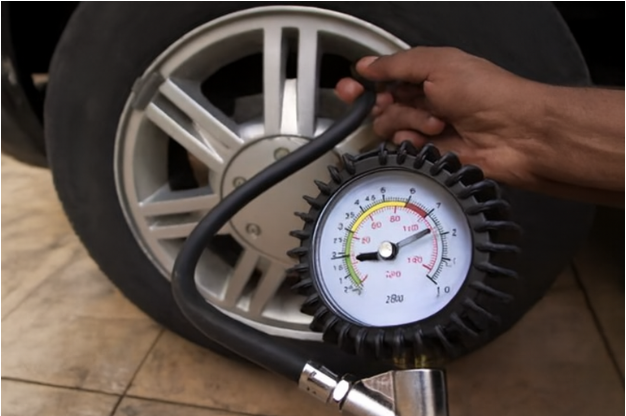
Nigerian roads are unforgiving on tyres. Potholes, sharp edges, heavy loads, and extreme temperatures combine to make proper inflation one of the most important yet misunderstood aspects of car maintenance. Many drivers still rely on general advice from mechanics who recommend “40 PSI all round” or “pump it hard so it doesn’t burst.” Such blanket recommendations often do more harm than good. Understanding the real reasons behind correct tyre pressure and why generic advice fails can save you money, improve safety, and extend tyre life significantly.
The core issue is that tyre pressure needs to match your specific car, tyre size, load, and driving conditions. A Corolla does not need the same pressure as a Highlander. A lightly loaded car on smooth expressways requires different inflation than one carrying passengers and goods on rough city roads. Nigerian heat also plays a major role. As temperatures rise, air inside the tyre expands, increasing pressure. Many mechanics overlook this and advise the same number year-round, leading to dangerous overinflation during the dry season or chronic underinflation when the weather cools.
Underinflated tyres are extremely common in Nigeria and cause multiple problems. They flex more than they should, generating excess heat that accelerates wear. Fuel consumption rises noticeably because the engine works harder to push the car forward. Most dangerously, underinflation reduces steering control and makes the car more likely to suffer blowouts when hitting potholes at speed. Sidewall damage becomes frequent, and the tyre’s contact patch with the road becomes uneven, leading to faster and irregular tread wear.
Overinflated tyres create different but equally serious issues. They provide a harsher ride, reduce the tyre’s ability to absorb shocks from bad roads, and increase the risk of punctures or blowouts on sharp edges. The smaller contact patch also reduces grip, especially in wet conditions during the rainy season. Many drivers who follow the “pump it very hard” advice experience poor handling and premature centre-tread wear.
The correct approach starts with your vehicle manufacturer’s recommendation. This information is usually found on a sticker inside the driver’s door frame or in the owner’s manual. It often gives two sets of figures: one for normal load and another for full load. For most family sedans like the Toyota Corolla or Honda Civic, recommended cold pressure is typically between 32 and 35 PSI. For SUVs and larger vehicles, the range is often 35 to 42 PSI depending on load.
Always check pressure when the tyres are cold, preferably first thing in the morning before driving.In Nigerian conditions, small adjustments make sense. During the peak harmattan when temperatures are lower, you can safely run slightly lower pressure for better comfort and grip. In the hottest months, add 2–3 PSI to account for heat expansion. If you frequently carry heavy loads or drive on very bad roads, increasing pressure by 3–5 PSI (but never exceeding the maximum marked on the tyre sidewall) helps prevent sidewall damage.
Checking pressure should become a regular habit. Do it at least twice a month and before long journeys. A good quality digital gauge is more accurate than the ones at most filling stations. Many drivers now keep a portable compressor in the car for convenience, especially during the rainy season when punctures are common.
Proper inflation brings real benefits. You will notice better fuel economy, more responsive handling, longer tyre life, and improved safety. Many mechanics who advise generic high pressure are simply repeating old habits from an era when roads were worse and tyre technology was different. Modern radial tyres are engineered to perform best at the manufacturer’s recommended pressures.The smartest drivers treat tyre pressure as part of routine maintenance rather than an afterthought. They understand that correct inflation is not about making the tyre “hard” but about achieving the balance the manufacturer designed for safety and efficiency. By moving beyond generic mechanic advice and using the specific recommendations for your car and conditions, you protect your investment and drive more safely on Nigeria’s demanding roads.
Taking a few minutes every couple of weeks to check and adjust your tyre pressure is one of the simplest and most effective ways to reduce running costs and improve your driving experience. In a country where road conditions constantly challenge your vehicle, this small habit delivers outsized benefits in safety, comfort, and economy.