
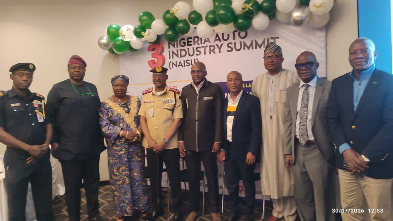
The Federal Government has framed Nigeria’s shift to compressed natural gas (CNG) and electric vehicles (EVs) as a core economic strategy rather than just an environmental goal. Speaking at the 3rd Nigeria Auto Industry Summit organised by the Nigeria Auto Journalists Association in Lagos, Barrister Ismaeel Ahmed, Executive Chairman of the Presidential Initiative on Compressed Natural Gas and Electric Vehicles (Pi-CNG & EV), said clean mobility is central to President Bola Tinubu’s transport and energy reforms.
Ahmed explained that the Initiative was created after fuel subsidy removal to offer Nigerians a practical, affordable alternative by tapping the country’s abundant natural gas. Its mandate covers investment attraction, expansion of refuelling and charging infrastructure, vehicle conversion support, local manufacturing, skills development, and building consumer confidence.
Over the past two years, Nigeria’s CNG ecosystem has grown rapidly. More certified conversion centres have opened, refuelling stations have expanded through public-private investment, and conversions continue to rise among commercial operators and private motorists drawn by lower running costs. Thousands of technicians have been trained for safe conversion services. Partnerships with banks, energy firms, manufacturers, and state governments are improving access to finance and accelerating adoption. A new Nigeria Gas Vehicle Monitoring System will strengthen safety, transparency, and public trust.
While CNG progress is strong, Ahmed stressed equal commitment to electric mobility as part of a multi-technology future. Government is engaging manufacturers and partners on EV deployment, charging networks, local assembly, and supportive policies. Remaining priorities include infrastructure growth, consumer financing, local manufacturing, technical capacity, research, and standardisation.
Ahmed called for collaboration among government agencies, investors, manufacturers, transport operators, financiers, development partners, and the media. He urged journalists to intensify public education, noting that informed acceptance is as critical as physical infrastructure. Success, he said, will ultimately be measured by lower transport costs, stronger energy security, job creation, industrial growth, and better living standards for Nigerians.