
Driving after drinking remains one of the most preventable causes of serious road crashes in Nigeria. The law sets a clear limit on how much alcohol a driver may have in their system, and the Federal Road Safety Corps has powers to test motorists at the roadside. Understanding the current rules, the testing process, and the penalties helps drivers make safer decisions and avoid legal trouble.The legal blood alcohol concentration (BAC) limit for drivers in Nigeria is 0.05 percent, also expressed as 0.5 grams of alcohol per litre of blood. This means that once the amount of alcohol in your blood reaches or exceeds this level, you are considered to be driving under the influence. Even amounts below the legal limit can affect judgement, reaction time, and coordination, which is why the safest choice is not to drink at all before driving.
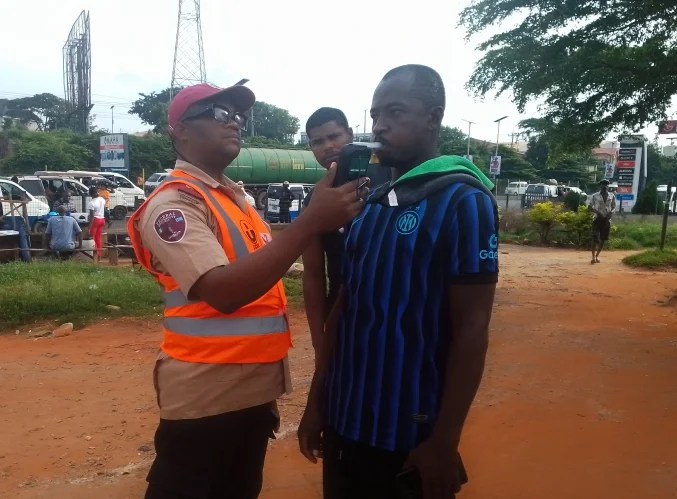
FRSC officers are empowered to conduct preliminary roadside breath tests when they have reasonable suspicion that a driver may be under the influence. Suspicion can arise from the way a vehicle is being driven, the smell of alcohol, the driver’s appearance or behaviour, or the circumstances of a stop or crash. The test is usually carried out with a breathalyser device that estimates the alcohol content from a breath sample.If the roadside test indicates alcohol above the legal limit, or if the driver shows clear signs of impairment, further action follows. This can include arrest, formal charging, and possible additional testing. Refusing to take a lawful roadside breath test is itself an offence under the rules that govern FRSC operations.
Under the existing penalty schedule widely applied in 2026, driving under the influence of alcohol or drugs attracts a fine of ₦5,000 and five penalty points. In more serious cases, especially where the driver is clearly incapable of proper control of the vehicle, prosecution can lead to higher consequences, including the possibility of imprisonment. Accumulated penalty points can also affect a driver’s licence status over time.It is worth noting that the Senate passed an amendment to the FRSC Act in mid-2026 that proposes significantly higher penalties.
Under the bill, driving under the influence could attract a fine of ₦100,000, imprisonment for up to two years, or both. Refusing a roadside breath test could carry a ₦50,000 fine, six months’ imprisonment, or both. As of the latest available information, the bill was awaiting presidential assent, so drivers should monitor official announcements to know when the new penalties take full effect. Until then, the current ₦5,000 fine and existing enforcement powers remain the baseline.In practice, enforcement of drink-driving laws has faced challenges, including limited numbers of reliable breathalysers in some commands. Nevertheless, FRSC continues to conduct targeted operations, especially during festive periods and special interventions, and has maintained partnerships aimed at reducing alcohol-related crashes.
Drivers should never assume that testing will not happen.The effects of alcohol begin with the first drink. It slows reaction times, reduces concentration, impairs judgement of speed and distance, and increases risk-taking behaviour. These effects are more pronounced at night or when the driver is already tired. Because alcohol continues to be absorbed and processed by the body over time, a person may still be over the limit the morning after heavy drinking.The most reliable way to stay safe and legal is simple:
if you plan to drive, do not drink. Arrange alternative transport, use a designated driver, or wait until you are certain the alcohol has left your system. Commercial drivers and those who drive for work carry an even greater responsibility, as impairment endangers passengers and other road users.If you are stopped and asked to take a breath test, remain calm and cooperate. Arguing or refusing usually makes the situation worse and can lead to additional charges. If you believe a test was conducted improperly, you can later raise the issue through the proper legal channels, but non-compliance at the roadside is rarely advisable.
Drink-driving laws exist to protect everyone on the road. The 0.05 percent limit, the power to conduct roadside tests, and the penalties that follow are all designed to reduce preventable crashes. By respecting the limit and choosing not to drive after drinking, Nigerian motorists protect their licences, their freedom, and, most importantly, lives.
Stay informed about any changes to penalties once new legislation is fully implemented, and treat every journey as one that requires a clear head. The road is unforgiving when judgement is impaired.